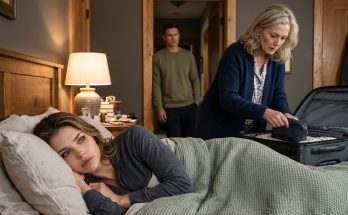
The first time my husband told me I was imagining my symptoms, I believed him. By the seventh day of unbearable headaches, I was beginning to believe I was dying.
What I didn’t know was that Ethan and his mother had been counting on my silence.
My name is Claire Bennett. I was thirty-four years old when I arrived at a Houston emergency department in borrowed shower slippers, carrying eleven dollars in my pocket and a phone that wouldn’t stop ringing.
For months, my feet had been growing numb. My hands trembled when I tried to button my clothes. Then the headaches began, each one worse than the last.
Ethan called it grief. His mother, Margaret, called it nervous exhaustion. Neither would take me to a doctor.
But Dr. Michael Hayes noticed something neither of them had ever explained: pale horizontal bands across my fingernails, unusual neurological symptoms, and bruises on my wrist.
He asked about the tablets Margaret had been giving me. When I admitted I didn’t know what they contained, he called for the police and asked the hospital staff to keep me safe.
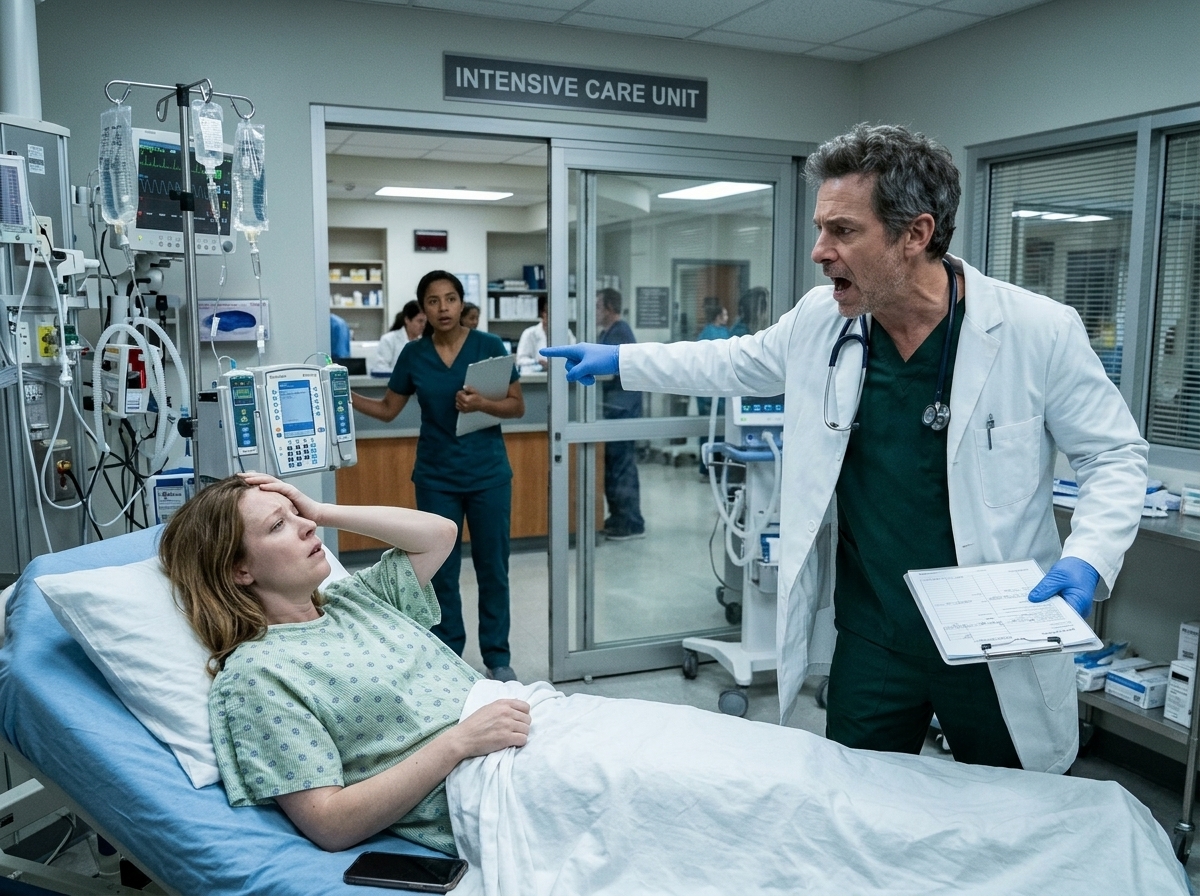
Now Ethan and Margaret were outside my examination room, insisting I couldn’t make decisions for myself.
I had just told Dr. Hayes that I didn’t want to leave with them when Margaret’s voice carried through the hallway.
“Tell that doctor there’s no reason to test her for arsenic. We already know what caused it.”
Dr. Hayes stopped turning the pages of my chart.
He looked toward the door, then back at me.
“Claire,” he said quietly, “has anyone ever told you that you’ve been exposed to arsenic?”
I shook my head.
The word meant almost nothing to me. I knew it was poisonous, but I couldn’t understand why Margaret would mention it.
Dr. Hayes pulled a chair beside my bed.
“Some of your symptoms make us concerned about a possible toxic exposure. That doesn’t establish what happened, and we need proper testing. But your mother-in-law just mentioned a substance nobody here has discussed with her.”
My stomach tightened.
“She said it was vitamins,” I whispered.
“What vitamins?”
“I don’t know. She never let me see the bottles.”
He didn’t look shocked. Somehow, that frightened me more.
“Then we’re going to find out.”
A nurse named Denise came in and asked whether I wanted Ethan and Margaret allowed into the room.
“No,” I said.
It was such a small word. Yet I couldn’t remember the last time I’d spoken it without apologizing afterward.
Denise documented my wishes and arranged for hospital security to keep them from entering against my instructions.
Outside, Ethan began arguing.
“She’s my wife! She’s been mentally unstable since her parents died!”
I closed my eyes.
My parents had died in a highway accident eight months earlier. They had been driving home from visiting my aunt when another vehicle crossed the center line.
The investigation had found no connection to Ethan. Their deaths were a tragedy, not a mystery. But Ethan had turned that tragedy into an explanation for everything wrong with me.
When I forgot an appointment, it was grief. When I stumbled on the stairs, it was grief. When I complained that my feet felt like they belonged to someone else, he told me to stop looking for reasons to be unhappy.
Margaret moved into our guest room a month after the funeral. She insisted I needed someone to organize my meals, medications, and finances.
At first, I was grateful.
She made breakfast. She folded laundry. She arranged little tablets in a plastic weekly organizer and told me they would help my nerves settle.
But when I asked what I was taking, she became offended.
“After everything I’ve done for you, Claire, you still don’t trust me?”
Eventually, I stopped asking.
Dr. Hayes ordered imaging and laboratory tests to investigate my severe headache and neurological symptoms. He explained that the nail changes and numbness could have more than one cause, and that checking for certain toxic substances required specialized testing.
Nothing could be concluded from my fingernails alone.
While we waited, a police officer came to take my statement.
Officer Ramirez introduced herself and sat where I could see her face.
“Your husband says he has medical authority to speak for you,” she told me. “Did you give him that authority?”
“No.”
“Did you ask him to keep you away from medical care?”
“No. I begged him to bring me here.”
She wrote down my answer.
Then she asked whether anyone had ever physically prevented me from leaving.
I looked at the bruises on my wrist.
Three nights earlier, I had tried to walk to the front door. Ethan had caught me near the staircase and pulled me back into our bedroom.
“You’re embarrassing yourself,” he’d said. “What would a hospital do that Mom hasn’t already done?”
I told Officer Ramirez everything.
When I finished, she asked if I had any messages showing what had happened.
I handed her my phone.
There were seven days of unanswered requests for help. There were messages from Ethan telling me not to call an ambulance and warnings that I would regret involving strangers in our marriage.
Then a new message appeared.
Mom says you need to tell them the pills were yours. Don’t make this worse than it already is.
Officer Ramirez read it without changing her expression.
“Would you be willing to preserve these messages for the investigation?”
“Yes.”
For the first time, I was grateful Ethan had preferred texting to listening.
That afternoon, the first routine tests came back. My scan showed no acute bleeding, but the medical team was still concerned about my neurological symptoms and possible exposure to something harmful.
Dr. Hayes recommended admitting me for monitoring and further investigation.
I agreed.
When Denise helped me move to a hospital room, she asked if there was anyone outside my husband’s family I wanted to contact.
For a moment, I couldn’t think of anyone.
Then I remembered Celia Grant.
Celia had been my parents’ attorney for nearly twenty years. She had helped settle their estate, and she had called repeatedly after the funeral.
I stopped answering because Ethan said she was trying to take advantage of me.
Denise helped me find her number.
Celia answered on the second ring.
“Claire? Sweetheart, where have you been?”
Her voice broke something open inside me.
“I’m in the hospital,” I said. “I think Ethan and Margaret have been hurting me.”
There was a silence.
Then Celia said, “I’m coming. And Claire, don’t sign anything they bring you.”
I sat up despite the headache.
“Why would they bring me something to sign?”
“Because Ethan called my office yesterday asking about your parents’ properties. He said you were ready to appoint him to manage everything permanently.”
My parents had left me their small home and two rental properties outside Houston. The properties weren’t a fortune, but they represented everything my parents had worked for.
I had never agreed to put Ethan in charge of them.
Celia continued carefully.
“He wanted to know whether a durable power of attorney could authorize him to borrow against the properties. I told him I’d need to speak directly with you.”
“He didn’t tell me any of that.”
“He also said you were too confused to understand the paperwork.”
My hands started shaking again.
Suddenly, I remembered Margaret setting a folder beside my breakfast plate three days earlier.
“Just some documents to simplify things,” she’d said. “We’ll deal with them Friday, when you’re feeling more cooperative.”
Friday was tomorrow.
They hadn’t wanted me well enough to see a doctor. They wanted me well enough to hold a pen.
Celia arrived that evening carrying a notebook and the worried expression I remembered from my father’s funeral.
She didn’t rush into questions. She sat beside me, held my hand, and waited until I could speak.
When I explained the tablets and the headaches, her face went pale.
“Claire, your father was worried about Ethan’s business finances before he died.”
I stared at her.
“What?”
“Ethan approached him about financing a construction project. Your father declined because Ethan couldn’t provide the records he requested.”
I remembered Ethan coming home furious one evening, saying my father had humiliated him.
He had never explained why.
Celia opened her notebook.
“Your father told me something afterward. He said he was afraid Ethan cared more about what you might inherit than about you.”
My throat tightened.
I wanted to argue. I wanted to tell her my husband wasn’t that kind of man.
But I could still hear him refusing to open our bedroom door while I begged for medical help.
Two days later, the specialized urine testing returned results concerning for elevated inorganic arsenic exposure. The doctors explained that additional assessment was needed to understand the source and extent of the poisoning.
Dr. Hayes stood beside my bed when he told me.
“I can’t determine from a laboratory result alone who caused this,” he said. “But your exposure is real. It isn’t something you imagined.”
I started crying.
Not because I was surprised.
Because someone had finally said I wasn’t imagining it.
The hospital’s toxicology team discussed treatment and continued monitoring. My symptoms would not disappear overnight, and the numbness in my feet might take considerable time to improve.
Meanwhile, investigators began examining what had happened inside my home.
With evidence from my messages, the medical findings, and the statements already collected, they pursued further records and authorization to search for the substances I’d been given.
They eventually recovered medication containers, a weekly organizer, financial paperwork, and a handwritten calendar from Margaret’s bedroom.
Officer Ramirez visited me again after the search.
“I want you to look at something,” she said.
She showed me a photograph of the calendar.
The entries appeared ordinary at first: breakfast, laundry, appointments.
Then I noticed the notes beside certain dates.
Slept most of afternoon.
Too dizzy to drive.
Forgot bank password.
Refused tablets.
One entry, written three days before I escaped, made my blood run cold.
Friday — papers. Keep her calm.
Margaret hadn’t merely noticed that I was getting worse.
She had been tracking it.
The investigator explained that the calendar alone didn’t prove what each pill contained. Laboratory examination of the recovered materials and further interviews would be necessary.
But the calendar, the messages, and the financial documents were beginning to tell the same story.
Ethan’s company was in serious financial trouble. He had concealed debts and failed projects from me for months.
He wanted access to the rental properties my parents had left me, and he needed my signature to gain the authority he was seeking.
Margaret had taken responsibility for making me dependent on them.
I asked Officer Ramirez a question I was afraid to hear answered.
“Did Ethan know what his mother was giving me?”
“We’re still investigating exactly what each person knew,” she replied.
Then she showed me another message, obtained from Ethan’s communications during the investigation.
It was addressed to Margaret.
She can barely stand now. You promised the tablets wouldn’t do permanent damage. We only need her to cooperate until Friday.
I read it three times.
I had spent months wondering whether Ethan was simply impatient with my illness, whether he was ashamed of my grief, whether he’d stopped loving me because I couldn’t be the cheerful wife he remembered.
Now I understood something far worse.
He knew his mother was deliberately making me unwell.
Whether he understood the precise substance or its consequences was a question for the investigators. But he’d known enough to recognize that I was being harmed, and he’d still told me not to seek help.
I asked to be alone.
When Officer Ramirez left, I stared out the window until the sun disappeared behind the hospital parking garage.
I thought about my mother, who used to tell me that love was supposed to make difficult days easier, not make me afraid of asking for help.
I thought about my father, who taught me how to change a tire because he never wanted me stranded somewhere with no choices.
And I thought about that taxi ride, when I’d been certain I was betraying my husband by seeking medical care.
The next morning, Celia brought news.
She had contacted the relevant financial institutions and the title professionals handling my parents’ estate matters. With my authorization, she was arranging measures to protect the properties and challenge any suspicious documents submitted in my name.
Nothing had been sold.
No completed transfer of the properties had been identified.
Ethan’s plan had not succeeded.
But the financial paperwork revealed another painful detail.
He had drafted a statement portraying me as incapable of managing my own affairs. It described my grief, memory problems, and physical weakness as evidence that I could no longer be trusted to make decisions.
Symptoms that had driven me to desperation were being collected as arguments for taking away my independence.
Celia set the document on the table.
“Claire, I need you to understand something. Being ill doesn’t automatically mean someone else gets to control your property. And nobody gets to declare you incapable just because it benefits them.”
I looked at the signature line.
My name was printed beneath it.
Waiting.
I pushed the document away.
“Then they can keep waiting.”
The criminal investigation continued over the following weeks. Testing of the recovered materials, financial records, and communications led to charges against Margaret and Ethan connected to the suspected poisoning and conspiracy. Their attorneys disputed parts of the allegations, and the legal proceedings were far from finished.
But I no longer needed a courtroom verdict to decide whether I would return to that marriage.
Celia helped me find an attorney for the separation. A victim advocate helped me make a safety plan, arrange temporary housing, and obtain information about protective measures.
When I was discharged, I did not go back to the house where Margaret had arranged my pills.
I stayed in a small furnished apartment near my rehabilitation appointments.
Some mornings, my hands still trembled. Sometimes the headaches returned, though not with the same terrifying intensity. I needed help walking longer distances, and there were days when recovery felt painfully slow.
I had to learn that healing wasn’t a straight line.
The hardest part wasn’t the physical therapy.
It was making ordinary decisions again.
For months, someone had told me when to eat, what medicine to swallow, whether to leave the house, and what thoughts I was allowed to trust.
The first time I went grocery shopping alone, I stood in front of a shelf of tea for almost ten minutes.
Nobody was there to tell me which one I should buy.
I finally chose the kind my mother used to drink.
I went home, made a cup, and cried at my kitchen table.
Several weeks later, Ethan sent a letter through his attorney. He said he was sorry I’d suffered. He blamed Margaret for the tablets and claimed he’d never intended for me to become seriously ill.
He asked whether we could talk about repairing our marriage.
I read the letter once.
Then I put it away.
I didn’t need to know whether he believed every excuse he had written. I remembered him holding my wrists while I tried to leave. I remembered seven days of begging to see a doctor. I remembered his message telling me not to let anyone treat me.
Whatever Ethan claimed he hadn’t known, he had known I needed help.
And he had chosen to stop me from getting it.
I told my attorney I wanted to continue the divorce proceedings and that I didn’t want direct contact with him.
There was no dramatic confrontation. No final speech in a crowded courtroom. No moment when Ethan suddenly became the man I thought I’d married.
There was simply a decision.
Mine.
Three months after my escape, I returned to the hospital for a follow-up appointment. My recovery was still ongoing, and the doctors were honest that some nerve symptoms could persist.
On my way out, I saw Dr. Hayes near the nurses’ station.
He recognized me immediately.
“Claire,” he said, smiling. “How are you doing?”
“Better. Slowly.”
He nodded.
“Slowly still counts.”
I wanted to thank him for discovering the poisoning, for calling the police, for refusing to believe Ethan’s version of my life.
But the words came out differently.
“Thank you for asking me what I wanted.”
He looked at me for a moment.
“That’s something you should never have had to thank anyone for.”
Outside, the afternoon sunlight was bright enough that I reached for my sunglasses. The old headaches had once made even that much light unbearable.
I stood on the sidewalk and watched people hurry past, carrying coffee cups, backpacks, and grocery bags. Nobody knew what had happened to me. Nobody knew how extraordinary it felt simply to stand there and choose where I would go next.
I took out my phone and called Celia.
“I’m leaving the hospital,” I said.
“Do you need a ride?”
I looked toward the row of taxis waiting near the entrance.
“No,” I answered. “I think I’d like to get myself home.”
The word home meant something different now.
It wasn’t the place where my husband lived, or where his mother controlled the medicine cabinet. It wasn’t the property my parents had left me or the money Ethan had tried to reach.
Home was somewhere I could be ill without being punished, frightened without being dismissed, and uncertain without having another person claim ownership of my mind.
I had walked into that emergency department believing I needed someone to rescue me.
And I did need help. I had needed doctors, nurses, investigators, friends, and people willing to listen when I was too weak to fight alone.
But I’d also done something Ethan and Margaret never expected.
I had believed myself long enough to get into that taxi.
The night I arrived, I begged Dr. Hayes, “Please don’t let them take me home.”
Now, for the first time in months, I was going home on my own terms.
And no one else would be choosing the way for me.
THE END