“They Threw Me Out for Christmas… Then Learned the ‘Family Empire’ Was Never Theirs”
Dad called me again at 8:42 the next morning.
I watched his name flash across my phone while Lena Cross reviewed the first pages of the forensic audit.
“Answer it,” she said.
I did.
“Claire!”
Dad didn’t even say hello.
“Fix this immediately.”
I leaned back in my chair.
Outside the conference room window, Christmas snow still covered the sidewalks in thin white sheeTS.
“Good morning to you too.”
“Don’t play games with me.
My cards are frozen.
Payroll is being questioned.
Madison is screaming about her car.
Reeves says you’re somehow involved with the trust.”
I glanced at Lena.
“Somehow?”
There was silence.
Then Dad lowered his voice.
“What did Arthur leave you?”
Not Grandpa .
Arthur.
That told me everything.
“You knew about the trust?”
“I knew my father had complicated financial arrangemenTS.”
“Did you know he owned the company?”
Another silence.
Longer this time.
Dad finally said, “Claire, whatever paperwork you found, you don’t understand how businesses work.”
I almost smiled.
“Neither do you, apparently.
That’s why the audit found eighteen hundred thousand dollars missing.”
His breathing changed.
“Nothing is missing.”
“Then I’m sure you have nothing to worry about.”
“Listen to me carefully,” Dad snapped.
“You are not qualified to control Hale Development.
You lost your job six months ago.”
“The company I worked for went bankrupt.”
“Same difference.”
There it was.
The sentence I had heard in different forms my entire life.
My success belonged to luck.
My failures belonged to me.
Madison could crash a luxury car and call it bad weather.
I could survive a company collapse, rebuild my income from nothing, and somehow become a loser.
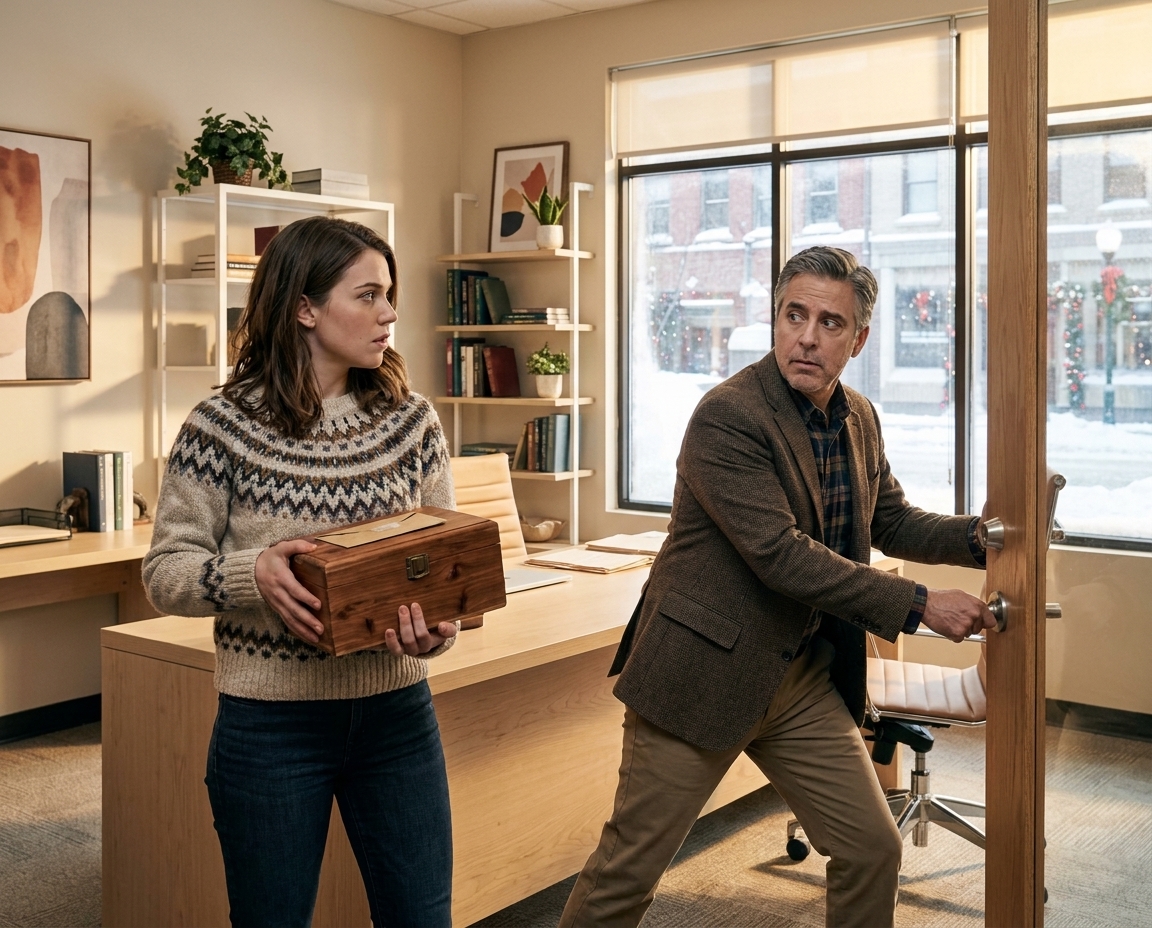
I looked down at Grandpa’s cedar box.
Then I said, “I’m going to give you one chance.”
Dad went quiet.
“One chance for what?”
“To tell the truth before the auditors finish.”
His voice hardened.
“I have nothing to confess.”
“Then I guess we’re done.”
“Claire—”
I ended the call.
Lena closed the audit folder.
“He’s scared.”
“No,” I said.
I looked at the snow outside.
“He’s angry because he thinks fear belongs to everyone else.”
By the end of the week, the truth had begun unraveling faster than any of us expected.
The $1.8 million wasn’t one mistake.
It was dozens.
Unauthorized transfers.
Personal expenses hidden as consulting fees.
Company money used for Madison’s vacations, designer purchases, private events, and the lease on the Mercedes she loved posting online.
There were loans taken out using Hale Development assets as collateral.
There were contracts signed without proper approval.
And there was one detail that made Lena slowly remove her glasses and stare at me.
“Claire.”
I looked up.
“What?”
She turned her laptop toward me.
“Your father tried to transfer one of the rental properties last year.”
“To who?”
“Madison.”
I stared at the screen.
The property was worth more than $900,000.
“Did Grandpa stop it?”
“Looks like it.”
Grandpa had seen everything.
Even while the family whispered that he was confused.
Even while Dad made decisions in his name.
Even while Madison laughed at his old sweaters and complained that his house smelled like “retirement.”
Grandpa had known.
And instead of destroying them immediately, he had waited.
Not because he was weak.
Because he was giving them a chance to stop.
They never did.
On New Year’s Eve, Dad came to my apartment.
Not the mansion.
Not the corporate office.
My apartment.
The tiny place Madison had called a shoebox.
I opened the door and found him standing there without his expensive suit jacket.
For the first time in years, he looked tired.
Actually tired.
Not the dramatic kind he performed whenever he wanted sympathy.
The kind that sits behind someone’s eyes when they realize the world has changed without asking permission.
“Can I come in?”
I almost said no.
Then I remembered Grandpa.
Don’t use power because you’re angry.
So I stepped aside.
Dad looked around my apartment.
At the small kitchen.
The secondhand bookshelf.
The laptop on the table where I had spent six months building my freelance work.
He sat down slowly.
“I didn’t know about the sixty-two percent,” he said.
“I believe you.”
He looked surprised.
“But you knew enough to act like the company belonged to you.”
His eyes dropped.
“For twenty years, I ran that company.”
“No.
You worked there for twenty years.”
His face tightened.
“That’s not the same thing,” I continued.
“You built your entire identity around something Grandpa allowed you to manage.
Then you treated everyone around you as if they owed you for it.”
“I made mistakes.”
“Madison made mistakes too?”
Dad sighed.
“She’s your sister.”
“And I’m your daughter.”
That one landed.
He stared at the floor.
I waited.
Finally, he whispered, “I know.”
For a moment, I saw something I had wanted from him for years.
Not an excuse.
Not anger.
Recognition.
Then his phone rang.
Madison.
He looked at the screen but didn’t answer.
“She still thinks you’re going to fix everything,” I said.
Dad gave a bitter laugh.
“She thinks I can.”
“And can you?”
“No.”
The word seemed difficult for him.
I nodded.
“Then maybe it’s time she learns that too.”
Madison learned three days later.
She arrived at Hale Development headquarters wearing sunglasses and a white coat that probably cost more than my first car.
She marched through the lobby and announced that she wanted to speak to me.
The receptionist called upstairs.
I told her to send Madison in.
She entered my office without knocking.
“Finally.”
I said nothing.
She looked around at the room.
Then at me sitting behind Grandpa’s old desk.
Her smile disappeared.
“You actually think you’re keeping this?”
“The trust documents say I am.”
“You manipulated Grandpa.”
I laughed.
That seemed to surprise her.
“Madison, you hadn’t visited him in almost a year before he died.”
“I was busy.”
“You were busy spending money.”
Her face turned red.
“You have no right to judge me.”
“I don’t.”
I opened the audit report.
“But these numbers do.”
She stepped forward.
“You’re ruining my life.”
“No.”
I looked directly at her.
“I’m stopping you from ruining someone else’s.”
For several seconds, neither of us spoke.
Then she pointed toward the papers.
“Ethan’s family knows about the audit.”
I said nothing.
“His parents are asking questions.”
Still nothing.
Her eyes filled with tears.
Not fake ones this time.
“He postponed the wedding.”
I felt a brief ache.
Because she was my sister.
Because once, when we were children, she had climbed into my bed during thunderstorms.
Once, we had shared secreTS.
Once, I had believed she loved me.
But somewhere along the way, Madison started measuring love by usefulness.
And I had finally stopped qualifying.
“What do you want me to do?” I asked.
She looked at me desperately.
“Fix it.”
There it was.
The old Madison.
The one who believed someone else would always clean up the mess.
I closed the audit folder.
“I can help you.”
Her face lifted.
“But not the way you want.”
“What does that mean?”
“It means you cooperate with the investigation.
You return what you can.
You get your own lawyer.
You stop lying.
And you find a way to support yourself without using the company as your personal wallet.”
Her expression turned cold again.
“So I have to become poor like you?”
I smiled.
“No.”
I stood.
“You have to become responsible like me.”
She walked out without saying goodbye.
For the first time in my life, I didn’t chase after her.
The investigation took monThS.
Dad eventually resigned from his executive position.
He agreed to repay what he could and cooperate with the restructuring.
Because he had cooperated and because the evidence showed years of reckless decisions rather than a single simple act, the process became long, expensive, and deeply embarrassing for him.
Madison sold the Mercedes.
Her engagement ended.
And for several weeks, she blamed me for all of it.
Then something happened that I hadn’t expected.
She got a job.
A real one.
Entry-level.
No company card.
No driver.
No assistant.
The first month, she quit twice.
The third time she called me.
“I hate my manager.”
“Congratulations.”
“What?”
“Now you’re having a normal adult experience.”
She laughed.
A real laugh.
Small.
But real.
We didn’t become close overnight.
Some wounds don’t disappear because someone finally says sorry.
Trust has to be rebuilt the same way it was destroyed.
One choice at a time.
But Madison eventually apologized.
Not perfectly.
Not with a dramatic speech.
She came to my apartment carrying coffee and said:
“I was awful to you.”
I waited.
She continued.
“And I think I kept acting awful because admitting it would mean admitting you were stronger than me.”
I looked at her.
“You don’t have to compete with me.”
Her eyes filled with tears.
“I know that now.”
That was enough for that day.
Not forgiveness for everything.
But a beginning.
One year after the Christmas morning when my parents threw me into the snow, I hosted dinner.
Not a party.
Not a social media event.
Just dinner.
I used Grandpa’s old dining table.
Dad arrived early and brought flowers.
Madison brought dessert, which she admitted she had burned once before getting it right.
I cooked the turkey.
For a while, nobody mentioned the trust.
Nobody mentioned the audit.
Nobody mentioned the Christmas when I had been called a loser.
Then Dad stood with his glass in his hand.
“I owe Claire an apology.”
The room went silent.
He looked directly at me.
“For years, I treated success like proof that someone deserved love.”
His voice shook slightly.
“And when Claire struggled, I made her feel smaller because it was easier than admitting I was losing control of my own life.”
He swallowed.
“I was wrong.”
I didn’t cry.
Not then.
But I listened.
That mattered.
After dinner, I went upstairs and opened Grandpa’s cedar box.
One compartment remained unopened.
Inside was a final letter.
Only four lines.
Claire,
If you’re reading this, you survived the part where they underestimated you.
Now make sure you don’t become the kind of person who underestimates love.
The greatest inheritance I gave you was never the company.
It was the chance to decide what kind of family you would become.
I sat there for a long time.
Then I smiled.
Because Grandpa had been right about one thing.
The money was never the real power.
The house wasn’t.
The company wasn’t.
Power was knowing I could have destroyed them—and choosing instead to protect what was worth saving.
Downstairs, I heard Madison laughing at something Dad said.
For the first time in years, it didn’t sound like a performance.
I closed the cedar box.
And I finally understood why Grandpa had waited until my family showed me who they really were.
He wasn’t giving me a weapon.
He was giving me a choice.
That Christmas morning, my parents threw me out of their house believing I had nothing.
By the end of the year, I owned the company they thought belonged to them.
But that wasn’t my victory.
My victory was simpler.
They had called me a loser when I lost my job.
They had laughed when I lived in a small apartment.
They had pushed me into the snow and expected me to come crawling back.
Instead, I walked away.
I opened the box.
I learned the truth.
And then I built a life where I no longer needed anyone’s permission to know my worth.
Sometimes, the people who reject you are not ending your story.
Sometimes, they are forcing you to discover the chapter they were never meant to control.
And sometimes, the door they slam in your face on Christmas morning…
is the very door that finally leads you home.
THE END
Source: topstoryusa.store