The Breakfast Table That Broke My Family Open — And the Day My Four-Year-Old Daughter Finally Taught Me What Real Family Means
The police arrived before noon.
I was sitting beside Emma’s hospital bed, watching the steady rise and fall of her chest, when Denise returned with two officers.
They did not come in loudly.
They did not make dramatic announcemenTS. One officer introduced herself as Detective Morales, then sat across from me and opened a small notebook.
“Rachel,” she said gently, “we need you to tell us everything you remember.”
So I did.
I told her about the breakfast.
About Emma waking up excited because Grandma had promised pancakes.
About how Lily’s chair had a purple cushion on it because she liked sitting higher than everyone else.
About how Emma had wandered downstairs before I came back.
And then I told them about the sound.
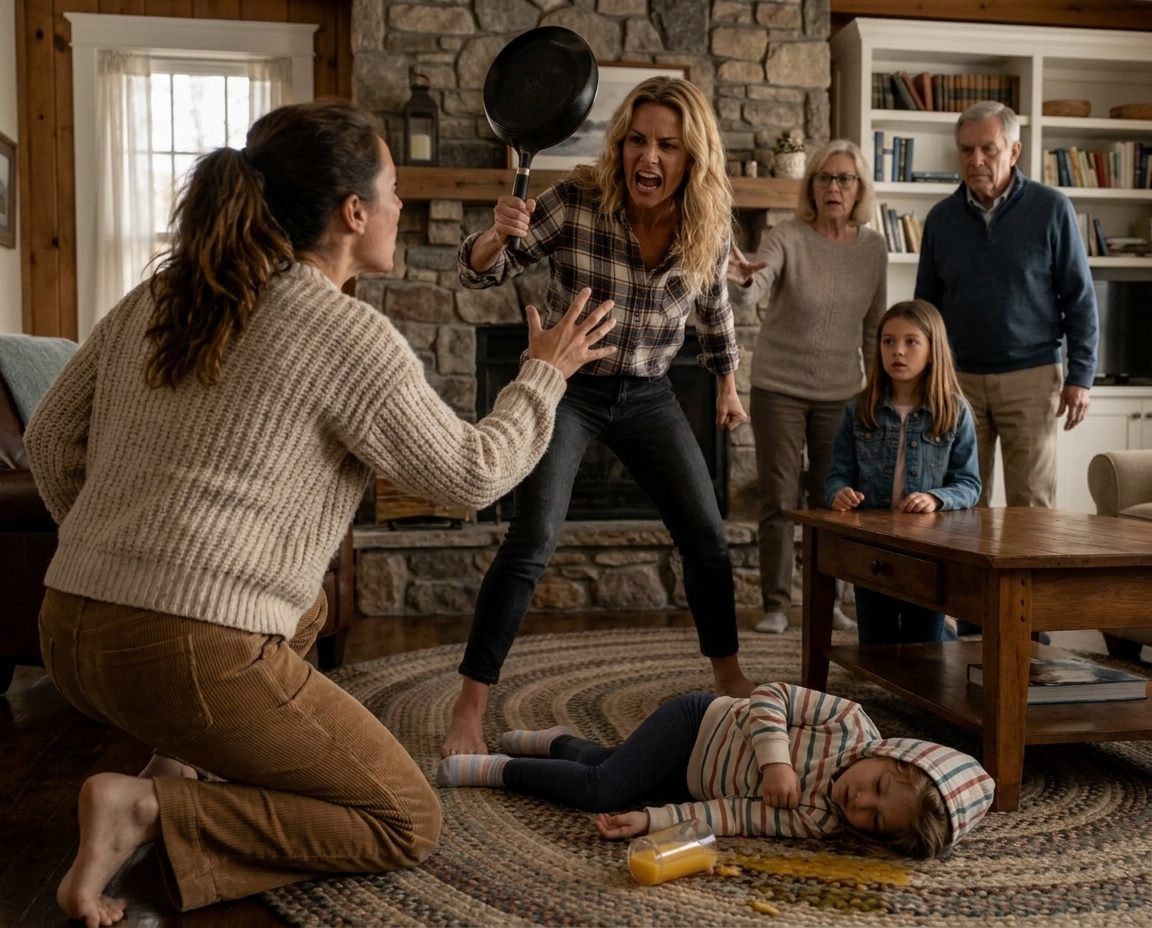
The crash.
The silence.
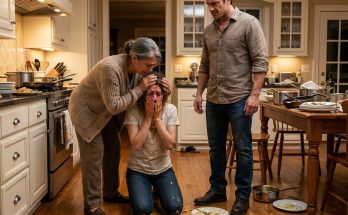
Emma on the floor.
The pan.
Vanessa standing beside the stove.
My mother telling me to stop shouting.
My father refusing to answer one simple question.
Was the pan thrown?
I handed Detective Morales my phone.
She read every message.
Then she stopped at the one my mother had sent.
“I told Vanessa to handle Emma before you came downstairs.”
Her expression changed.
“Did your mother explain what that meant?”
“No.”
“Did Vanessa ever threaten Emma before?”
I thought about it.
At first, I wanted to say no.
Then memories began returning in pieces.
Vanessa rolling her eyes whenever Emma touched Lily’s toys.
Vanessa telling Emma she was “too loud.”
Vanessa once grabbing Emma’s wrist at Christmas because my daughter had reached for a cookie before dinner.
I had pulled Emma away that day, but Mom had laughed.
“She’s just teaching her manners.”
Teaching.
That word suddenly felt different.
I looked through the hospital window.
Emma was asleep under a white blanket, her yellow sweatshirt folded carefully on a chair.
A nurse had cleaned the syrup from it.
My throat tightened.
“How many times,” I whispered, “did I tell myself something was harmless because I didn’t want to fight with my family?”
Detective Morales didn’t answer.
She didn’t have to.
By early afternoon, the hospital had completed its initial report.
A child protection investigator came to speak with me.
A pediatric specialist explained Emma would need continued monitoring, follow-up treatment, and time to heal.
But there was one sentence I held onto with both hands.
“She is going to recover.”
I cried then.
Not quietly.
Not politely.
I cried with my face in my hands while Denise sat beside me.
For the first time all day, I allowed myself to feel something other than fear.
Emma was going to recover.
Nothing else mattered more.
Then my phone rang again.
Mom.
I stared at her name until the call nearly ended.
Then I answered.
“Rachel,” she said immediately, “what are you telling people?”
I almost laughed.
Not because it was funny.
Because after everything that had happened, that was what she cared about.
“What am I telling people?”
“Yes.
Your father says police may come to the house.”
“They will.”
A long silence followed.
Then she lowered her voice.
“You don’t understand what happened.”
“Then explain it.”
“She was being difficult.”
“She is four.”
“Vanessa only meant to scare her.”
My fingers tightened around the phone.
For several seconds, I said nothing.
Then I looked through the window at my daughter.
“You told Vanessa to handle Emma.”
Mom inhaled sharply.
“I didn’t mean—”
“What did you mean?”
“Rachel—”
“What did you tell her?”
“I said Emma needed to learn she couldn’t take Lily’s place.”
The hallway seemed to disappear around me.
I could hear only the soft electronic rhythm from the machines inside Emma’s room.
My mother continued speaking.
“I didn’t know Vanessa would lose her temper.”
“You knew she was angry.”
“I knew Emma had upset her.”
“She sat in a chair.”
“Lily is sensitive about people touching her things.”
“Lily is six years old.”
“She has feelings too!”
I stood.
My chair scraped against the floor.
“And Emma doesn’t?”
Mom became quiet.
That silence told me everything.
Not because she had planned exactly what happened.
But because she had created the kind of family where protecting Vanessa mattered more than protecting a four-year-old child.
Where Lily’s breakfast seat mattered more than Emma’s safety.
Where I was expected to carry my unconscious daughter out of the house without making everyone uncomfortable.
“I loved you,” I said.
“Rachel—”
“I still do.
That’s the worst part.”
Then I ended the call.
I blocked her number.
Then Dad’s.
Then Vanessa’s.
I sat back down beside Emma.
And for the first time in my life, I understood that walking away from family was not always abandonment.
Sometimes it was rescue.
The investigation moved faster than I expected.
My father eventually gave a statement.
At first, he repeated that everything had happened “too quickly.”
Then Detective Morales showed him the messages from Mom.
After that, his story changed.
He admitted Vanessa had been angry before I came downstairs.
He admitted Mom had complained that Emma was “spoiling breakfast.”
And finally, he admitted he had seen Vanessa pick up the pan.
“What did you do?” the detective asked him.
According to his statement, nothing.
He froze.
That became his explanation for why he had done nothing.
He froze.
I wanted to hate him for it.
Part of me did.
But another part of me realized something painful.
My father had spent his entire life freezing whenever Mom or Vanessa became angry.
And he had taught me to do the same.
Don’t make trouble.
Don’t raise your voice.
Keep the peace.
Smile.
Let it go.
Until one day, the price of keeping the peace was my daughter lying unconscious on a kitchen floor.
I was done paying it.
Vanessa was held accountable for what she had done.
The court process was difficult, emotional, and exhausting, but I attended every meeting and provided every piece of evidence requested.
The messages, the witness statements, and the medical records painted a picture no amount of family pressure could erase.
My mother faced consequences too for her role in encouraging the confrontation and trying to minimize what had happened afterward.
And through it all, I learned something important.
Justice did not mean standing in a courtroom and suddenly feeling better.
It did not erase the hospital nighTS.
It did not erase the moment I had seen Emma’s small body on the floor.
Justice was quieter than that.
It was a boundary finally being taken seriously.
It was a record saying that what happened was not “discipline.”
Not a misunderstanding.
Not a family disagreement.
It was wrong.
And Emma deserved adults who were willing to say that.
Three weeks later, Emma came home.
The house was too quiet at first.
I had moved us into a small apartment across town.
It wasn’t fancy.
The kitchen was narrow, and the bedroom windows faced a parking lot.
But nobody shouted.
Nobody told Emma she was disturbing the mood.
Nobody made her afraid of sitting in the wrong chair.
On our first morning there, I woke before sunrise and stood in the kitchen making pancakes.
Emma shuffled in wearing purple pajamas and dragging her stuffed rabbit by one ear.
She looked at the table.
There were only two chairs.
She stopped.
Her face changed.
“Mommy?”
“Yes, sweetheart?”
“Which one is mine?”
The spatula slipped from my hand.
For one terrible second, I was back in my mother’s kitchen.
Orange juice on the floor.
The black pan.
My daughter’s small fingers against the hardwood.
I crossed the room and knelt in front of her.
“Emma,” I said.
She waited.
I pointed toward the table.
“Every chair in this house is yours.”
She looked confused.
“All of them?”
“All of them.”
Even then, she wasn’t convinced.
“What if somebody gets mad?”
I swallowed.
“Then they can leave.”
She stared at me.
Then she smiled.
A small smile.
But it was real.
She climbed onto one chair, changed her mind, climbed down, and moved to the other.
Then she laughed.
“I’m sitting here today.”
“Excellent choice.”
I served her a pancake shaped like a crooked heart.
She took one bite.
Then another.
And for the first time since that morning, I watched my daughter eat breakfast without being afraid.
Months passed.
Emma grew stronger.
Children have a way of moving forward that adults sometimes envy.
She still had difficult days.
There were moments when sudden noises frightened her, and times when she asked questions I could not answer without tears.
“Why was Aunt Vanessa mad at me?”
“Why didn’t Grandma help me?”
“Did I do something bad?”
Every time, I told her the truth in words a child could understand.
“No, sweetheart.
You did nothing wrong.”
I repeated it so often that eventually she began saying it herself.
One afternoon, I overheard her talking to her stuffed rabbit.
“You can sit anywhere,” she told it seriously.
“You don’t have to be scared.”
I stood outside her bedroom door and cried.
But these were different tears.
Not tears of helplessness.
Tears of hope.
Because maybe healing was exactly that.
Not forgetting what happened.
But building so much safety around the memory that it no longer controlled your life.
My father contacted me nearly a year later.
Not by phone.
I had blocked him.
He sent a letter through my attorney.
Inside was a single handwritten page.
He did not make excuses.
For the first time, he didn’t ask me to forgive him.
He wrote that he was sorry he had frozen.
Sorry he had watched fear control the entire family for years.
Sorry he had expected me to accept it too.
At the bottom, he wrote:
I should have protected my granddaughter.
Since I didn’t, I will respect whatever distance you need.
I read the letter twice.
Then I put it away.
I wasn’t ready to forgive him.
But I appreciated that he finally understood forgiveness was not something he could demand.
A few months later, when Emma was ready and after careful consideration, I allowed him to send her a birthday card.
No surprise visiTS.
No pressure.
No family gatherings.
Just a card.
Emma opened it at the kitchen table.
She looked at the drawing of a rainbow on the front.
“Is Grandpa still sad?” she asked.
“I think he is.”
“Because he made a bad choice?”
“Yes.”
She thought about that.
Then she nodded.
“People can make better choices later.”
I looked at her.
Four years old when everything happened.
Now older, wiser in some ways than she ever should have needed to be.
“Yes,” I said softly.
“They can.”
That was the beginning of a different kind of relationship with my father.
Slow.
Careful.
Built on actions instead of promises.
And for once, I was the one deciding the rules.
My mother and Vanessa never became part of our lives again.
Not because I wanted revenge.
I didn’t.
For a long time, I thought revenge would mean making them hurt as much as I had hurt.
But eventually, I understood something better.
The greatest victory was not destroying them.
It was refusing to let them destroy what was left of us.
So I stopped checking for updates.
I stopped asking what relatives were saying.
I stopped defending myself to people who insisted I should “forgive and forget for the sake of family.”
Whenever someone said that, I asked one question.
“Would you tell Emma to go back?”
Nobody ever answered.
Because suddenly, the truth became obvious.
Family was never supposed to mean accepting the unacceptable.
Love was never supposed to require silence.
And peace that exists only because one person is afraid to speak is not peace at all.
It is control.
Two years after that breakfast, Emma started kindergarten.
On her first day, she wore a yellow sweatshirt.
Not the old one.
That one had been packed away long ago.
This was a new yellow sweatshirt, with tiny white stars across the front.
She stood beside me outside the classroom, holding my hand.
“Mommy?”
“Yes?”
“What if I sit in somebody’s seat?”
I smiled.
“Then you apologize if it was assigned to someone else.”
She considered this.
“And then?”
“And then you find another seat.”
“That’s it?”
“That’s it.”
She stared at me.
“No one gets mad?”
“Not in a way that makes you unsafe.”
She nodded.
Then she ran into the classroom.
A little boy had already taken the seat beside the window.
Emma looked disappointed for exactly three seconds.
Then she chose another chair.
Within five minutes, she was laughing with a girl beside her.
I stood outside the classroom door, watching her.
Alive.
Safe.
Growing.
I thought about the woman I had been on that terrible morning.
The woman who had still believed that if she stayed calm enough, patient enough, quiet enough, her family would eventually treat her with kindness.
I wanted to go back and hold her.
I wanted to tell her that love should never require her child to earn basic safety.
I wanted to tell her that the moment she picked Emma up from that floor, something inside her had already changed.
She just hadn’t known it yet.
Because the real ending of our story wasn’t when the police arrived.
It wasn’t when the court made its decisions.
It wasn’t when I blocked the numbers or moved away.
The real ending came on an ordinary morning, when my daughter walked into a classroom full of empty and occupied chairs and understood something simple.
If one seat wasn’t hers, she could choose another.
She didn’t have to fight.
She didn’t have to be afraid.
And she didn’t have to believe that one mistake meant she deserved to be hurt.
I watched her take her place among the other children.
Then she turned and waved at me.
I waved back.
And as I walked away, I finally understood what I had been trying to teach myself all along.
Sometimes you don’t save your child by holding on to the family you were born into.
Sometimes you save your child by building a new definition of family around them.
One where every voice matters.
One where apologies come with changed behavior.
One where a little girl never has to ask permission to feel safe.
That morning, Emma sat at a new table.
And this time, no one told her she didn’t belong there.
THE END
Source: topstoryusa.store