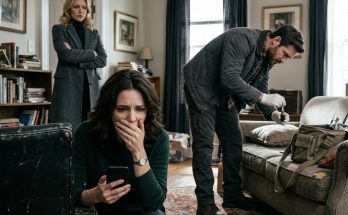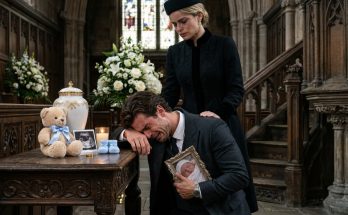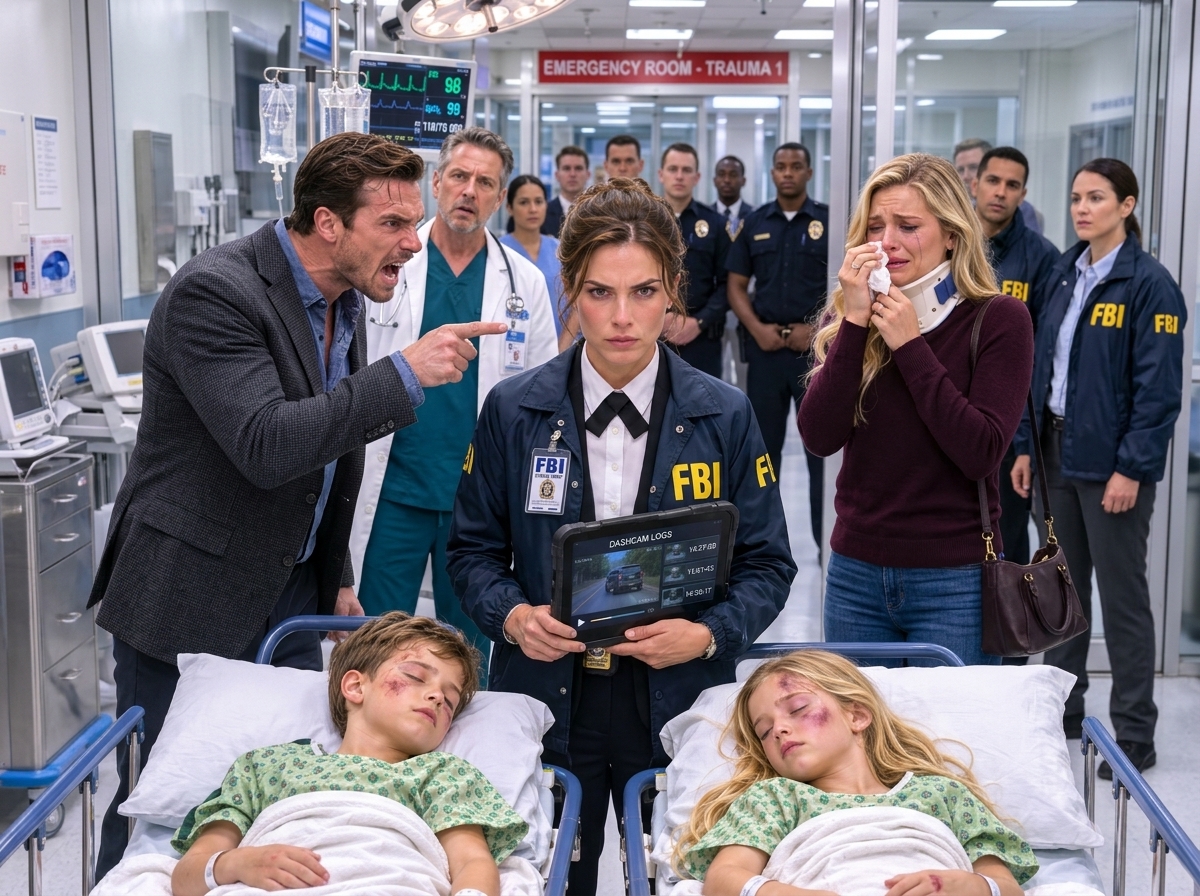
At 5:10 p.m., Highway Patrol reported a head-on collision on Highway 101 carrying my 7-year-old twins, driven by my husband’s mistress flashing a fake military dependent card. My husband swore they were camping. At the hospital, he sneered: “She’s an upgrade; you were too busy deploying overseas to care about your kids!” I didn’t argue. I pulled out my Naval Intelligence badge and dashcam logs, exposing the dark truth that the crash was no accident, but…
1. The Shattered Horizon
The air inside a Sensitive Compartmented Information Facility does not breathe. It is recycled, dried, chilled to exactly sixty-two degrees, and scrubbed of radio frequencies, acoustic vibrations, and sunlight. For thirty-six hours, I had lived in that suspended synthetic twilight beneath Naval Air Station North Island , staring through the glare of high-resolution monitors as encrypted satellite feeds tracked irregular surface movements across the Strait of Malacca. My uniform—service khakis, pressed and crisp despite the endless shifts—felt like an exoskeleton. On my collar, the gold oak leaves of a Lieutenant Commander in the Office of Naval Intelligence caught the fluorescent tube light.
To the Navy, I was an analyst with an uncanny aptitude for pattern recognition. I was the officer who could stare at a dozen disconnected data points—a sudden spike in maritime diesel purchases, an anomalous cargo manifest filed in Port Klang, an unlisted call from a burner terminal in Dubai—and identify the exact moment a merchant freighter transformed into a sanctions-busting ghost ship.
To my seven-year-old twins, Cole and Maya , I was the voice that read The Velveteen Rabbit through the static of satellite-relayed phone lines from five thousand miles away, promising that every deployment had an end.
And to my husband, Derek , I had become a financial instrument and a convenient scapegoat.
My secure government device sat in its shielded docking station on the desk. At 2:15 p.m., my personal phone, left in the SCIF’s entry lockboxes in compliance with DOD protocol, had received a single text. I had only read it an hour ago, during my mandatory fifteen-minute chow break.
“Kids are roasting marshmallows,” Derek’s message had read. “Big Sur is gorgeous. Cell service is spotty out here past the redwoods. Don’t call and ruin their peace with work paranoia. Let them be normal for once.”
I had stared at that message while leaning against the cold metal lockers in the secure vestibule, my thumb hovering over the glass. A knot had tightened behind my sternum—an instinct honed by twelve years of operational intelligence. Derek had insisted on this off-grid trip. For months, our home across the bay in Coronado had felt like a low-yield detonation site. Every dinner was salted with his quiet, cutting resentments: that my deployments emasculated him, that my shore duty still demanded too much vigilance, that my hazardous-duty pay and combat allowances were somehow an insult because they paid the mortgage on a home his failed architectural consulting firm couldn’t sustain.
“You treat this family like an auxiliary unit, Kendra,” he had hissed at me three nights before packing the SUV. “They need dirt. They need campfires. They need to forget the smell of ship diesel and their mother’s stiff collars. I’m taking them off-grid. Leave your tactical neuroses at the gate.”
I had yielded. I had swallowed the bile of his condescension, telling myself that perhaps he was right. Perhaps my children, with their wide hazel eyes and soft, questioning smiles, deserved a father who showed them the towering ancient redwoods rather than a mother who spent her evenings calculating missile trajectories and tracking illicit cargo manifests. I had signed the permission slips, transferred three thousand dollars from my personal savings into our joint account for their travel gear, and kissed Cole and Maya’s warm foreheads while they slept before my 0400 muster.
Now, at 5:10 p.m. on a rain-slicked Tuesday, the SCIF’s secure landline buzzed with a low, dual-tone priority ring.
I picked up the handset, pressing the receiver to my ear with practiced military neutrality. “Lieutenant Commander Hayes, Maritime Watch.”
“Kendra? It’s Mark.” The voice belonged to Commander Mark Lawson, the base watch commander and a longtime friend. His voice lacked its usual dry, professional banter. It sounded strained, thin, as though he were forcing words past an obstruction in his throat. “Step out of the vault. Right now. You need to take a call at the liaison desk.”
“Mark, I’m mid-cycle on an intelligence packet for Pacific Fleet—”
“Leave the packet, Kendra. Hand it to the watch supervisor. You need to come out to the quarterdeck immediately.”
The synthetic cold of the room seemed to plunge straight through my ribs. I logged out of my terminal with three mechanical keystrokes, gathered my access badge, and badged through the three-inch steel blast door.
The quarterdeck was quiet, save for the rhythmic drumming of an unseasonable late-autumn storm lashing the hangar bays across the tarmac. Outside, the Pacific was churning gray and vicious. Mark stood by the watch officer’s console, holding a receiver. A California Highway Patrol liaison officer stood beside him, his peaked hat resting on the desk, his yellow reflective slicker dripping rain onto the gray linoleum.
“Commander Hayes?” the CHP officer asked softly. His badge read Sgt. Miller . He didn’t look at my gold oak leaves; he looked at my eyes with the dreaded, universally recognized gravity of a law enforcement officer about to tear a human life into shreds.
“Yes,” I said. My voice did not shake. In moments of catastrophic threat, the military training does not fail; it erects an interior bulkhead, compartmentalizing shock to preserve operational function. “What happened?”
“Ma’am, at approximately 1615 hours, California Highway Patrol Dispatch Santa Barbara received multiple 911 calls regarding a Code 3 catastrophic multi-vehicle collision on Highway 101 , southbound near the Gaviota tunnel,” Miller said, reading from a damp notebook. “A silver Lincoln Navigator registered to Derek Hayes crossed the center median under high velocity, shearing into the side of a commercial flatbed tractor-trailer.”
The room seemed to drop its atmospheric pressure. Big Sur? The Gaviota tunnel was more than two hundred miles south of Big Sur. Derek had claimed they were deep in the wilderness near Pfeiffer State Park.
“My children,” I whispered, the bulkhead holding, though I could hear the metal groaning under the water pressure. “Cole and Maya. Were they in the vehicle?”
“Yes, ma’am. Two pediatric trauma patients were extricated using hydraulic rescue tools. Both are currently being airlifted by Calstar to the Pediatric Intensive Care Unit at Santa Barbara Cottage Hospital . They are listed in critical condition.”
“And Derek?”
Sergeant Miller hesitated. His eyes flicked to Commander Lawson, then back to mine. “Mr. Hayes was not in the vehicle, Commander.”
A violent discord struck my brain. “What do you mean he wasn’t in the vehicle? He was driving. He took them.”
“The driver of the vehicle was a female civilian,” Miller said, his tone turning acutely clinical. “She survived the impact due to late driver-side side-curtain airbag deployment. Upon extraction, she presented a military dependent credential to emergency personnel, attempting to claim immediate medical priority and legal custody of the minors. She identified herself as your dependent.”
Miller reached into his slicker and pulled out a clear evidence bag, sliding it across the counter.
Inside the plastic lay an altered Uniformed Services Identification Card—my old, expired Geneva Convention card from three years ago. The laminated face had been peeled back with razor precision. My photograph had been excised. In its place was the smiling, heavily contoured face of an unfamiliar brunette with dyed platinum highlights and sharp, predatory cheekbones.
The name typed across the bottom of the card was not Kendra Hayes.
It read: Danica Brooks .
Attached to the corner of the plastic sleeve was a small, high-frequency transponder—the private encrypted gate pass keyed directly to my personal vehicle and my family home on the naval amphib base.
“Ma’am,” Sergeant Miller asked, his voice deadened by the rain outside, “do you know who this woman is?”
I stared through the plastic at the face of the stranger who had just run my seven-year-old twins under the wheels of a fifty-ton commercial semi-truck while flashing my own forged identity to the paramedics.
Before I could answer, Miller’s mobile radio chirped. A voice from the Santa Barbara Major Accident Investigation Team cut through the static: “Dispatch, update on the 101 Gaviota incident. The Lincoln’s secondary vehicle search turned up an unregistered firearm, two opened bottles of high-end bourbon, and a forged power of attorney naming the driver legal guardian of the pediatric victims. The registered owner, Derek Hayes, has just checked into the trauma center waiting room via private Uber.”
2. The Emergency Room Ambush
The Navy twin-engine C-26 transport touched down at Santa Barbara Municipal Airport forty-four minutes later through an atmospheric river that whipped the runway lights into bleeding streaks of yellow and red. I didn’t take an ambulance; I rode in the front seat of a marked CHP cruiser with its siren screaming a raw, continuous wail up the curves of the canyon toward the hospital.
I was still in my service dress whites. I had changed in the hangar locker room at North Island because I refused to walk into that hospital as Derek’s broken, supplicating wife. If my children were bleeding behind the double doors of an emergency department, they did not need a panicked civilian mother collapsing under the fluorescent lights. They needed the full, crushing weight of the United States Armed Forces standing between them and whatever monster had done this.
The emergency wing of Santa Barbara Cottage Hospital smelled of antiseptic bleach, cauterized tissue, and the unmistakable metallic iron scent of fresh blood. The Pediatric Intensive Care Unit was cordoned off behind heavy magnetic security doors.
Through the safety glass of the trauma bay, I saw them.
Maya lay on the left-hand gurney, her tiny body pinned beneath an intricate web of clear intravenous lines, chest drainage tubes, and an intracranial pressure sensor drilled directly into the crown of her shaved, honey-brown hair. Her left leg was encased in an external fixation frame—steel rods drilled directly through bone to stabilize a shattered femur. Across the narrow bay, Cole was intubated, his small chest rising and falling to the mechanical hiss-click of a pediatric ventilator, his face bruised into an unrecognizable tapestry of violet and black.
My heart didn’t break; it turned into an iron anvil falling through my stomach. I reached out, my fingers trembling slightly as they touched the cold glass divider. Hold on, I thought into the silence. Just hold on. Mommy is on the perimeter.
“Kendra!”
The voice was not a comfort; it was an accusation hurled across the sterile corridor.
I turned slowly.
Derek was marching toward me down the hall. He was wearing an Italian cashmere sweater that had cost eight hundred dollars—purchased, I remembered with instantaneous, forensic clarity, two weeks after my hazardous-duty deployment allowance had cleared our joint checking account. His eyes were bloodshot, his jaw stubbled, and he reeked of small-batch bourbon and stale panic.
Three paces behind him, trailing like an insolent shadow, walked the woman from the evidence bag.
Danica Brooks looked remarkably intact for someone who had just rolled a four-ton luxury SUV across an interstate median. She wore an open-collared silk blouse, white designer denim, and a pristine foam cervical neck brace that looked as though it had been purchased from a boutique rather than applied by an emergency medical technician. She was clutching an iced caramel macchiato in one manicured hand, while her other hand casually toyed with a heavy brass key fob—the ignition key to my Lincoln.
Derek didn’t look at the trauma bay window. He didn’t ask if Cole’s lungs were holding pressure. He didn’t ask if Maya’s intracranial monitor had stabilized. He closed the distance until his face was six inches from mine, his voice booming through the quiet corridor, deliberately weaponizing the presence of two attending physicians, a social worker, and three hospital security officers who had followed him from the lobby.
“You have some nerve showing up here in your costume!” Derek sneered, his spit spraying across the pristine gold buttons of my dress uniform. “You think putting on your ribbons makes you a mother? You abandoned these kids! You spent eight months out of the last year playing GI Jane in the Persian Gulf while Danica and I were actually doing the work of raising them!”
The hospital social worker stepped forward, her hands raised. “Sir, please keep your voice down. This is a critical pediatric care floor—”
“No! I will not keep my voice down!” Derek roared, playing to the room, his eyes wide with a performative, theatrical fury that masked a deep, vibrating terror. “Let everyone know who this woman is! She’s an absentee mother! She cares more about her security clearances and her Navy pensions than her own flesh and blood. Danica was the one who packed their lunches! Danica took them to their soccer matches! She’s an upgrade in every single way—warmer, prettier, and actually present!”
Danica shifted behind him, tilting her oversized designer sunglasses down the bridge of her nose. Her lips curled into an arrogant, pitying smirk. She raised her coffee cup toward me in a mock toast, her eyes sweeping over my uniform with open contempt.
“You were too busy deploying overseas to care about your own kids, Kendra,” Derek shouted, pointing a shaking, nicotine-stained finger directly at my chest. “You drove them to this! If they die on those tables tonight, their blood is on your uniform!”
The corridor fell into an appalled, suffocating silence. A young nurse near the nursing station gasped, her hand flying to her mouth. The attending trauma surgeon, Dr. Aris Thorne, paused with his clipboard, staring at Derek with cold professional disgust.
I stood completely motionless. My hands rested naturally along the seams of my white trousers. My pulse was sixty beats per minute.
When an enemy asset mounts an overt, emotionally erratic diversionary assault, it is never an act of strength. It is an act of desperation designed to conceal an operational compromise. My mind shifted instantly into threat assessment mode, scanning Derek’s physical posture: dilated pupils, micro-tremors in his right index finger, rapid carotid pulse visible beneath his collar. Then my eyes shifted to Danica Brooks.
Her neck brace was unfastened by two inches at the lateral velcro strap—it wasn’t providing cervical support; it was a costume prop. She wasn’t limping. Her designer purse, an oversized leather tote slung over her shoulder, hung unzipped.
I didn’t yell. I didn’t weep. I didn’t strike him. To strike him would be to concede the battlefield to his chosen terrain.
“Doctor Thorne,” I said, my voice cutting through Derek’s theatrical tirade with the crisp, diamond-edged clarity of a commander on a bridge deck. “I am Lieutenant Commander Kendra Hayes, mother and legal custodian of Maya and Cole Hayes. Has my husband signed any medical consent documentation since his arrival?”
“No, Commander,” Dr. Thorne replied immediately, stepping around Derek as if the man were a pile of refuse on the linoleum. “He refused to authorize the cranial burr hole for your daughter without a financial disclosure agreement from the hospital’s risk management team. We were waiting for next of kin.”
Derek’s face flushed an ugly, mottled crimson. “I’m the father! I have legal custody—”
“You have secondary status under the Defense Enrollment Eligibility Reporting System,” I said, looking directly into his watery, bloodshot eyes. “And you have two minutes to clear this hallway before I have base security escort you out in zip-ties.”
I stepped past him. I didn’t brush his shoulder; I moved with the precise, deliberate spatial dominance of an officer boarding a hostile vessel. Derek reached out to grab my arm, but the CHP officer who had accompanied me stepped between us, his hand resting firmly on the butt of his sidearm.
“Step back, sir,” the trooper muttered. “Right now.”
I walked toward the trauma bay doors. As I passed Danica Brooks, her hip brushed against the edge of the consultation desk. Her unzipped leather tote swung open slightly under the fluorescent light.
Nestled inside, beneath a silk scarf, lay an inexpensive, generic prepaid Android burner phone.
The screen illuminated with an aggressive, continuous vibration. A preview banner flashed across the locked display:
UNKNOWN SENDER (SIGNAL): “Tow driver dropped the Lincoln at the impound yard. Did the side-impact crush the rear booster seats like we planned? Briggs wants his cash before the CHP accident report clears.”
3. The Tactical Counter-Offensive
I didn’t sleep. Sleep is a luxury reserved for those who are not at war.
By 0200, the pediatric neurosurgical team had completed Maya’s emergency craniotomy. The intracranial pressure monitor was holding at eleven millimeters of mercury—well within the acceptable margin of survival. Cole had been transferred out of the trauma bay into PICU Bed 4, his bilateral compound fractures realigned with titanium plates. They were alive. They were broken, they were chemically paralyzed, but they were breathing.
I sat in an empty private consultation room four doors down from the PICU. On the laminate conference table, I had deployed my military-grade Panasonic Toughbook, connected via a restricted satellite transceiver to the secure network at North Island.
Beside me stood Special Agent Garrett Rhodes of the Naval Criminal Investigative Service (NCIS) . Rhodes was forty-five, with short-cropped silver hair, the physique of an ex-Marine sniper, and eyes that had spent twenty years cataloging the worst crimes committed by and against uniformed personnel.
“The federal nexus is established, Kendra,” Rhodes said softly, setting a cardboard cup of black coffee next to my elbow. “The moment Danica Brooks presented your altered Geneva Convention credentials to the first responders to secure custody of the children and demand military hospital transfers, she committed a violation of 18 U.S. Code § 1028—Aggravated Identity Theft—and 18 U.S. Code § 498, forging military credentials. That pulls this case out of local jurisdiction and drops it squarely into federal territory. We have full investigative authority.”
“I don’t just want her for identity theft, Garrett,” I said. My fingers moved across the keyboard with rapid, rhythmic precision, pulling real-time telemetry files from the California Department of Transportation and the National Highway Traffic Safety Administration. “Identity theft carries two years. I want them for premeditated capital murder.”
“You think Derek was in on an execution?”
“I don’t think. I analyze.” I spun the laptop screen toward him.
The screen displayed a three-dimensional wireframe reconstruction of the crash site at mile-marker 88 on Highway 101, alongside the raw hex-code telemetry downloaded directly from the Lincoln Navigator’s Electronic Data Recorder—the vehicle’s “black box”—which NCIS had seized from the CHP impound lot twenty minutes prior under a federal search warrant.
“Look at the throttle position sensors,” I pointed at the jagged red graph spiking across the bottom of the screen. “The speed limit through that construction zone near Gaviota is fifty miles per hour due to rain and standing water. Danica was cruising at fifty-four miles per hour on adaptive cruise control. At precisely 16:14:02, the cruise control was manually disengaged. Not by braking. By throttle override.”
Garrett leaned closer, his eyes narrowing. “She accelerated?”
“From fifty-four miles per hour to seventy-two miles per hour in two-point-four seconds,” I said, my voice dead and cold. “Look at the steering angle sensor. Zero counter-steering. If she hydroplaned, the steering wheel would show violent oscillatory inputs as the driver fought for traction. There were none. Danica maintained a fixed three-degree left-hand yoke input. She intentionally steered the vehicle out of the southbound lane, across the rumble strips, through the plastic delineator pylons, and directly into the northbound oncoming lane.”
“And the truck?”
“A 2018 Peterbilt flatbed transport owned by an independent logistics carrier named Briggs Hauling LLC ,” I pulled up the commercial registration and the driver’s profile. “The driver is a man named Sean Briggs . Danica didn’t hit him head-on. She swung the Navigator laterally at the last half-second. She protected her own driver-side safety cell while swinging the passenger-side rear—the exact quarter-panel where Cole and Maya were strapped into their booster seats—directly under the truck’s steel under-ride guard.”
Garrett let out a slow, sharp hiss between his teeth. “Christ, Kendra. That wasn’t an accident. That was a surgical strike. But why? Derek’s an idiot, but is he a psychopath? Why kill his own children?”
“Because of this,” I typed an authorization override, accessing our joint banking records, my personal DOD trust accounts, and an unlisted offshore brokerage query I had requested from the Treasury Department’s Financial Crimes Enforcement Network (FinCEN) an hour ago.
The data cascaded down the screen in harsh green text.
Derek’s architectural firm hadn’t just failed; it had evaporated into an abyss of catastrophic debt. Over the past sixteen months, while I was deployed aboard the USS Abraham Lincoln in the Arabian Sea, Derek had lost over seven hundred and fifty thousand dollars to an unregulated, offshore cryptocurrency derivatives platform based in Belize. To cover the margin calls, he had secured high-interest hard-money loans from predatory private lenders in Las Vegas.
“He was drowning,” I said. “He had exhausted his credit lines. He had drained my deployment savings. He had taken two unauthorized home-equity loans against our Coronado property by forging my signature on notary affidavits. And then, three weeks ago, this happened.”
I opened a scanned PDF file obtained via emergency subpoena from Northwestern Mutual Life Insurance.
An application for a supplemental pediatric life insurance policy.
Three million dollars per child.
Signed: Kendra Hayes .
The electronic IP address used to submit the digital signature had originated not from my base terminal at North Island, but from a private residence in La Jolla: the registered home address of Danica Brooks.
“Danica isn’t just his mistress,” I told Garrett, my fingernails biting into the palms of my hands until I felt the skin break. “She’s a former paralegal. She was disbarred two years ago in San Diego County for orchestrating staged slip-and-fall syndicates with crooked chiropractors. She knows insurance law inside and out. She knew that accidental death policies on minors pay out double if the death occurs during a commercial transport incident. Six million dollars total. With me out of the picture—either labeled an absentee mother or gaslit into an institutional breakdown—Derek and Danica walk away with six million dollars in cash, untaxable, cleared in sixty days.”
Garrett stood up straight, his face darkening with a terrible, righteous fury. “I’ll call the U.S. Attorney right now. We’ll take them both into federal custody in the lobby.”
“No,” I said, shutting the laptop screen with a quiet click . “Not yet. If we arrest them now, Derek’s civil attorneys will post bail before the sun comes up. They’ll claim Danica was just a reckless driver and that the insurance policy was Derek’s legitimate estate planning. I don’t want them out on bail. I want them caught in the jaw of their own trap. I want them to walk into the light where they think they’ve won, and I want to destroy them so completely that neither of them ever sees the sun again.”
Before Garrett could respond, the heavy glass doors of the consultation room swung open.
A California state marshal stepped into the room, holding a stamped legal folder. He looked uncomfortable, his eyes darting between my uniform and the NCIS credentials resting on Garrett’s belt.
“Lieutenant Commander Kendra Hayes?” the marshal asked.
“I am.”
“Ma’am, I have been ordered to serve you with an emergency ex-parte protective order and custody decree issued forty-five minutes ago by the Santa Barbara County Family Court, filed on behalf of your husband, Derek Hayes.”
I took the folder. The ink was still fresh from the courthouse fax machine.
Derek had petitioned the night-duty judge for immediate, sole emergency legal and physical custody of Cole and Maya Hayes. The affidavit alleged that I was suffering from acute, combat-related operational combat fatigue, that my presence at the hospital was causing severe emotional destabilization to the children, and that I constituted an imminent flight risk with military resources.
The accompanying restraining order was explicit: Lieutenant Commander Kendra Hayes is hereby ordered to vacate the premises of Santa Barbara Cottage Hospital immediately and maintain a distance of not less than five hundred yards from the minor children pending an emergency evidentiary hearing at 0900 hours in the hospital administration auditorium.
Attached to the decree was a second petition, signed by Derek’s civil counsel: an immediate request to terminate life support protocols for Maya Hayes if her neurological baseline did not show positive improvement within twenty-four hours, citing “the emotional suffering of the family.”
4. The Trap Springs
The hospital administration auditorium on the fourth floor had been converted into an impromptu court annex. The morning sun, breaking through the storm clouds over the Santa Ynez mountains, spilled cold, pale light through the wide glass windows, illuminating the mahogany conference table, the state seal pinned to the wall, and the small cadre of hospital ombudsmen, county child welfare workers, and private attorneys who had gathered for the 0900 emergency hearing.
Derek sat at the petitioner’s table. He had shaved, combed his hair back with pomade, and changed into a bespoke charcoal-gray wool suit. He sat with his hands clasped before him, projecting the image of a shattered, dignified father fighting for his children against the cold machinery of the military.
Beside him sat Danica. She had removed her sunglasses. She wore a modest navy blazer, no jewelry, and an expression of soft, angelic sorrow that would have fooled any judge in the state of California. Her legal counsel, a slick, silver-tongued civil litigation attorney named Richard Vance, sat to her left, tapping his gold Montblanc pen against a leather-bound legal pad.
“Your Honor,” Vance was saying to the administrative family court referee, Judge Harrison, who sat at the head of the long table via an authorized remote judicial link, “my client, Mr. Hayes, has acted solely in the best interests of his children. The mother, Commander Hayes, is an active-duty intelligence officer whose deployments have rendered her a stranger to these children. Her sudden appearance, brandishing military authority to intimidate hospital staff and override the father’s parental choices, is unconscionable. We are asking for an immediate affirmation of the protective order and full medical guardianship transferred to Mr. Hayes and his designated caregiver, Ms. Brooks.”
Derek dabbed a clean linen handkerchief at the corner of his dry eye. “I only want them to be safe, Your Honor,” his voice trembled with rehearsed pathos. “Kendra’s world is violence, secrets, and war. My children were terrified of her deployments. Danica has been their true mother. If Commander Hayes is allowed near them, she will drag them into military custody. She’s already trying to use base police to silence us!”
Judge Harrison adjusted his spectacles on the screen. “The court is deeply concerned by these allegations, Mr. Vance. Has Commander Hayes been served? Why is she not present?”
“Commander Hayes was served three hours ago, Your Honor,” Vance said smoothly, checking his Rolex. “Her failure to appear indicates her contempt for civil authority. We ask that you issue an immediate warrant for her removal from the hospital perimeter.”
The heavy double oak doors at the back of the auditorium did not open slowly; they cracked open like the breech of a naval cannon.
Every head in the room whipped around.
I walked down the carpeted center aisle. I was not alone.
I wore my Service Dress Whites, the gold aiguillette of a flag officer’s staff pinned to my shoulder, my ribbons gleaming beneath the lights: the Defense Meritorious Service Medal, the Navy Commendation Medal with combat valor device, the Global War on Terrorism Expeditionary Medal. My posture was rigid, my chin level, my stride measured to exactly thirty inches per step.
Flanking me on my right was Special Agent Garrett Rhodes, wearing his federal NCIS badge clipped to his breast pocket. Flanking me on my left was Assistant United States Attorney Marcus Vance—no relation to Derek’s lawyer, but a man known throughout the Central District of California as the Department of Justice’s most lethal financial crimes prosecutor.
Behind us walked two armed federal marshals and Sergeant Miller of the California Highway Patrol.
Derek stiffened, his face shifting from smug grief to an instinctive, animal twitch of alarm. “What is this? Your Honor, this is an administrative custody hearing! She can’t bring federal agents in here to intimidate this court!”
“Sit down, Derek,” I said. My voice wasn’t loud, but it possessed an operational authority that vibrated the oak paneling.
“Commander Hayes,” Judge Harrison’s voice crackled through the speakers, his tone sharp with confusion. “Explain this intrusion immediately, or I will hold you in summary contempt.”
“Your Honor,” Marcus Vance stepped forward, placing a thick, stamped federal indictment folder onto the mahogany table directly in front of Derek’s attorney. “I am Assistant United States Attorney Marcus Vance. I am here to inform this court that the jurisdiction of the Santa Barbara Family Court over the minors Cole and Maya Hayes is officially superseded pursuant to a federal arrest warrant issued thirty minutes ago by Chief Judge Elizabeth Martinez of the United States District Court for the Central District of California.”
Derek’s lawyer surged to his feet. “On what possible grounds? This is a civil domestic dispute!”
“On the grounds of conspiracy to commit wire fraud, aggravated identity theft, destruction of maritime and vehicular defense assets, and two counts of attempted premeditated murder,” Marcus Vance said flatly.
Danica Brooks froze. Her iced caramel macchiato sat forgotten on the table. The angelic sorrow drained from her face, leaving behind a sharp, rat-like mask of sheer panic.
“This is absurd!” Derek shouted, his voice cracking into a high, shrill register. He slammed his fist onto the table. “You’re making things up because you’re losing custody, Kendra! Tell them, Richard! Tell them she’s insane!”
“I don’t need to tell them anything, Derek,” I said calmly, stepping to the podium at the front of the auditorium. I opened my Toughbook, jacked the HDMI cable into the wall port, and tapped a single key.
The twin eighty-inch high-definition presentation screens flanking the judicial bench hummed to life.
“Exhibit Alpha,” I said, my finger tapping the touchpad.
The screen split into four synchronized windows.
Window One displayed the high-definition dashcam video retrieved from the commercial flatbed driven by Sean Briggs. The wide-angle lens showed the rain-drenched stretch of Highway 101, the wipers clacking rhythmically. Suddenly, the silver Lincoln Navigator appeared on the left, cutting through the median pylons with terrifying, deliberate precision.
Window Two displayed the Navigator’s internal black-box telemetry, synchronized to the millisecond.
“As the court can see,” I said, my voice clinical, cold, and absolute, “the Lincoln accelerated from fifty-four to seventy-two miles per hour two seconds prior to contact. The brakes were never touched. The steering input was held at precisely three degrees left—just enough to clear the truck’s front bull-bar and swing the rear passenger compartment directly beneath the under-ride guard.”
Window Three opened: an audio waveform accompanied by a live federal interrogation feed from the Santa Barbara County Sheriff’s Department.
On screen sat the truck driver, Sean Briggs , his hands cuffed to the table, weeping openly into a paper towel.
“I didn’t want to do it,” Briggs’ recorded voice filled the auditorium, thick with panic and phlegm. “Danica approached me two months ago at a truck stop in Oxnard. She told me she had a sucker husband who owed hundreds of thousands to offshore loan sharks. She said they had taken out a massive supplemental policy on the kids. She promised me fifty grand in cash from the payout. She told me she’d position the SUV so the impact would crush the rear booster seats instantly. She said the kids wouldn’t feel a thing and it would look like a hydroplane accident in the storm. Derek knew. He helped her stage the route. He gave her Kendra’s old military IDs to forge medical priority so they could cash out before the mother ever landed!”
Derek’s breath caught in his throat with a horrific, wet gasp. He turned his head toward Danica, his skin turning a sickly, translucent white. “You… you told me Briggs was just supposed to clip the rear quarter-panel! You told me it was a minor settlement claim! You said no one would get seriously hurt!”
Danica sprang from her leather chair like a wild animal, her manicure curving into talons as she lunged across the table at Derek’s throat. “Shut up! Shut your mouth, you weak, pathetic coward! You signed the insurance policies! You gave me her military credentials from her jewelry box! You were the one who wanted the crypto debts cleared!”
The two federal marshals moved with instantaneous, brutal efficiency.
One marshal grabbed Danica by the shoulder, driving her down across the mahogany table with a heavy, concussive thud, twisting her arms behind her back until the steel cuffs clicked shut. The second marshal forced Derek down onto the floor, planting a combat boot between his shoulder blades as Derek began to sob, his bespoke suit tearing at the seam under his armpit.
“Get off me!” Derek shrieked, his cheek pressed flat against the carpet, his tears pooling on the floorboards. “Kendra! Kendra, please! She tricked me! She told me she could fix our finances! I’m the father of your children! You can’t do this to me!”
I walked over to where he lay pinned beneath the marshal’s boot. I looked down at him. I didn’t feel rage. I didn’t feel hatred. Rage and hatred are emotions reserved for human beings who possess a soul. I looked at Derek the way an intelligence officer looks at a neutralized hostile asset—with absolute, sterile finality.
“You told me she was an upgrade, Derek,” I whispered, loud enough only for him to hear over his frantic hyperventilating. “You told me she was warmer, prettier, and actually present.”
I knelt down, my dress whites rustling slightly, until my face was three inches from his ear.
“You forgot one detail, Derek. When you try to kill a naval officer’s children, you’d better make sure she doesn’t survive the deployment.”
The marshal hauled Derek to his feet. As they dragged him toward the double doors, his shoes scuffing the carpet, Derek frantically screamed back over his shoulder: “I’ll cooperate! Garrett! Marcus! I’ll give you Danica’s offshore accounts! I have the keys to her safe-deposit box in Zurich! I’ll trade everything for immunity!”
Danica Brooks, her hair disheveled, a bloody smear across her lip where it had hit the mahogany table, twisted her neck toward him, spitting a crimson glob of saliva directly onto the back of his neck.
“Go ahead, Derek!” she hissed, her voice a cracked, venomous screech that echoed down the administrative corridor. “Tell them where the money went! Tell her about the trust funds! And while you’re at it, Derek, tell her who gave the GPS coordinates for her supply convoy in the Red Sea last December!”
5. Justice and the Long Road Back
The wheels of federal justice, once set into motion by an ironclad intelligence packet, do not grind slowly; they crush instantaneously.
The trial did not last three weeks; it lasted four days. Faced with Sean Briggs’ complete videotaped confession, the unalterable telemetry from the Lincoln Navigator’s black box, and the encrypted Signal transcripts retrieved from Danica’s burner device by the ONI Cyber Warfare Division, the defense crumbled before opening statements were completed.
Danica Brooks was convicted of two counts of attempted premeditated murder, conspiracy to commit capital murder for pecuniary gain, aggravated identity theft, and federal wire fraud. The judge, noting her predatory history and utter absence of remorse, sentenced her to life imprisonment without the possibility of parole at the Federal Correctional Institution, Dublin.
Derek Hayes was convicted as an active co-conspirator. His desperate attempts to claim he was merely an unwitting participant in a minor insurance scam were shredded by his own electronic signatures, the five hundred thousand dollars in crypto-margin calls traced to his personal IP address, and the testimony of his Las Vegas bookmakers. He was sentenced to life imprisonment with a mandatory minimum of forty-five years at the United States Penitentiary, Victorville.
The foreclosed house in Coronado was sold under a federal forfeiture decree, but because Marcus Vance successfully argued that the property had been bought primarily with my naval allowances and family inheritance, every single dollar of equity was restored to a court-protected trust established exclusively for Cole and Maya.
Yet, as the prison vans rolled out of the federal courthouse in Los Angeles, I felt no sense of victory. True victory cannot be found in a sentencing order or the click of a cell door closing behind a monster. True victory is measured in the millimeters of bone growth, the clearing of cerebral fluid, and the terrifying, fragile journey of rebuilding a child’s shattered sense of reality.
Two weeks after the sentencing, I walked into the administrative offices of the Chief of Naval Personnel at the Pentagon.
I had been offered a promotion to Commander. I had been offered the directorship of the Maritime Intelligence Task Force in Bahrain—a posting that would have guaranteed my eventual elevation to the flag officer ranks.
I took the promotion paperwork, folded it neatly, and placed it on the Admiral’s desk alongside a formal request for an immediate transfer to the shore-based instruction cadre at the Naval Postgraduate School in Monterey, California .
“Kendra,” the Admiral had said, looking at me over his gold-rimmed reading glasses with genuine concern. “You’re throwing away a fast-track to Admiral. You have the sharpest analytical mind in the Pacific Fleet.”
“With respect, Admiral,” I had replied, standing at rigid attention, “my country has three hundred thousand active-duty sailors to defend its perimeters. My children only have one mother to hold theirs. I’m going home.”
Eight months after the crash on Highway 101, the morning fog hung low and damp over the outdoor physical therapy pavilion at the Monterey Children’s Rehabilitation Center. The scent of wild eucalyptus and coastal brine drifted across the courtyard.
Cole stood between two parallel chrome rehabilitation bars. His legs, scarred with long, pale surgical lines where titanium plates now bound his shattered bones, were encased in carbon-fiber pediatric braces. His small hands, white-knuckled and trembling, gripped the metal rails. His face was slick with sweat, his lower lip quivering with a pain that no seven-year-old boy should ever have to understand.
“I can’t, Mom,” he whispered, a tear cutting a clean path through the salt on his cheek. “It feels like needles in my knees. I can’t take another step.”
Five feet away, sitting in a customized pediatric wheelchair, Maya watched him.
She had survived the craniotomy, but the trauma of the impact had locked her behind a wall of post-traumatic mutism. For seven months, she had not spoken a single syllable. She had communicated only through small, desperate tugs on my sleeve and wide, terrified stares whenever the sound of screeching tires drifted in from the nearby highway.
I walked to the end of the parallel bars. I knelt down on the hard rubber matting.
I was wearing a simple civilian sweater and worn denim—no ribbons, no medals, no gold oak leaves. I reached into my pocket, pulled out the gold officer’s crest I had worn on my patrol cap for a decade, and laid it gently on the rubber floor between Cole’s feet and mine.
“Cole,” I said. My voice was low, soft, but filled with the unbreakable certainty that had once guided warships through minefields. “Look at me, sweetheart.”
He raised his wet, exhausted eyes to mine.
“When I was out in the deep water, three thousand miles away, thinking of your voice was the only thing that kept air in my lungs,” I said, reaching out to place my palms flat on the matting. “You don’t have to be a soldier, Cole. You don’t have to be brave. You don’t have to carry the whole world. You just have to take one step toward me. That’s all. Just one.”
“It hurts, Mom,” he sobbed.
“I know it hurts, baby. But you are not alone in the dark anymore. There are no deployments. There are no ships leaving the dock. I am right here. I am holding the perimeter, and nothing is ever going to hurt you again.”
Cole looked at my open hands. He looked at the gold crest on the floor.
He inhaled a ragged, shaking breath, set his jaw with the exact same stubborn determination I had seen in my own mirror for twenty years, and dragged his left foot forward.
Click. The carbon-fiber brace locked into place.
Then the right foot. Click.
He took three stumbling, agonizing steps before his knees gave way. He didn’t hit the rubber floor. I surged forward, catching his small, trembling frame against my chest, wrapping my arms around his shoulders, burying my face in his damp hair as he wept against my neck.
And then, from behind us, a sound broke through the coastal fog.
It was small. It was high-pitched. It was rusty from seven months of silence, but it rang through the eucalyptus trees like a silver bell.
Maya was clapping her hands.
“Go, Cole,” she whispered. Her voice was cracked, paper-thin, but clear. “Go… Mommy has us.”
I froze. Cole lifted his head from my shoulder.
We turned together to look at Maya. She was sitting upright in her wheelchair, tears streaming down her smiling cheeks, her small hands beating together in pure, unadulterated joy.
I pulled them both into my arms right there on the rubber floor of the therapy pavilion. The monitors, the hospital smell, the shattered glass of Highway 101, the venomous sneers of Derek Hayes—all of it washed away into the cold Pacific tide, leaving behind only the warm, rhythmic beating of three unbroken hearts.
Two weeks later, the final foreclosure and inventory clearance of Derek’s off-base commercial storage unit in San Diego was finalized.
As the legal executor of the remaining domestic estate, I was required to inspect the remaining property before the unit was auctioned. Most of it was garbage: broken golf clubs, empty bourbon crates, and rolled-up blueprints for speculative houses that were never built.
In the back corner, tucked beneath a stained drop cloth, sat a locked, fireproof steel strongbox.
NCIS had already cleared the unit of primary criminal evidence, leaving the box marked as Civilian Personal Effects . I used a heavy pry bar from the trunk of my car to snap the brass lock.
Inside lay three thick, leather-bound personal journals belonging to Derek.
Beneath them was an unopened, certified envelope from the Department of Veterans Affairs , dated four days before the crash.
I tore the envelope open. Inside was a formal request, signed by Derek with a forged power of attorney, attempting to cancel my military survivor benefit plan and redirect my naval death gratuity into a private shell company registered in the Cayman Islands under the name Aegis Holdings LLC .
I frowned, a cold, analytical chill returning to my spine.
I opened the first leather journal. On the final page, written in Derek’s frantic, erratic handwriting two nights before he sent my children toward the Gaviota tunnel, was a single entry:
“Danica says the truck driver is secured. But Briggs was never the primary contact. The man who set up the Cayman accounts isn’t an insurance broker. He’s the same logistics contractor who arranged the diversion of Kendra’s supply convoy in the Red Sea. He told me if Kendra dies, the kids have to go too, or the trust defaults back to the Department of the Navy. His name is Vance. Not Richard Vance. His brother: Rear Admiral Arthur Vance, Pentagon Logistics Command.”
6. Salt Air and Unbroken Ground
Eighteen months later.
The Monterey coast does not apologize for its climate. It offers no tropical illusions. The Pacific here is vast, indigo, and fierce, carving its way into granite headlands crowned with ancient, wind-twisted cypress trees that have survived two centuries of relentless gales by bending their branches low and anchoring their roots deep into the stone.
Our cottage sat on the bluffs just south of Pacific Grove , its cedar shingles weathered by the salt air into a soft, silvery pewter. A wrap-around wooden porch faced the water, bordered by wild rosemary and purple coastal sage that filled the morning air with a clean, sharp fragrance.
Every morning at 0630, I made breakfast in a kitchen that smelled of freshly brewed dark-roast coffee and cinnamon pancakes. There were no scrambled military alerts, no encrypted satellite terminals chirping in secure alcoves, no red-line briefings on foreign missile silos.
My work now was centered at the Naval Postgraduate School, four miles inland. As an associate professor of maritime intelligence analysis, I spent my days teaching young lieutenants and lieutenant commanders how to dissect satellite data, how to identify irregular patterns in international trade, and—most importantly—how to never lose their humanity to the cold arithmetic of operational command. My uniform hung in my bedroom closet, immaculate and honored, but I no longer wore it as an armor against my own life.
On the porch, a small cast-iron brazier sat cold on the stone pavers.
Beside it lay a cardboard box containing the final, toxic detritus of my past: the finalized state divorce decrees, the federal bankruptcy clearance certificates, the trial transcripts, and three framed photographs of Derek Hayes that had once sat on our mantle in Coronado.
I pulled a stainless-steel lighter from my pocket.
One by one, I fed the papers into the brazier. The divorce decree burned first, the blue legal stamps curling into black ash. Then the criminal trial transcripts, the descriptions of the impact on Highway 101 crumbling under the orange flame into harmless carbon flakes that caught the morning breeze and drifted out toward the ocean.
Finally, I picked up the photographs. Derek smiling on our wedding day in Annapolis; Derek holding Cole at his baptism; Derek standing before our Coronado house with a smug, self-satisfied grin.
I felt no hatred. Hatred requires an expenditure of energy, and Derek Hayes was no longer worth a single calorie of my spirit. He was an inmate number in a high-security federal penitentiary in the Mojave Desert, spending twenty-three hours a day in an eight-by-ten concrete cube, eating institutional soy loaf and scrubbing laundry for fifty cents an hour. Danica Brooks was serving her life sentence in Dublin, permanently stripped of her paralegal certificates, her designer clothes, and her vanity.
And Rear Admiral Arthur Vance?
When I had delivered Derek’s hidden journal to the Director of the Naval Criminal Investigative Service eighteen months ago, I hadn’t made a speech. I had simply placed the notebook on his desk alongside thirty-two pages of financial cross-referencing I had compiled over forty-eight sleepless hours.
The subsequent sweep by federal counterintelligence had dismantled an eight-million-dollar defense procurement fraud ring operating out of the Pentagon’s Bahrain logistics depot, resulting in the quiet court-martial and dishonorable dismissal of Vance and three civilian defense contractors before they could ever flee the country.
I dropped Derek’s photographs into the brazier. The plastic laminate blistered, blackened, and vanished into smoke.
Down on the sand, seventy feet below the bluff, the sound of laughter rose above the rhythmic roar of the breakers.
I leaned against the porch railing, holding my coffee mug in both hands, watching.
Cole was running along the wet sand at the water’s edge, chasing an energetic three-legged golden retriever we had adopted from the local shelter. His run was not perfect—there was a slight, almost imperceptible hitch in his right stride where the titanium plates supported his femur—but he was running. His cheeks were bright pink, his laughter ringing clear and wild against the cliff face as the dog splashed through the foam, barking joyously.
Maya sat near the dunes, her sketchbook balanced on her knees, her honey-brown hair whipping across her face in the salt breeze. She was twelve inches taller than she had been on that terrible night in Santa Barbara. She was singing—a soft, tuneful melody she had learned in her school choir, her voice strong and unbroken.
She looked up, saw me standing on the porch, and waved her charcoal pencil vigorously over her head.
“Mom!” she called out, her voice floating up the path. “Come look! The tide left something for us!”
I smiled, set my coffee mug on the cedar table, and walked down the weathered wooden staircase that wound through the ice plant to the beach. The sand was cool and firm beneath my sneakers.
As I reached the dunes, Maya jumped up, running toward me with her hand outstretched. She stopped before me, opening her small palm with a look of pure, breathless triumph.
Resting on her skin was a smooth, rounded pebble of sea glass, translucent and deep emerald-green. It was completely frost-surfaced, its edges soft and curved, without a single sharp corner remaining.
“Look, Mom,” Maya said, her hazel eyes wide with wonder. “The waves must have smashed an old bottle against the rocks a long time ago. It was probably broken into a hundred sharp pieces that could cut your feet. But the ocean kept rolling it around in the sand until it stopped being sharp. Now it’s beautiful. You can hold it as tight as you want, and it doesn’t hurt at all.”
I took the small green stone from her palm. It felt cool, solid, and utterly peaceful against my skin.
I looked up. Cole came charging up the slope of the dune, his sneakers kicking up wet sand, the dog bounding beside him. He threw his arms around my waist, burying his sandy forehead into my sweater with the fierce, unhesitating trust that had once been stolen from him in the dark.
“I beat him, Mom!” Cole panted, grinning up at me with his crooked front teeth. “Copper tried to cut the corner at the tide pool, but I out-sprinted him!”
“You did, sweetheart,” I whispered, wrapping one arm around his shoulders while Maya nestled against my other side, her head resting against my ribs.
I looked out across the Monterey Bay. The storm clouds that had haunted my family for two long, agonizing years were gone, burned away by the vast, clean light of the morning sun. The horizon was sharp, unbroken, and endless.
“You’re right, Maya,” I said softly, closing my fingers over the sea glass. “The storm can batter you against the rocks. It can break you into pieces. But it doesn’t get to decide what you become when the tide goes out.”
We stood there together on the salt-aired shore—unbroken, unafraid, and finally home.
As we turned to walk back up the stairs toward the cottage and the smell of breakfast, the civilian mobile phone in my pocket chimed with a low, discrete dual-tone vibration.
I pulled it out. It was a secure, encrypted data notification forwarded through the Office of Naval Intelligence’s priority liaison desk.
The screen illuminated with a message from the Director himself:
PRIORITY FLASH / EYES ONLY / HAYES, K., LCDR (RET):
“Commander Hayes: The secondary financial dossier you extracted from Derek’s offshore accounts in Zurich has just been cross-referenced by Interpol and the Department of Homeland Security. The shell company funding his cryptocurrency debts was an operational front for an international human-trafficking syndicate operating out of the Port of San Diego. Federal agents raided their primary warehouse forty minutes ago. Forty-two minors have been rescued from containerized transport. You didn’t just save Cole and Maya, Kendra. You just brought forty-two children home to their mothers. The perimeter is secure. Stand down, Commander. Fair winds and following seas.”
I stared at the glowing screen for three seconds. Then, with a slow, deep breath of cold Pacific air, I tapped Delete , slipped the phone back into my pocket, and took my children’s hands as we walked up the stairs into the warmth of the morning sun.
If you want more stories like this, or if you’d like to share your thoughts about what you would have done in my situation, I’d love to hear from you. Your perspective helps these stories reach more people, so don’t be shy about commenting or sharing.