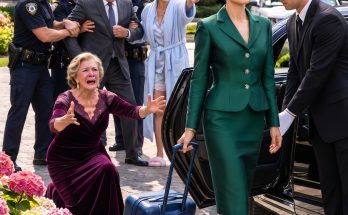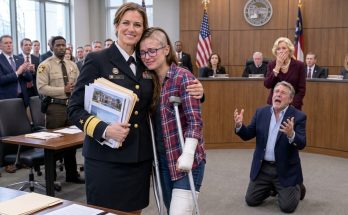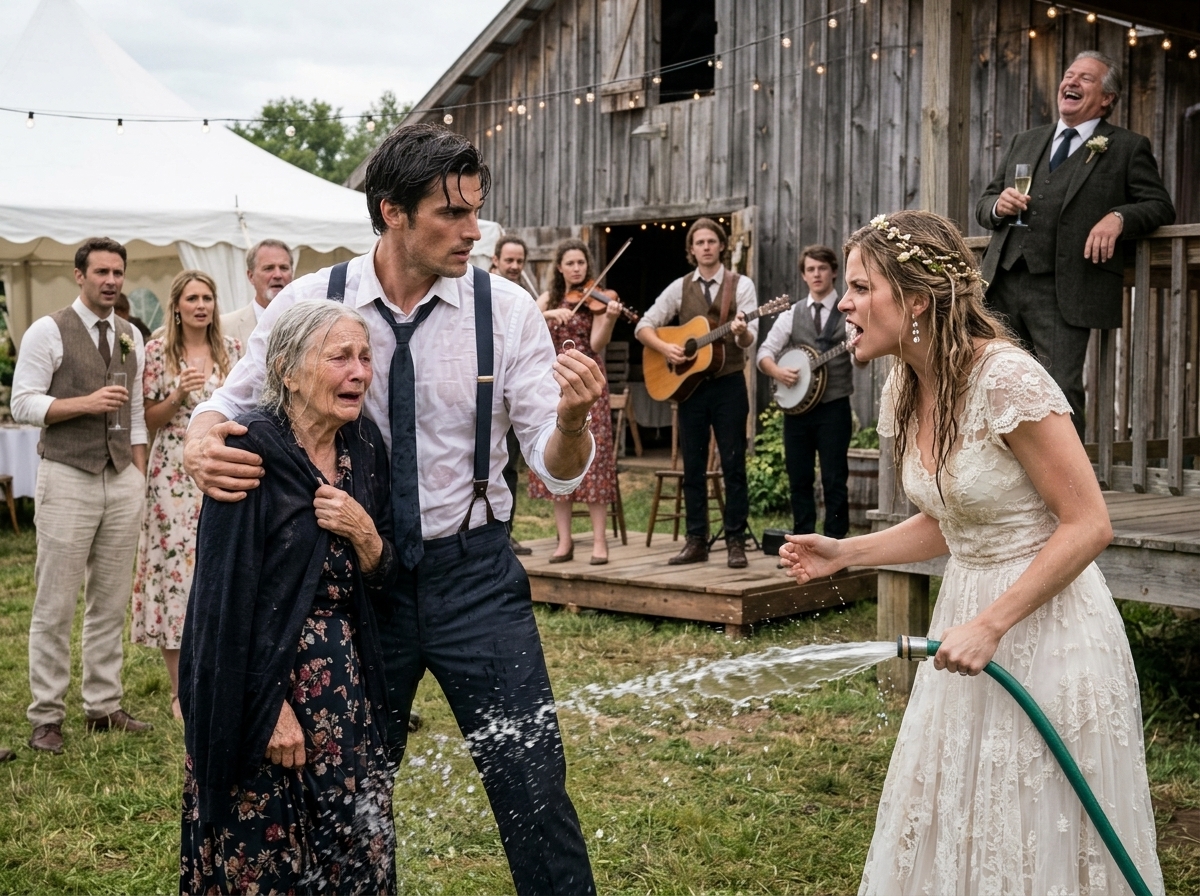
PART 2: THE HOUR BEFORE DAWN
Rebecca did not ask what happened.
She had heard enough in my voice.
“Are you absolutely certain, Daniel?”
I looked through the windshield.
My mother sat beside me, trembling.
Water dripped from her silver hair.
Her hands were folded in her lap.
She was staring at her wedding invitation.
The expensive paper had turned translucent.
“Yes,” I answered.
“Activate everything.”
There was a brief silence.
Then I heard her keyboard clicking.
“Understood.”
“Rebecca?”
“Yes?”
“Protect the employees.”
The clicking stopped.
“Already included in the instructions.”
I closed my eyes.
For two years, I had been patient.
For two years, I had remained silent.
I had mistaken restraint for wisdom.
But some people interpreted kindness as weakness.
And Charles Whitmore was one of them.
Rebecca spoke again.
“The first notices go out tonight.”
“The lenders?”
“Already prepared.”
“The board?”
“Emergency meeting requested.”
“And the evidence?”
“Secured.”
I watched Charles pacing across his terrace.
His face was red with anger.
Vanessa stood beside him, gesturing wildly.
Neither understood what had just begun.
“Daniel,” Rebecca said quietly.
“There is something else.”
“What?”
“The investigation uncovered another discrepancy.”
I tightened my grip on the phone.
“What kind?”
“A serious one.”
“Tell me.”
“Not over an unsecured connection.”
I looked toward my mother.
She was quietly wiping her face.
“Then I’ll see you at headquarters.”
Rebecca hesitated.
“Bring Eleanor.”
“Why?”
“Because some documents concern her.”
The line went dead.
For several seconds, I remained motionless.
Then my mother touched my wrist.
“Danny?”
I turned toward her.
Her lips were almost blue.
“Can we go somewhere warm?”
Those six words destroyed my composure.
Not the insults.
Not the laughter.
Not the humiliation of my canceled wedding.
Those six words.
My mother had endured public cruelty.
And all she wanted was warmth.
I started the engine.
Behind us, the Whitmore gates opened.
A security guard stepped into the driveway.
I recognized him immediately.
His name was Marcus Reed.
He had worked at the estate for years.
He was a broad-shouldered former firefighter.
Usually, he greeted me with a smile.
Tonight, his expression was troubled.
He approached my window.
I lowered it.
“Mr. Hayes,” he said.
“I’m sorry.”
He looked toward my mother.
“Mrs. Hayes, are you all right?”
She attempted a smile.
“I’ll be fine, dear.”
Marcus swallowed.
“I saw what happened.”
I nodded.
“Then please preserve whatever you recorded.”
His eyes moved toward the security cameras.
“I already made a copy.”
That surprised me.
“Before anyone asked?”
He looked toward the mansion.
“Mr. Whitmore ordered the footage deleted.”
My jaw tightened.
“When?”
“Five minutes ago.”
“Did you follow that order?”
Marcus shook his head.
“No, sir.”
He reached into his jacket.
A small storage device appeared.
“I made this before they disconnected everything.”
He handed it through the window.
“Why?” I asked.
His answer came without hesitation.
“Because my mother cleans houses.”
I stared at him.
Marcus looked at Eleanor again.
“And nobody deserves that treatment.”
My mother reached across me.
She gently squeezed his hand.
“Thank you.”
Marcus stepped backward.
“Drive safely.”
As we pulled away, I looked back.
He remained standing beside the gates.
Beyond him, the wedding lights burned brightly.
Music had started again.
Charles was apparently determined to continue celebrating.
That was his first mistake.
He believed the evening was merely embarrassing.
He did not understand its financial consequences.
And he certainly did not understand Rebecca.
My attorney had spent eighteen months preparing.
Not for revenge.
For a situation we hoped to avoid.
Tonight, that situation had finally arrived.
We drove through the darkening countryside.
The Whitmore estate disappeared behind the trees.
My mother kept her eyes on the road.
For several minutes, neither of us spoke.
Then she asked a terrible question.
“Was it something I said?”
I turned toward her.
“What?”
“At the wedding.”
She looked down at her hands.
“Did I embarrass Vanessa somehow?”
I almost pulled over.
“Mom.”
“Perhaps I should have worn something different.”
Her voice grew quieter.
“She has always liked expensive things.”
I stared at her.
The woman beside me had survived poverty.
She had buried my father.
She had worked three jobs.
She had built a life through determination.
Yet she was wondering whether her dress
had somehow justified being attacked.
“Listen to me,” I said.
She looked up.
“You did nothing wrong.”
“But—”
“Nothing.”
My voice cracked.
“You were invited because you’re my mother.”
A tear rolled down her cheek.
“I know, Danny.”
“No, I don’t think you do.”
I stopped at a red light.
“You were supposed to sit beside me.”
I struggled to breathe.
“You were supposed to watch me marry.”
I looked through the windshield.
“And instead, I watched them hurt you.”
She placed her hand over mine.
“You protected me.”
“Too late.”
“No.”
Her voice became unexpectedly firm.
“You protected me when it mattered.”
The light turned green.
I drove forward slowly.
She continued.
“Sometimes people show us their hearts.”
“Unfortunately, today they showed you theirs.”
I swallowed.
“I should have seen it earlier.”
My mother did not argue.
That silence hurt more than agreement.
Because there had been signs.
Small ones.
Unpleasant ones.
Moments I had deliberately explained away.
Vanessa had mocked waiters.
She had complained about charitable donations.
She had once refused to enter
a restaurant because the owner’s shoes
looked inexpensive.
I remembered a Christmas dinner.
A housekeeper had accidentally broken a glass.
Vanessa demanded that Charles deduct
the replacement cost from her wages.
The glass was worth forty dollars.
The woman’s monthly salary was modest.
I had paid for the glass myself.
Vanessa had called me sentimental.
I remembered another afternoon.
We were shopping for wedding decorations.
My mother called to ask
whether Vanessa liked handmade lace.
She had spent three months sewing
a delicate table runner for our reception.
Vanessa listened through the speakerphone.
Then she laughed.
“We’re not hosting a church basement wedding.”
I had told myself she was stressed.
I had told myself weddings changed people.
I had told myself love required patience.
But patience was not blindness.
And love did not require surrendering dignity.
The truth became unbearable.
I had seen pieces of Vanessa’s character.
I simply refused to assemble them.
My mother broke the silence.
“Do you still love her?”
The question stunned me.
I considered lying.
Instead, I answered carefully.
“I love who I thought she was.”
Mom nodded.
“That can be a difficult person to mourn.”
I glanced at her.
She was watching the road again.
“Did you know?” I asked.
“About Vanessa?”
She hesitated.
“I knew she didn’t like me.”
“Why didn’t you tell me?”
“Because you looked happy.”
I shook my head.
“That wasn’t a reason.”
“No,” she admitted.
“It wasn’t.”
Her fingers tightened around the invitation.
“I was afraid you’d think
I was trying to separate you.”
I felt something heavy settle inside me.
My mother had been protecting my happiness.
While I had been protecting an illusion.
We reached the city forty minutes later.
I parked outside a small hotel.
It was nowhere near the Whitmore properties.
That mattered tonight.
The receptionist looked concerned
when she saw my mother’s wet clothes.
I requested a quiet suite.
Then I asked for clean towels.
She immediately disappeared into the back office.
A moment later, she returned
with an entire stack of them.
“Would you like some hot tea?”
My mother smiled gratefully.
“That would be lovely.”
The receptionist introduced herself as Hannah.
She was perhaps twenty-five.
Her dark hair was tied into a bun.
She glanced at my soaked shirt.
“Were you caught in the storm?”
I almost laughed.
There hadn’t been a storm.
Only a wedding.
“Something like that,” I answered.
Hannah studied us for another second.
Then she handed me two room keys.
“I put you near the elevator.”
“Thank you.”
“And there’s no charge for the tea.”
My mother touched her arm.
“You’re very kind.”
Hannah shrugged gently.
“Everyone needs kindness sometimes.”
I carried our bags upstairs.
There was no luggage for my mother.
Only her small handbag.
She had expected to return home
after watching her son get married.
Now everything had changed.
Inside the suite, I turned up the heat.
My mother disappeared into the bathroom.
I called the front desk again.
Hannah arranged for a local shop
to deliver comfortable clothes and slippers.
Then I called Rebecca.
“I’m at the Harbor Hotel.”
“I know the property,” she replied.
“Send the address anyway.”
I did.
“Security?”
“Already arranged.”
“Rebecca, this isn’t a kidnapping case.”
“No,” she answered.
“But Charles is unpredictable when cornered.”
I looked toward the bathroom.
Water was running.
“Tell me what you discovered.”
“Not yet.”
“Rebecca.”
Her voice softened.
“Daniel, I need you focused.”
“On what?”
“On making legally defensible decisions.”
I sat on the edge of the bed.
“I’m listening.”
“Northbridge holds sixty-two percent
of Whitmore Holdings’ preferred equity.”
“I know.”
“Those shares carry conversion rights
under certain circumstances.”
“I negotiated the agreement.”
“And those circumstances appear to exist.”
I exhaled slowly.
“Explain.”
“The independent audit found duplicated collateral.”
“How much?”
“At least ninety-four million dollars.”
I stood.
“What?”
“Possibly more.”
“That’s impossible.”
“I wish it were.”
My mind raced through the documents.
I remembered the refinancing schedules.
The warehouse valuations.
The hotel development budgets.
The equipment leases.
We had reviewed thousands of pages.
“How did they conceal it?”
“Through overlapping subsidiaries.”
“Who signed the certifications?”
“Charles.”
I closed my eyes.
“And?”
“Vanessa.”
For a moment, I heard nothing.
The hum of the air conditioner disappeared.
Even my own breathing seemed distant.
“Vanessa isn’t the chief financial officer.”
“No.”
“Then why was she signing?”
“Because she controlled three subsidiaries.”
I sat down again.
Rebecca continued.
“She’s been managing transactions independently.”
“How long?”
“Possibly eighteen months.”
I stared at the carpet.
Eighteen months.
During our engagement.
During the wedding preparations.
During our conversations about building a family.
“Did she know the figures were false?”
“That remains under investigation.”
“But she signed them.”
“Yes.”
I looked at the ring.
It lay in my jacket pocket.
The metal felt suddenly poisonous.
“Continue,” I said.
“Northbridge also holds secured debt.”
“Two hundred forty million.”
“Correct.”
“And the defaults?”
“Several material breaches appear documented.”
I understood.
Our investment agreement contained
carefully negotiated protective clauses.
They had not been designed as weapons.
They protected creditors, pension investments,
and thousands of ordinary employees.
If the Whitmores had misrepresented assets,
their voting control could be suspended
under the agreed contractual conditions.
Independent directors could assume authority.
Assets could be preserved.
Operations could continue.
But Charles would lose his throne.
Not necessarily his wealth overnight.
Certainly not every legitimate business.
Yet his control over the empire
could disappear before the sun rose.
That was the distinction that mattered.
I had no intention of destroying
the livelihoods of innocent workers.
Rebecca knew that.
She had helped write those provisions.
“What are the directors saying?”
“They’re frightened.”
“Of me?”
“Of the evidence.”
“Good.”
She hesitated.
“Daniel, anger isn’t evidence.”
“I know.”
“Then remember why we created Northbridge.”
I looked toward the bathroom.
My mother had stopped the water.
“To prevent powerful people from doing
whatever they wanted,” I answered.
“Exactly.”
I remained silent.
Rebecca continued.
“We proceed through the contracts.”
“Independent review.”
“Documented votes.”
“Full protection for employee payroll.”
“And no public accusations without support.”
I nodded.
“Agreed.”
“There’s another matter.”
The tone of her voice changed.
“Whitmore’s internal counsel called me.”
“What did they want?”
“They threatened a defamation lawsuit.”
“For what?”
“For releasing the audit findings
to the company’s authorized directors.”
I almost smiled.
“That’s not defamation.”
“Correct.”
“Who made the threat?”
“A lawyer named Victor Lang.”
I knew Victor.
He had handled Charles’s personal affairs.
He was expensive, arrogant, and theatrical.
I had never trusted him.
“Tell him we’re preserving evidence.”
“I already did.”
“And Vanessa?”
Rebecca paused.
“She called the office sixteen times.”
I looked at the clock.
Only ninety minutes had passed.
“What did she say?”
“She demanded to speak with
the real owner of Northbridge Capital.”
For the first time that evening,
I laughed.
A short, humorless sound.
“Did you tell her?”
“No.”
“Why not?”
“Because I thought you’d enjoy doing it.”
Despite everything, I smiled.
Rebecca was still Rebecca.
But then her voice became serious.
“Daniel, come to the office tonight.”
“I will.”
“And bring Eleanor.”
I looked toward the bathroom door.
“Why is she involved?”
Rebecca answered slowly.
“Because the oldest document
in the investigation bears her name.”
Before I could ask another question,
the bathroom door opened.
My mother emerged in a hotel bathrobe.
Her hair was wrapped in a towel.
She looked exhausted.
But at least she was warm.
“I have to go,” I told Rebecca.
“Be here by ten.”
The call ended.
Mom looked at me.
“Trouble?”
I studied her face.
The familiar lines around her eyes.
The small scar beneath her chin.
The expression of a woman
who had spent decades carrying secrets.
“Mom,” I asked gently.
“Did you ever work for Charles Whitmore?”
Her smile disappeared.
The room suddenly felt colder.
For a long moment, she said nothing.
Then she sat beside the window.
“Who told you that?”
“Rebecca found something.”
My mother looked down.
I waited.
Finally, she whispered,
“I wondered when this day would come.”
I sat opposite her.
“What day?”
“The day Charles learned
that the past hadn’t disappeared.”
I stared at her.
“What are you talking about?”
She glanced toward the city lights.
“Not here, Danny.”
“Mom.”
“Please.”
There was something in her expression
I had never seen before.
Fear.
Not fear of Charles’s money.
Not fear of his lawyers.
Fear of a memory.
A memory she had spent years burying.
I wanted to question her.
But her hands were trembling again.
So I did something simpler.
I made her tea.
We sat together in silence.
And for the first time,
I understood that tonight’s disaster
had begun long before my engagement.
Perhaps long before I was born.
At nine twenty-three,
Rebecca’s driver arrived.
My mother had changed into dark trousers
and a soft blue sweater.
The hotel staff had found her shoes.
I thanked Hannah personally.
She looked at my mother’s face.
“Are you feeling better?”
“A little,” Mom replied.
Hannah smiled.
“I’m glad.”
We entered the waiting vehicle.
A security specialist sat beside the driver.
He introduced himself as Paul Bennett.
He was polite and discreet.
I recognized him from Northbridge headquarters.
“Mr. Hayes,” he said.
“We’ve secured the office entrance.”
“Necessary?”
He met my eyes in the mirror.
“After the threats, yes.”
I didn’t ask what threats.
Not yet.
The city passed outside the windows.
Restaurants were closing.
People hurried along sidewalks.
Couples laughed beneath streetlights.
The ordinary world continued.
I wondered how many lives
were changing behind those illuminated windows.
How many people were discovering
that someone they loved had betrayed them.
How many were pretending everything was fine.
My mother watched a young couple
holding hands at a crosswalk.
“Your father loved rainy evenings,” she murmured.
I turned.
“What?”
“He said the city looked honest
when the rain washed everything clean.”
I remembered very little about my father.
He had died when I was five.
A quiet man named Samuel Hayes.
Mom told me he repaired machinery.
He was gentle.
He loved music.
He made terrible pancakes.
Those fragments formed most of my memories.
“Did Dad know Charles?”
My mother closed her eyes.
“Yes.”
The answer was barely audible.
I waited.
She added nothing.
The car turned toward Northbridge Tower.
It was a modest-looking building
compared with Whitmore’s glass headquarters.
No gold letters decorated the entrance.
No enormous sculpture dominated the lobby.
Its appearance had always been deliberate.
Northbridge invested quietly.
We preferred results to publicity.
The security doors opened automatically.
Inside, the night receptionist stood.
“Good evening, Mr. Hayes.”
“Good evening, Clara.”
She noticed my mother.
“Mrs. Hayes.”
Mom smiled.
“Hello, dear.”
Clara immediately came around her desk.
“I heard there was an incident.”
Mom’s expression tightened.
“News travels quickly.”
Clara reached for her hand.
“We’re all very sorry.”
My mother blinked.
“Thank you.”
Then something extraordinary happened.
The night cleaning supervisor approached.
His name was Luis.
Behind him came two other employees.
They had apparently heard.
Nobody mentioned the Whitmores.
Nobody asked about the wedding.
Luis simply held out a folded blanket.
“My wife made this,” he said.
“For your mother’s charity auction.”
My mother recognized it.
A blue-and-white quilt.
“Oh, Luis.”
“She said you should have it tonight.”
Mom placed a hand over her mouth.
Luis continued.
“She remembers what you did
when our daughter needed surgery.”
My mother shook her head.
“That was nothing.”
He looked directly at her.
“It was everything to us.”
My throat tightened.
I had known about the surgery.
I hadn’t known Mom paid the bills.
She had never mentioned it.
Luis placed the quilt around her shoulders.
Then everyone quietly returned to work.
There was no applause.
No performance.
Just kindness.
The kind the Whitmores couldn’t understand.
As the elevator rose,
my mother touched the quilt.
“Your father would have liked him.”
I looked at her.
“Luis?”
She nodded.
“He treats people like people.”
The elevator opened.
Rebecca was waiting.
She wore a charcoal suit.
Her red hair was pulled back tightly.
There were dark circles beneath her eyes.
She embraced my mother first.
“Eleanor.”
“Hello, Rebecca.”
For several seconds, they held each other.
I watched, surprised by their familiarity.
Rebecca had represented Northbridge for years.
I knew she respected my mother.
But their embrace suggested something deeper.
“Come inside,” Rebecca said.
“There’s much to discuss.”
We entered the main conference room.
Three people were waiting.
Julian Park, our chief financial officer.
Mira Shah, head of compliance.
And Katherine Bell, independent board chair.
All three stood when my mother entered.
Not for me.
For her.
That was when I realized
the evening contained another revelation.
Katherine crossed the room.
“Eleanor, I’m deeply sorry.”
My mother accepted her embrace.
“Thank you, Katherine.”
Then Julian approached.
His expression was unusually serious.
“Mrs. Hayes, we’ve confirmed the numbers.”
She nodded.
“Show Daniel.”
I looked between them.
“What numbers?”
Rebecca pulled out a chair.
“Sit down.”
I didn’t move.
“Why does everyone know something I don’t?”
My mother looked exhausted.
“Because I asked them to wait.”
I stared at her.
“You asked them?”
She nodded.
“Until I could explain.”
I slowly sat.
Rebecca placed several folders on the table.
The first was labeled:
NORTHBRIDGE CAPITAL — FOUNDING TRUST.
The second contained financial statements.
The third was much older.
Its edges were yellow.
A faded photograph had been attached.
I reached toward it.
My mother stopped my hand.
“Before you open that,” she said,
“there’s something you should understand.”
I waited.
She looked around the room.
Then she looked directly at me.
“Your father wasn’t just a mechanic.”
The words struck me strangely.
I had heard his occupation all my life.
“He designed industrial systems,” she continued.
“Machines that reduced manufacturing waste.”
“He held several patents.”
I stared at her.
“Why didn’t you tell me?”
“I told you he repaired things.”
“That wasn’t the whole truth.”
“No.”
She lowered her eyes.
“It wasn’t.”
Rebecca quietly pushed the first folder forward.
“Samuel Hayes and Eleanor Hayes
established the original investment trust.”
I opened the document.
The names were unmistakable.
My parents.
Both listed as founders.
The date was almost thirty years old.
I stared.
“That doesn’t make sense.”
My mother spoke gently.
“Your father was very good
at solving difficult problems.”
“He believed useful inventions should benefit
the people who helped create them.”
I turned another page.
Patent royalties.
Industrial licensing agreements.
Early investment partnerships.
Then acquisitions.
Then compound growth.
The numbers increased across decades.
My chest tightened.
“Mom.”
She looked at me.
“How much of Northbridge do you own?”
The room became silent.
Rebecca answered instead.
“Through the family trust,
Eleanor controls the majority interest.”
I had known about the trust.
I had managed its operating companies.
I had assumed its ownership
was divided among several institutional investors.
My mother had insisted
that the personal beneficiaries remain confidential.
I had respected her wishes.
Now I understood why.
“The remaining interests?” I asked.
“Held for you,” Rebecca replied.
My mother watched me carefully.
“Not because money makes someone important.”
She leaned forward.
“Your father wanted you to have choices.”
I shook my head.
“I already have choices.”
“Yes.”
“And you’ve made good ones.”
Her smile was sad.
“But there are things I should’ve told you.”
I looked at the third folder.
The old photograph.
A factory building.
A group of workers.
Three men standing beside machinery.
One was my father.
I recognized him immediately.
The second was younger Charles Whitmore.
The third man was unfamiliar.
“What is this?”
My mother’s face changed.
“That,” she said,
“was taken before the fire.”
I looked up sharply.
“What fire?”
Nobody answered immediately.
Then Katherine spoke.
“The fire at the Halstead manufacturing plant.”
I had heard the name.
It appeared in old industry reports.
The company collapsed in the nineties.
Several workers had died.
Its assets were acquired cheaply.
Whitmore Industries had emerged afterward.
Charles frequently described that acquisition
as his first brilliant investment.
I stared at the photograph.
“Dad worked there?”
My mother nodded.
“He helped design the equipment.”
“Did Charles own the plant?”
“No.”
Her voice grew cold.
“He wanted to.”
I studied her.
“What happened?”
She looked at Rebecca.
Rebecca nodded gently.
My mother took a slow breath.
“Samuel discovered irregularities.”
“Financial?”
“And safety violations.”
“He reported them to management.”
“What did they do?”
“They told him to stay quiet.”
I looked at the photograph again.
“Did he?”
“No.”
The answer was immediate.
My mother continued.
“He documented everything.”
“Then he contacted the state inspectors.”
“And three days later?”
She stopped.
I leaned forward.
“Mom?”
Her eyes filled.
“The factory caught fire.”
I felt my heartbeat change.
“Dad died in that fire?”
She nodded.
“Yes.”
I had always been told
that a mechanical accident killed him.
Technically, perhaps that was true.
But the story suddenly looked different.
“What did the investigation find?”
“Electrical failure.”
“Was that accurate?”
“We never received the complete records.”
I turned toward Rebecca.
“Why wasn’t this investigated?”
“It was,” she answered.
“Repeatedly.”
“But important documents disappeared.”
My mother folded her hands.
“Charles acquired the damaged company afterward.”
“For almost nothing.”
I looked toward the city.
The Whitmore estate suddenly seemed farther away.
Not physically.
Morally.
Charles had built his reputation
on an acquisition connected to my father’s death.
And somehow my mother had spent decades
watching him become wealthy.
“Did Charles know Dad?”
“Yes,” she whispered.
“They were once friends.”
The silence became unbearable.
I stood and walked toward the windows.
Below us, cars moved through the city.
Their headlights looked like distant stars.
I thought about my father’s photographs.
His gentle smile.
His workbench in our old garage.
The small wooden airplane he made me.
My mother had kept it for decades.
I remembered asking why Dad never came home.
I remembered her holding me.
I remembered her saying accidents happened.
Now I wondered what she had hidden.
And why.
“Did Charles cause the fire?”
I turned to face her.
My mother did not answer immediately.
“We don’t know,” she said.
“That’s the truth.”
I wanted certainty.
I wanted someone to blame.
But she refused to give me
an accusation she couldn’t prove.
That restraint made me love her more.
Rebecca opened another folder.
“However, we found something relevant.”
I returned to the table.
Inside were copies of old correspondence.
Purchase agreements.
Insurance filings.
Corporate restructuring documents.
Charles’s signature appeared repeatedly.
Then Rebecca showed me a payment record.
“Four months after the fire,
Charles received a substantial insurance-related settlement.”
I studied the figures.
“From whom?”
“A company controlled by an intermediary.”
“Which intermediary?”
She looked at Julian.
Julian spoke.
“That’s the part we’re still verifying.”
I rubbed my forehead.
“What does this have to do
with the current financial investigation?”
Mira answered.
“Several old entities remain active.”
“And they’ve been used recently.”
“For what?”
“To move collateral between subsidiaries.”
My eyes narrowed.
“Explain.”
She projected a diagram onto the wall.
Boxes appeared.
Lines connected them.
Dozens of companies.
Some familiar.
Others obscure.
At the center stood Whitmore Holdings.
But underneath it,
three older businesses formed another network.
“Those companies were established
after the Halstead acquisition,” Mira explained.
“They originally held industrial property.”
“Today they serve as collateral vehicles.”
I studied the diagram.
“And Charles double-pledged the assets.”
“Yes.”
“Using the same titles?”
“Sometimes.”
“Other times through intercompany guarantees.”
Julian opened a spreadsheet.
“The resulting exposure is enormous.”
“How enormous?”
He hesitated.
“Potentially four hundred million dollars.”
I stared at him.
The earlier figure had been ninety-four million.
Now the potential problem was much larger.
“Verified?”
“Not all of it.”
“Then don’t treat it as confirmed.”
Julian nodded.
“Agreed.”
I looked at Mira.
“What can we establish tonight?”
“Enough to trigger independent oversight.”
“Not enough for criminal accusations?”
“Not yet.”
I nodded.
“Then that’s our boundary.”
Katherine leaned forward.
“The directors are joining remotely
in less than an hour.”
“What about Charles?”
“He’s been notified.”
“And?”
“He called me a traitor.”
I almost smiled.
“That sounds like Charles.”
Katherine’s face remained serious.
“He also threatened my grandchildren.”
The room went still.
“What?”
She looked toward Rebecca.
“He said my family would regret
helping you destroy his reputation.”
I felt anger flare.
Rebecca immediately spoke.
“We’ve documented the statement.”
“Security has been informed.”
“Katherine, you shouldn’t have to endure that.”
She met my eyes.
“I’ve endured worse board meetings.”
Then her voice hardened.
“But nobody threatens my family.”
I nodded slowly.
“Neither does anyone threaten mine.”
The first board session began at eleven.
Seven directors appeared on the screen.
Two were visibly nervous.
One looked furious.
Charles had apparently contacted all of them.
Rebecca opened the meeting formally.
She explained the contractual basis
for the emergency review.
Mira summarized the verified discrepancies.
Julian presented the liquidity risks.
Katherine asked questions carefully.
No one shouted.
No one made dramatic threats.
The seriousness of the evidence
made theatrics unnecessary.
Then one director spoke.
His name was Martin Cole.
He had served alongside Charles
for almost fifteen years.
“This is clearly a coordinated attack.”
Rebecca looked at him.
“Please identify the inaccurate information.”
Martin hesitated.
“I’m saying the timing is suspicious.”
“The audit began six months ago.”
“Convenient.”
Mira opened another document.
“Mr. Cole, you signed this certification.”
His expression changed.
“What?”
“The March asset verification statement.”
He leaned toward his camera.
“I don’t remember that.”
“The signature is yours.”
Martin looked away.
Rebecca remained calm.
“Were the valuations independently reviewed?”
A long silence followed.
Finally, Martin said,
“Charles assured us everything was legitimate.”
Nobody spoke.
Then Katherine asked quietly,
“Did you review the documents yourself?”
Martin’s shoulders sank.
“No.”
I watched him.
One careless answer.
One neglected responsibility.
The first visible crack in Charles’s empire.
The meeting continued.
At eleven forty-seven,
the directors approved an independent review.
They also authorized temporary restrictions
on certain executive financial powers.
The vote was six to one.
Martin opposed it.
Rebecca documented everything.
The next phase required lender coordination.
And confirmation of contractual defaults.
But we were moving.
Carefully.
Legally.
Irreversibly, if the evidence held.
My phone began vibrating.
Vanessa.
I ignored it.
A second call followed.
Then a third.
Finally, a message appeared.
DANIEL, STOP THIS INSANE BEHAVIOR.
I read it silently.
Another arrived.
MY FATHER WILL DESTROY YOUR CAREER.
Then another.
YOU HUMILIATED ME IN FRONT OF EVERYONE.
I stared at those words.
She had soaked my mother.
Mocked her poverty.
Laughed while strangers applauded.
Yet she considered herself the victim.
I turned off the screen.
Rebecca noticed.
“Vanessa?”
“Yes.”
“Don’t respond impulsively.”
“I won’t.”
“Preserve everything.”
I forwarded the messages.
At midnight, the lenders convened.
Representatives from three banks joined.
Their faces were solemn.
They already had the audit summaries.
One banker, Thomas Avery, spoke first.
“Mr. Hayes, we’re extremely concerned.”
“So am I.”
“Our exposure is significant.”
“I understand.”
“If these representations are false—”
“Then we need independent control.”
Thomas nodded.
“We also need assurance
that ordinary payroll will continue.”
I looked at Julian.
He was ready.
“Northbridge will provide a restricted
short-term operating facility,” I explained.
“Subject to independent oversight.”
“No distributions to controlling shareholders.”
“No luxury expenses.”
“No transfers to related parties.”
“Payroll and essential vendors remain protected.”
Thomas studied me.
“You’re willing to provide additional funding?”
“Only under strict safeguards.”
“And why?”
I thought about Luis.
Marcus.
The hotel receptionist.
My mother.
“Because the people who built those businesses
shouldn’t pay for executive dishonesty.”
Thomas’s expression softened.
“Understood.”
The discussions lasted nearly two hours.
Every clause mattered.
Every definition mattered.
We examined covenant breaches,
notice requirements,
collateral rights,
and emergency governance protections.
Nobody could simply seize an empire
because someone behaved cruelly at a wedding.
But financial misconduct was another matter.
If the Whitmores had broken their agreements,
the consequences belonged to them.
At one forty-six,
the lenders issued formal default notices.
Certain undistributed funds were frozen.
An independent officer was appointed
to oversee affected accounts.
The directors scheduled another emergency vote.
And Charles’s ability to move company assets
was sharply restricted.
My phone began ringing again.
This time, the caller was Charles.
I answered.
“Daniel.”
His voice sounded strangely calm.
“Where are you?”
“At work.”
He laughed.
“Playing businessman?”
I said nothing.
“Listen carefully, son.”
“I’m not your son.”
“Don’t be dramatic.”
He lowered his voice.
“I know you’re upset about Eleanor.”
My fingers tightened around the phone.
“Upset?”
“It was a foolish joke.”
“She was assaulted.”
“Oh, spare me.”
His tone became impatient.
“Vanessa was drinking.”
“That doesn’t excuse it.”
“She’s emotional.”
“That doesn’t excuse it either.”
He sighed.
“You’re making a family disagreement
into an international incident.”
I looked at Rebecca.
She was documenting the call.
“Then why are you calling?”
Charles hesitated.
“Some bankers contacted us.”
I waited.
“They’re asking ridiculous questions.”
“Answer them.”
“You know how finance works.”
“Yes.”
“Then explain the misunderstanding.”
“Which misunderstanding?”
His breathing changed.
“The audit.”
I leaned back.
“What about it?”
“You’re my future son-in-law.”
“Not anymore.”
“Daniel.”
His voice hardened.
“You owe this family loyalty.”
I looked through the conference room window.
My mother sat beside Katherine.
They were drinking tea.
I remembered Vanessa laughing.
Charles raising his champagne glass.
The cold water striking Eleanor’s shoulder.
“Loyalty,” I said quietly,
“isn’t permission to commit fraud.”
The silence on the line was immediate.
Then Charles spoke very softly.
“Be careful.”
“Of what?”
“Accusations have consequences.”
“So do false financial statements.”
He stopped breathing for a moment.
At least, that was how it sounded.
Then he said,
“You don’t understand who you’re dealing with.”
I almost answered angrily.
Instead, I said,
“I understand exactly.”
And ended the call.
Rebecca watched me.
“Did he threaten you?”
“Indirectly.”
“Recorded?”
“Yes.”
She nodded.
“Good.”
At two fifteen,
the second board meeting began.
This time, Charles joined.
He appeared from his private study.
Behind him stood Vanessa and Victor Lang.
Charles wore an expensive black suit.
His hair was immaculate.
He looked nothing like the angry man
who had shouted across the wedding lawn.
He smiled into the camera.
“Ladies and gentlemen.”
Nobody responded.
“I’m told we’re having a misunderstanding.”
Katherine spoke.
“This is an emergency governance meeting.”
“Over bookkeeping?”
“Over material financial representations.”
Charles waved dismissively.
“Numbers can be reconciled.”
Mira looked directly at him.
“Can duplicated collateral be reconciled?”
His smile faltered.
Victor stepped forward.
“My client disputes the characterization.”
Rebecca nodded.
“Your objection is noted.”
Charles leaned closer.
“Who authorized this circus?”
Katherine answered.
“The directors.”
“You work for me.”
“No,” she said.
“We serve the corporation.”
I watched Charles’s face redden.
He had never understood that distinction.
For decades, he treated companies
like extensions of his own personality.
Employees were servants.
Directors were ornaments.
Banks were sources of unlimited money.
And kindness was weakness.
Now the rules were changing.
Victor cleared his throat.
“We demand immediate identification
of Northbridge’s controlling shareholder.”
Rebecca looked at him.
“Why?”
“Because this is clearly a hostile maneuver.”
Katherine spoke before Rebecca could answer.
“The identity is not relevant
to whether the financial reports were accurate.”
Charles slammed his palm against the desk.
“I want to know who’s behind this!”
My mother looked up.
Then she slowly rose.
I watched her cross the conference room.
She stepped beside my chair.
Her blue sweater hung loosely.
The quilt remained around her shoulders.
She looked small.
Nothing like the powerful investors
Charles spent his life flattering.
Rebecca glanced at her.
“Eleanor?”
My mother nodded.
“It’s time.”
I felt my heartbeat quicken.
Mom looked toward the camera.
“Hello, Charles.”
His expression froze.
For several seconds, nobody moved.
Then he laughed uncertainly.
“Eleanor?”
She smiled faintly.
“You remember me.”
“Of course.”
He looked toward Victor.
“What is this?”
My mother spoke softly.
“I helped establish the original Northbridge trust.”
Charles stared.
“And I remain its controlling beneficiary.”
Vanessa stepped into view.
“What?”
My mother continued.
“Daniel manages the business.”
“He has done so responsibly.”
“But the original controlling interest is mine.”
Charles’s mouth opened.
Then closed.
Victor immediately began whispering.
Vanessa shook her head violently.
“That’s impossible.”
Mom looked at her.
“Why?”
“Because you live in that little house!”
My mother nodded.
“I like my house.”
“You wear clothes from discount stores!”
“I like comfortable clothes.”
“You don’t even own designer jewelry!”
“No.”
She paused.
“I don’t particularly enjoy jewelry.”
Vanessa stared at her.
For the first time that evening,
I saw genuine confusion on her face.
She had spent two years
measuring my mother by appearances.
Now every calculation had failed.
Charles leaned toward the screen.
“Eleanor, we should discuss this privately.”
Mom looked at him.
“We had that opportunity thirty years ago.”
The room went still.
Charles’s face changed.
I noticed immediately.
Not anger.
Recognition.
Fear.
“What are you talking about?” he asked.
My mother did not answer.
Instead, she turned toward Katherine.
“Please continue the meeting.”
She returned to her seat.
I watched Charles.
He was no longer smiling.
The vote began.
Directors reviewed the contractual notices.
The independent findings were summarized.
Charles objected repeatedly.
Victor demanded delays.
Martin tried to interrupt.
But the required notices had been served.
The documented protections had been triggered.
And the board was authorized
to take temporary protective measures.
At three nineteen,
the directors approved an interim executive suspension.
Charles Whitmore lost operational authority
over the affected companies.
Vanessa lost her signing authority.
All extraordinary transfers required independent approval.
A restructuring officer assumed immediate oversight.
The vote passed.
Five to two.
Charles stared into the camera.
“You cannot do this.”
Katherine looked at him.
“We just did.”
He stood abruptly.
“This is theft!”
Rebecca answered.
“It’s a contractual governance action.”
“My lawyers will destroy you!”
Victor touched his shoulder.
Charles shook him off.
“You think you can take my company?”
He pointed directly at the screen.
“Daniel, I built that empire!”
I looked at him calmly.
“Then you should have protected it.”
His face turned crimson.
“Listen to me—”
Katherine muted his microphone.
Then she formally adjourned the meeting.
I looked at the clock.
Three twenty-seven.
The Whitmore empire had not disappeared.
Its factories still stood.
Its hotels still welcomed guests.
Its workers still had jobs.
Its customers still had contracts.
But Charles no longer controlled them.
The crown had fallen.
And dawn was still hours away.
Nobody celebrated.
There was too much work ahead.
Julian immediately contacted payroll operations.
Mira began coordinating the independent review.
Rebecca prepared preservation notices.
Katherine spoke with the restructuring officer.
I went to my mother.
She sat quietly beside the window.
Her hands rested on the blue quilt.
“Mom.”
She looked up.
“It’s done.”
She nodded.
“Not entirely.”
I sat beside her.
“What do you mean?”
She studied my face.
“You’ve taken away his power.”
“Yes.”
“But you haven’t learned the truth.”
I remembered the photograph.
The factory.
My father.
Charles standing beside him.
“Then tell me.”
My mother opened her handbag.
Inside was a small envelope.
Its paper had yellowed with age.
She held it for several seconds.
“Your father wrote this.”
I reached toward it.
She pulled it back.
“Danny, promise me something.”
“What?”
“Don’t let what happened to him
turn you into someone cruel.”
The words pierced me.
“I won’t.”
“Promise.”
I looked directly at her.
“I promise.”
She handed me the envelope.
My father’s handwriting covered the front.
For Eleanor.
In case I cannot come home.
I felt the room tilt.
My mother touched my shoulder.
“Take your time.”
I carefully opened the envelope.
Inside was a single folded letter.
The writing was neat.
The ink had faded slightly.
I recognized my father’s signature.
I began reading.
He wrote about the factory.
About equipment inspections.
About missing safety documentation.
About pressure from investors.
He mentioned Charles repeatedly.
Then one sentence stopped me.
Charles has been moving money
through accounts the workers cannot see.
I read it again.
My father continued.
He described forged approvals.
Unexplained insurance changes.
And a meeting scheduled
for the night before the fire.
At the bottom,
beneath his signature,
he had added one final line.
If anything happens,
ask Eleanor about the blue ledger.
I looked at my mother.
“What blue ledger?”
Her expression changed immediately.
She stared at the letter.
Then toward the conference room door.
“Danny.”
Her voice was barely audible.
“We need to leave.”
I stood.
“Why?”
She grasped my wrist.
“Because Charles knows.”
“Knows what?”
Before she could answer,
Rebecca entered carrying her phone.
Her face had lost all color.
“Daniel.”
I turned.
“What happened?”
“Charles has filed an emergency complaint.”
“About the board vote?”
“No.”
She swallowed.
“He’s accusing Eleanor of financial crimes
dating back to the Halstead fire.”
I stared.
“That’s ridiculous.”
Rebecca shook her head.
“He supplied documents.”
“What documents?”
“An old ledger.”
My mother went completely still.
The blue quilt slipped from her shoulders.
Rebecca continued.
“The documents appear to bear
your mother’s signature.”
I looked at Eleanor.
She was staring at the floor.
“Mom?”
She whispered,
“That ledger was supposed to be destroyed.”
At that exact moment,
the elevator doors opened.
Three investigators stepped onto our floor.
One held a sealed warrant.
The oldest approached our conference room.
“Daniel Hayes?”
I nodded.
He showed his identification.
“We need to speak with you.”
“About what?”
He looked toward my mother.
“About the death of Samuel Hayes.”
My heart stopped.
Then he said something
that changed everything.
“Mr. Hayes, we have evidence
your father’s death was not accidental.”
My mother covered her mouth.
And the investigator added,
“We also have reason to believe
someone inside your family concealed the truth.”
PART 3: THE SECRET BENEATH THE ASHES
I stood between the investigator and my mother.
Nobody moved.
The building’s ventilation system hummed overhead.
Rebecca approached immediately.
“I’m Rebecca Morgan, their attorney.”
The investigator nodded.
“Detective Adrian Foster.”
He displayed his credentials again.
Two other investigators waited behind him.
One carried a document case.
The other wore a dark blue jacket.
Foster looked at Eleanor.
“Mrs. Hayes, we’d like your cooperation.”
My mother remained seated.
Her face had become very pale.
“Is she under arrest?” Rebecca asked.
“No.”
“Is she being accused?”
“Not formally.”
“Then we need to understand
the purpose of your visit.”
Foster studied her.
“We’re investigating possible evidence tampering.”
“Related to a historical death?”
“And recent financial transactions.”
Rebecca held out her hand.
“May I see the warrant?”
Foster gave it to her.
She read every page.
I watched her expression carefully.
Rebecca never rushed legal documents.
She examined the dates.
The authorized locations.
The property descriptions.
Then she looked up.
“This authorizes a limited records search.”
“Correct.”
“It does not authorize taking Mrs. Hayes.”
“Correct.”
My mother slowly exhaled.
Foster looked toward me.
“Mr. Hayes, we understand tonight
has been difficult for your family.”
I almost laughed.
Difficult.
That was an interesting word.
My wedding had collapsed.
My mother had been publicly assaulted.
A financial empire had changed hands.
And now investigators were discussing
my father’s death.
“Yes,” I answered.
“It’s been difficult.”
Foster nodded.
“We received information several hours ago.”
“From Charles Whitmore?”
He did not answer directly.
“Information relevant to an old investigation.”
I looked at Rebecca.
She gave me a subtle warning.
Don’t speculate.
Don’t accuse.
Stay controlled.
Foster continued.
“We also received an authenticated copy
of Samuel Hayes’s original death certificate.”
I frowned.
“Why is that important?”
“Because the documented injuries
do not fully match the original accident report.”
My mother made a small sound.
I turned immediately.
“Mom?”
She was gripping the chair.
Foster noticed.
“Mrs. Hayes?”
My mother stared at him.
“What injuries?”
He hesitated.
“That information isn’t appropriate
to discuss without reviewing the case.”
She shook her head.
“No.”
Her voice became stronger.
“What injuries?”
Rebecca moved closer.
“Eleanor, you don’t have to answer questions.”
My mother barely seemed to hear her.
“Tell me what happened to Samuel.”
Foster looked genuinely uncomfortable.
“Mrs. Hayes, we believe your husband
may have been injured before the fire.”
The words hung in the air.
My mother closed her eyes.
I reached for her hand.
She gripped mine tightly.
“How do you know?” I asked.
“A newly located medical record.”
“Newly located where?”
“Among documents connected to Whitmore Holdings.”
I stared at him.
Charles had kept medical records
relating to my father’s death?
For nearly thirty years?
Why?
Rebecca asked the obvious question.
“Who supplied the records?”
Foster considered his answer.
“A source with access to corporate archives.”
“Charles?”
“I can’t identify every source tonight.”
I looked toward my mother.
She was trembling again.
But this time it wasn’t cold.
It was something much deeper.
A fear that had waited decades.
Rebecca placed the warrant on the table.
“We’ll cooperate within its scope.”
Foster nodded.
“Thank you.”
The investigators began their search.
They examined designated document cabinets.
Rebecca supervised every step.
Mira joined her.
Everything was recorded.
Everything was inventoried.
I stayed beside my mother.
She had become strangely quiet.
Finally, I asked,
“What did you mean about the ledger?”
She stared at her hands.
“Danny.”
“Please.”
Her eyes filled.
“I was trying to protect you.”
I swallowed.
“From what?”
She looked toward the investigators.
Then toward Rebecca.
“I think it’s time you heard everything.”
Rebecca walked over.
She sat opposite us.
Foster approached, but Rebecca stopped him.
“My clients need a private legal consultation.”
He nodded.
“We can wait.”
We entered a smaller conference room.
Rebecca closed the door.
The room contained a round wooden table.
Three chairs.
A whiteboard.
A bookshelf filled with financial regulations.
My mother sat slowly.
Then she removed the blue quilt.
She folded it with extraordinary care.
I watched her hands.
Those hands had held me as a child.
They had prepared school lunches.
They had repaired torn clothing.
They had written birthday cards.
They had worked through illness and exhaustion.
Now those same hands trembled
above a secret older than my memories.
“Your father trusted Charles,” she began.
I sat opposite her.
“They met at university.”
“Charles studied business.”
“Samuel studied engineering.”
“They were very different.”
She smiled faintly.
“But Samuel believed friendship
could bridge almost any difference.”
I listened.
“After graduation, they started working together.”
“Samuel developed machinery.”
“Charles found investors.”
“For several years, it worked.”
“What changed?”
“Money.”
She looked down.
“More specifically, Charles’s hunger for it.”
My mother took a breath.
“The machines became successful.”
“Manufacturers wanted licenses.”
“Investors wanted ownership.”
“Samuel wanted better conditions
for the workers operating them.”
“Charles wanted expansion.”
“At any cost.”
I looked toward Rebecca.
She remained silent.
My mother continued.
“Halstead Manufacturing became their biggest customer.”
“Samuel spent months there.”
“He knew the employees by name.”
“He knew which machines needed repair.”
“He knew which managers ignored warnings.”
She paused.
“Then he discovered something terrible.”
“What?”
“Someone had been falsifying maintenance records.”
My stomach tightened.
“Charles?”
“He was involved in financing decisions.”
“Samuel believed he knew.”
“Believed?”
My mother nodded.
“He never proved Charles ordered it.”
I appreciated her precision.
Even now,
she refused to turn suspicion into fact.
“Samuel collected copies of the records.”
“He created a blue ledger.”
“What was inside?”
“Dates.”
“Payments.”
“Maintenance warnings.”
“Insurance changes.”
“And the names of people
who approved the dangerous shortcuts.”
I remembered the letter.
Charles moving money.
Missing documents.
The meeting before the fire.
“Where is the ledger?”
My mother looked away.
“I had it.”
I leaned forward.
“Had?”
She nodded.
“After the fire, Samuel’s briefcase disappeared.”
“I thought everything inside was gone.”
“But weeks later,
a coworker brought me the ledger.”
“Who?”
“An electrician named Robert Ellis.”
I stared.
“Is he still alive?”
“I don’t know.”
She wiped her eyes.
“Robert said Samuel asked him
to keep a duplicate.”
“He was terrified.”
“Of Charles?”
“Of everyone involved.”
“What happened next?”
“I took the ledger to an attorney.”
Rebecca looked up.
“Not me,” she clarified.
My mother nodded.
“No.”
“A man named Gerald Mercer.”
“He reviewed it.”
“Then he told me something frightening.”
“What?”
“The transactions might implicate several executives.”
“Possibly banks.”
“Possibly insurers.”
“And possibly people investigating the fire.”
I felt my chest tighten.
“Did you report it?”
“Yes.”
“To whom?”
“State investigators.”
“An insurance fraud division.”
“Later, federal authorities.”
She shook her head.
“But every time,
someone said the records were insufficient.”
“Or that the originals were missing.”
“Or that the case was closed.”
I looked at Rebecca.
“Do we have those reports?”
“Some.”
She opened her notebook.
“Gerald Mercer died twelve years ago.”
“His archived files were incomplete.”
My mother continued.
“Then Charles came to see me.”
Her voice changed.
I could almost picture the scene.
A young widow.
A small rented house.
A frightened little boy.
And Charles arriving in an expensive car.
“What did he say?”
“He offered money.”
“How much?”
“Enough to change our lives.”
I waited.
“He said Samuel’s death was tragic.”
“He said the investigation should end.”
“He wanted me to sign a settlement.”
“Did you?”
“No.”
My mother lifted her chin.
“I told him I wanted answers.”
“What did he do?”
“He smiled.”
She swallowed.
“Then he mentioned you.”
My blood turned cold.
“What about me?”
“He said children needed stability.”
“That accidents happened.”
“And that widows sometimes made
unwise decisions when they were grieving.”
I stared at her.
“He threatened you.”
She nodded.
“Not openly.”
“But I understood.”
“What happened to the ledger?”
She closed her eyes.
“I hid it.”
“Where?”
“In the old house.”
I frowned.
“The one on Willow Street?”
“Yes.”
“We left that house decades ago.”
“I know.”
I leaned forward.
“Mom.”
She looked at me.
“I thought it would be safer there.”
“Where exactly?”
She hesitated.
“Under the staircase.”
I stared.
“The staircase?”
“There was a loose floorboard.”
“Samuel installed it himself.”
“He used to hide birthday presents there.”
For a moment,
an old childhood memory surfaced.
My father kneeling on a wooden floor.
A screwdriver in his hand.
A narrow compartment.
His laughter.
I remembered reaching toward it.
He gently pushed my hand away.
Not yet, Danny.
I felt a chill.
“Did you ever retrieve it?”
My mother shook her head.
“No.”
“Why?”
“Because Charles started watching the house.”
I stared at her.
“What?”
“A car appeared outside.”
“Men came asking questions.”
“Then someone broke into the garage.”
She looked ashamed.
“I got frightened.”
“So I moved us away.”
I remembered moving.
A rented apartment.
A tiny kitchen.
A bedroom overlooking railroad tracks.
Mom told me our old house
had become too expensive.
I believed her.
I had never questioned it.
“Who owns the house now?”
Rebecca opened her tablet.
“I checked earlier.”
I looked at her.
“You knew?”
“Eleanor told me part of this history.”
“When?”
“Several years ago.”
I felt betrayed.
“You kept it from me?”
Rebecca met my eyes.
“Your mother was my client.”
I opened my mouth.
Then stopped.
Of course.
Attorney-client confidentiality mattered.
Even when the client was my mother.
Rebecca continued.
“The Willow Street property changed ownership
four times after your family left.”
“And now?”
“It’s owned by a Whitmore subsidiary.”
The room became silent.
I looked at my mother.
Her expression told me everything.
Charles had acquired the house.
Not because it was valuable.
Because he knew something was hidden there.
“Does he have the ledger?” I asked.
My mother whispered,
“I think he found it.”
Rebecca leaned forward.
“Not necessarily.”
“The documents supplied to investigators
may be partial or altered copies.”
I looked at her.
“Then we need the original.”
She nodded.
“Yes.”
My mother stared at the table.
“There’s something else.”
I waited.
“Samuel made two ledgers.”
I felt my pulse quicken.
“Two?”
“One for the transactions.”
“One for the technical inspections.”
“Where’s the second?”
She hesitated.
Then reached into her handbag.
From a hidden compartment,
she removed a small brass key.
It hung from a faded ribbon.
I recognized the key immediately.
My father had once worn it
on a chain around his neck.
Mom had kept it for years.
“What does it open?”
She looked at me.
“A cabinet Samuel built.”
“Where?”
She took a shaky breath.
“In the workshop behind our old house.”
I stared.
“The workshop is still standing?”
Rebecca nodded.
“According to the property records.”
My mind began racing.
If the cabinet remained untouched,
we might finally have independent evidence.
Not accusations.
Not altered photocopies.
Original technical records.
Something Charles could not easily dismiss.
I looked at Rebecca.
“Can we access it?”
“Not without lawful authorization.”
“Then get authorization.”
She nodded.
“We’ll contact the investigators.”
I stood.
“We can’t let Charles destroy it.”
Rebecca raised one hand.
“Daniel.”
I stopped.
“We need to do this correctly.”
I knew she was right.
But the thought of waiting
made my stomach twist.
My mother reached for my hand.
“Your father waited for the law.”
I looked at her.
“And it didn’t protect him.”
Tears filled her eyes.
“No.”
The single word silenced me.
She continued.
“But if we abandon it now,
we give Charles another advantage.”
I sat slowly.
She squeezed my fingers.
“Be smarter than your anger.”
For several seconds,
I could not speak.
Then I nodded.
“Okay.”
Rebecca stood.
“I’ll speak with Foster.”
When she left,
my mother looked toward the door.
“Danny?”
“Yes?”
“I’m sorry.”
I frowned.
“For what?”
“For keeping so much from you.”
I shook my head.
“You were trying to protect me.”
She nodded.
“But protecting someone with silence
can become another kind of burden.”
I stared at her.
That was exactly what I had done
during my engagement.
I concealed my doubts.
Explained away Vanessa’s behavior.
Pretended the small cruelties didn’t matter.
Silence had nearly cost me everything.
I moved beside my mother.
“You don’t have to carry this alone.”
She began crying.
Quietly at first.
Then with the exhaustion
of someone who had held back tears
for almost thirty years.
I wrapped my arms around her.
She leaned against my shoulder.
And for several minutes,
we forgot about money.
We forgot about lawyers.
We forgot about the Whitmores.
We were simply a mother and son
grieving a man we both loved.
When Rebecca returned,
she found us sitting together.
Her expression softened.
“Foster is interested.”
I looked up.
“In the cabinet?”
“Yes.”
“He’s requesting immediate authorization.”
“How long?”
“He’s coordinating with the proper authorities.”
I nodded reluctantly.
Rebecca continued.
“There’s another development.”
“What?”
“The Whitmore estate video has surfaced.”
My stomach dropped.
“Where?”
“Online.”
“Who released it?”
“We don’t know.”
I remembered Marcus.
The storage device.
His promise to preserve the footage.
“Is my mother visible?”
“Yes.”
I looked toward Eleanor.
She closed her eyes.
“Can we have it removed?”
Rebecca hesitated.
“We can request removal
of unauthorized copies where appropriate.”
“But it’s already spreading.”
I felt anger rise again.
My mother touched my arm.
“Danny.”
I looked at her.
“Don’t let them make you ashamed of me.”
The words stunned me.
“Never.”
She nodded.
“Then don’t hide the truth
because you think it makes me small.”
I swallowed.
“It doesn’t.”
“I know.”
She looked toward Rebecca.
“Perhaps other people need to know that.”
Within an hour,
the video had been viewed thousands of times.
By morning,
it had reached millions.
A celebrity wedding.
A wealthy bride.
A garden hose.
An elderly woman standing helplessly.
And a groom walking away.
But public outrage did not remain simple.
Charles had connections.
Vanessa had publicists.
And money could buy a complicated narrative.
At eight fifteen,
a television network aired Vanessa’s statement.
We watched from Rebecca’s office.
Vanessa sat before a neutral background.
Her makeup was flawless.
Her wedding dress was gone.
She wore a cream-colored blouse.
Her eyes appeared red.
“I deeply regret the misunderstanding.”
She paused dramatically.
“The situation was taken out of context.”
I stared at the screen.
She continued.
“Our family has always supported charity.”
“My father employs thousands of people.”
“We were celebrating a beautiful occasion.”
“Unfortunately, emotions became overwhelming.”
The interviewer asked,
“Did you deliberately spray Eleanor Hayes?”
Vanessa lowered her eyes.
“I never intended to hurt anyone.”
“That wasn’t the question,” I muttered.
The interviewer tried again.
“Did you aim the hose at her?”
Vanessa inhaled shakily.
“I believed everyone understood it was playful.”
I stood.
“Playful?”
My mother remained silent.
Then Vanessa said something worse.
“Daniel’s mother has a complicated history.”
I froze.
The interviewer leaned forward.
“What do you mean?”
Vanessa looked directly into the camera.
“Certain financial matters
have recently come to light.”
“Financial matters involving Eleanor?”
“I cannot discuss an active investigation.”
She paused.
“But perhaps people should avoid
making judgments before hearing both sides.”
Rebecca immediately turned off the television.
The room became quiet.
I stared at the black screen.
“She planned that.”
Rebecca nodded.
“It’s a deliberate insinuation.”
“She knows about the ledger.”
“Apparently.”
My mother looked sick.
“She knows what Charles told me.”
I turned toward her.
“What did he tell you?”
She hesitated.
“Years ago.”
“He said if I ever spoke publicly,
he would make me look responsible.”
“For what?”
“For the missing money.”
I felt a chill.
“What missing money?”
She looked at Rebecca.
Rebecca reached for another folder.
“Daniel, remember the false authorizations?”
I nodded.
“Some were allegedly signed by Eleanor.”
I stared at my mother.
She shook her head immediately.
“I never signed them.”
I believed her.
Without hesitation.
But belief was not enough.
Not if someone had constructed evidence
to make her appear guilty.
“What do we know?” I asked.
Rebecca opened the folder.
“The questioned documents are copies.”
“Not originals?”
“No.”
“Can we authenticate them?”
“Not conclusively from these scans.”
“Then we need the originals.”
“Yes.”
I looked at the clock.
Nine twenty-three.
The sun was already high.
Yesterday I had expected
to begin my honeymoon today.
Instead,
I was preparing to investigate
a decades-old financial conspiracy.
My phone vibrated.
A message from Vanessa.
You should have married me.
I stared at it.
Then another arrived.
My father can still fix this.
I forwarded both to Rebecca.
She looked at the screen.
“Don’t respond.”
“I wasn’t going to.”
A third message appeared.
Think about what happens to Eleanor.
I felt my jaw tighten.
Rebecca read it.
Her expression hardened.
“That’s significant.”
“Why?”
“Because it could be interpreted
as an attempt to pressure you.”
I stared at Vanessa’s name.
The woman I had loved.
The woman I had defended.
The woman I had almost married.
And now she was using my mother’s safety
as leverage.
I turned off the phone.
“I’m done speaking to her.”
Rebecca nodded.
“Good.”
But Vanessa was not finished.
At ten forty,
she arrived at Northbridge Tower.
Clara called upstairs immediately.
“Mr. Hayes?”
“Yes?”
“Miss Whitmore is in the lobby.”
I closed my eyes.
“Do not let her upstairs.”
“She insists you invited her.”
“I didn’t.”
Clara hesitated.
“She’s threatening to call the police.”
Rebecca reached for the phone.
“Transfer the call to security.”
I watched her speak calmly.
Then she hung up.
“She’s being escorted outside.”
I nodded.
Five minutes later,
my private phone rang.
Unknown number.
I answered without thinking.
“Daniel?”
Vanessa.
I nearly ended the call.
Then she said,
“Please don’t hang up.”
I remained silent.
“I need to see you.”
“No.”
“Daniel, please.”
“What do you want?”
Her voice trembled.
“I want to explain.”
“You had two years to show me
who you were.”
She inhaled sharply.
“Don’t talk like that.”
“Like what?”
“Like I’m some monster.”
I looked toward my mother.
She was reading quietly.
“You assaulted my mother.”
“It was a joke!”
There it was.
The same defense.
The same refusal.
I spoke slowly.
“Then explain what’s funny.”
Vanessa went silent.
“Explain why humiliating an elderly woman
should make people laugh.”
“Daniel—”
“Explain why her poverty,
real or imagined,
made her less deserving of respect.”
Her breathing grew louder.
“You’re twisting everything.”
“No.”
“I’m finally seeing everything clearly.”
She began crying.
Or pretending to.
I could no longer tell.
“I love you.”
I closed my eyes.
Once,
those words would have melted my anger.
Now they sounded like another demand.
“Then why did you hurt her?”
Vanessa said nothing.
I waited.
Finally, she whispered,
“I didn’t think you’d react like that.”
The honesty surprised me.
Not remorse.
Not regret for my mother’s suffering.
Regret that her behavior had consequences.
I answered quietly.
“That’s the problem.”
She began speaking rapidly.
“My father is furious.”
“He’s blaming me.”
“He says you’ve destroyed everything.”
“You need to help us.”
I stared at the window.
“No.”
“Daniel, please!”
“Vanessa.”
My voice was firm.
“Our relationship is over.”
Another pause.
Then her tone changed.
Cold.
Sharp.
Almost unrecognizable.
“You think your mother is innocent?”
My stomach tightened.
“What are you saying?”
“I’ve seen documents.”
“Which documents?”
“Documents that prove she lied.”
“About what?”
“About your father.”
I stood.
“Vanessa.”
She laughed softly.
“Ask her why Samuel was at the factory
after his shift ended.”
My heart began pounding.
“Ask her who called him there.”
“Ask her why she never told you.”
The call ended.
I stared at the phone.
Then I turned.
My mother was watching me.
She had heard enough.
“Vanessa?” she asked.
I nodded.
Mom closed her book.
“What did she say?”
I repeated the questions.
Her face changed.
But not with surprise.
With grief.
I sat beside her.
“Mom.”
She took a breath.
“I called your father that night.”
The words struck me.
“What?”
“He was supposed to come home.”
“But I called him.”
“Why?”
“Because someone had contacted me.”
She looked toward the floor.
“A woman from the factory.”
“She said the records were being destroyed.”
“She said Samuel needed to come immediately.”
I stared.
“Who was the woman?”
My mother hesitated.
“Her name was Margaret.”
“Margaret what?”
“Ellis.”
I remembered Robert Ellis.
The electrician.
His wife?
“Was she related to Robert?”
“Yes.”
“She was his sister.”
I leaned forward.
“What happened?”
“Samuel went to meet her.”
“Then the fire started.”
My mother began crying again.
“For years, I believed my call
sent him to his death.”
I took her hand.
“Mom, you didn’t start the fire.”
“I know.”
“But I sent him there.”
“No.”
I spoke firmly.
“The people responsible for unsafe conditions
are responsible for what happened.”
She looked at me.
“Samuel made his own choice.”
I continued.
“He went because he wanted the truth.”
Tears rolled down her cheeks.
She nodded slowly.
“But what if I’d waited?”
I understood.
For decades, she had tortured herself
with a question that had no answer.
What if?
Those two words had stolen her peace.
I placed my hand over hers.
“Dad loved you.”
She began to shake.
“And he knew what he was doing.”
For several minutes,
we sat without speaking.
Then Rebecca entered.
She looked unusually alert.
“We have news.”
I stood.
“The warrant?”
“Approved.”
My pulse quickened.
“The workshop?”
“Yes.”
“Can we go?”
“Investigators have authorized our presence
outside the immediate search area.”
I looked toward my mother.
She rose slowly.
“I want to come.”
Rebecca studied her.
“Eleanor, are you certain?”
My mother nodded.
“I’ve avoided that house long enough.”
We left Northbridge shortly afterward.
Paul drove.
Another security vehicle followed.
Rebecca rode beside me.
My mother sat near the window.
The city gradually gave way
to older residential neighborhoods.
Brick houses.
Narrow streets.
Small gardens.
Places where families built ordinary lives.
Willow Street appeared after twenty minutes.
I recognized it immediately.
Even after decades.
The large oak tree remained.
The porch had been repainted.
The windows were different.
But the shape of the house
was exactly as I remembered.
My chest tightened.
“That’s it.”
Mom nodded.
“Yes.”
The car stopped across the street.
Two official vehicles stood outside.
Investigators were already present.
Foster approached.
“Mr. Hayes.”
“Detective.”
He looked toward my mother.
“Mrs. Hayes.”
She nodded.
“Hello.”
He glanced at the house.
“We’ve secured the premises.”
“Has anyone been inside recently?”
“Property maintenance personnel.”
“Whitmore employees?”
“Possibly.”
I looked at Rebecca.
She gave me a warning glance.
Wait.
Foster continued.
“We’ll document everything.”
“Please remain behind the marked boundary.”
I nodded.
The investigators entered.
We waited beside the cars.
My mother stared at the house.
I wondered what she saw.
Perhaps my father carrying groceries.
Perhaps a young version of herself
standing on the porch.
Perhaps me running through the yard.
I remembered the workshop.
A small wooden building behind the house.
Its roof had once been green.
My father loved spending weekends there.
He let me hold screws.
He taught me to sand wood.
He showed me how machines worked.
I remembered the smell of sawdust.
Warm metal.
Coffee.
And the faint sweetness of pipe tobacco,
although he rarely smoked.
I closed my eyes.
For one brief moment,
I could almost hear his voice.
Careful, Danny.
Good tools deserve respect.
My mother touched my arm.
“You remember?”
I nodded.
“The little airplane.”
She smiled sadly.
“He made that on your fourth birthday.”
“I still have it.”
“I know.”
Her voice trembled.
“He would be proud of you.”
I looked toward the workshop.
“I wish I could tell him everything.”
She squeezed my arm.
“So do I.”
An hour passed.
Then another.
Investigators moved carefully between buildings.
Photographs were taken.
Equipment was carried inside.
Nobody gave us updates.
Finally, Foster emerged.
He approached slowly.
“Mrs. Hayes.”
My mother straightened.
“Yes?”
“We found the cabinet.”
Her hand flew to her mouth.
“Is it intact?”
“Mostly.”
“Was it opened?”
“Someone attempted to force the lock.”
I looked at Rebecca.
Foster continued.
“But the inner compartment remains sealed.”
My heart began pounding.
“The key,” I said.
My mother reached into her handbag.
She handed Foster the brass key.
He accepted it carefully.
Then placed it inside an evidence envelope.
“We’ll document the transfer.”
My mother nodded.
“Of course.”
Foster returned to the workshop.
We waited again.
The afternoon shadows lengthened.
A breeze moved through the oak leaves.
Somewhere nearby,
a dog began barking.
The ordinary sounds felt strangely wrong.
As if the neighborhood had no idea
what was being uncovered.
At three twelve,
Foster returned.
He carried a sealed evidence container.
Inside was a narrow blue notebook.
My mother made a small sound.
“Samuel’s.”
Foster nodded.
“We’ll need to authenticate it.”
I stepped closer.
“What’s inside?”
“We haven’t completed examination.”
“Can you tell us anything?”
He hesitated.
“Preliminary inspection shows technical diagrams.”
“Maintenance records.”
“And correspondence.”
I swallowed.
“Names?”
“Yes.”
“Charles Whitmore?”
Foster looked directly at me.
“Yes.”
My mother began crying.
Not loudly.
Not dramatically.
Just a few quiet tears.
She had waited almost thirty years
to hear that evidence had survived.
Foster continued.
“We also found a sealed envelope.”
“Addressed to whom?” I asked.
He looked at Eleanor.
“To your son.”
I went completely still.
My mother stared at him.
“Daniel?”
Foster nodded.
“The handwriting appears consistent
with your husband’s known samples.”
I could barely breathe.
My father had left something for me.
Not a vague memory.
Not a story someone repeated.
Something written by his own hand.
Something he intended me to read.
“When can I see it?”
Foster’s expression softened.
“After forensic processing.”
I nodded reluctantly.
“Of course.”
Then he added,
“There’s another complication.”
Rebecca stepped forward.
“What?”
“The cabinet contains evidence
of a financial arrangement involving Eleanor.”
My mother frowned.
“What arrangement?”
Foster looked uncomfortable.
“We need to verify the documents.”
I watched him.
“Tell us.”
He hesitated.
“There’s a transfer authorization.”
“From whom?”
“Samuel Hayes.”
“To whom?”
Foster looked toward my mother.
“To Eleanor Hayes.”
My mother stared.
“That makes no sense.”
Rebecca frowned.
“What amount?”
Foster checked his notes.
“Eighteen million dollars.”
The air seemed to disappear.
I looked at my mother.
She was shaking her head.
“No.”
Foster continued.
“The document is dated
two days before the fire.”
My mother whispered,
“Samuel never told me about that.”
Rebecca asked,
“Was the transfer completed?”
“We’re tracing it.”
I felt a cold sensation.
Eighteen million dollars.
Nearly thirty years ago.
A fortune.
Enough to explain why Charles
had spent decades watching my mother.
Enough to explain the forged documents.
Enough to connect everything.
Foster closed his notebook.
“There’s also an unidentified beneficiary.”
I stared.
“Who?”
He looked at Rebecca.
“We’re still confirming that.”
Then his phone rang.
He stepped away to answer.
I watched his face change.
He listened.
Asked several short questions.
Then returned quickly.
“Everyone needs to leave the street.”
Rebecca stiffened.
“Why?”
Foster looked toward the workshop.
“We received a credible threat
against the evidence recovery team.”
My pulse surged.
“What kind of threat?”
He didn’t answer directly.
Instead, he turned toward his colleagues.
“Clear the property.”
Investigators began moving immediately.
I took my mother’s arm.
Rebecca guided us toward the car.
Then a dark SUV appeared
at the far end of Willow Street.
It accelerated toward the intersection.
Paul stepped between us and the road.
The SUV swerved sharply.
Its tires screamed.
For one horrifying second,
I thought it would strike the investigators.
But it turned into a side street.
Then disappeared.
Foster shouted into his radio.
Two vehicles followed.
My mother gripped my arm.
“Danny.”
“I’m here.”
We hurried into the car.
Paul locked the doors.
“Everyone secure?”
“Yes,” Rebecca answered.
He started the engine.
I looked back at the workshop.
A technician was carrying
the evidence container toward a waiting vehicle.
The blue notebook was inside.
My father’s final records.
Still intact.
Still protected.
For the moment.
We returned to Northbridge under escort.
Nobody spoke much.
My mother rested her head against the window.
Rebecca exchanged messages with Foster.
I stared at my phone.
Vanessa had called again.
Seventeen times.
I did not answer.
Instead,
I opened an old photograph.
My father holding me beside the workshop.
I was smiling.
He had one hand on my shoulder.
His other hand held a wooden airplane.
The image was slightly faded.
But his eyes were bright.
I stared at those eyes
until my vision blurred.
At headquarters,
the situation had worsened.
Julian met us outside the elevator.
His expression was grave.
“Daniel, we have another problem.”
I looked at him.
“What now?”
“Whitmore’s overseas accounts.”
“What about them?”
“Someone tried to initiate transfers.”
“How much?”
“Forty-six million dollars.”
I stopped walking.
“Who authorized them?”
“Credentials associated with Vanessa.”
My jaw tightened.
“Were the transfers completed?”
“No.”
“The restrictions held.”
I exhaled.
“Good.”
Julian nodded.
“But the attempt matters.”
“Document it.”
“Already done.”
Rebecca turned toward Mira.
“Notify the appointed restructuring officer.”
Mira nodded.
“Immediately.”
My mother listened quietly.
Then she spoke.
“Vanessa is frightened.”
I looked at her.
“She should be.”
Mom shook her head.
“Fear makes careless people dangerous.”
I knew she was right.
The Whitmores were losing control.
And every failed maneuver
made them more desperate.
At six thirty,
Katherine arrived in person.
She looked exhausted.
Her coat was wrinkled.
She carried a large leather briefcase.
“I’ve spent the afternoon
speaking with the company managers.”
I gestured toward a chair.
“Sit down.”
She shook her head.
“Not yet.”
“What happened?”
“Employees are terrified.”
My stomach tightened.
“About layoffs?”
“Yes.”
“And the rumors.”
“What rumors?”
“That Northbridge intends
to liquidate the entire company.”
I rubbed my forehead.
“Charles started that.”
Katherine nodded.
“Almost certainly.”
I looked at Julian.
“How quickly can we stabilize operations?”
“We’ve secured the payroll facility.”
“Essential payments continue.”
“Vendor accounts are being reviewed.”
I turned toward Katherine.
“Then let’s tell the workers.”
She studied me.
“Public statement?”
“No.”
“Direct meetings.”
“Let them ask questions.”
Katherine nodded slowly.
“That would help.”
I looked around the room.
“We didn’t intervene to punish employees.”
“We intervened because they were endangered.”
Mira nodded.
“I’ll prepare verified figures.”
Rebecca raised one finger.
“Stay within what we can prove.”
“Always,” I replied.
The first employee meeting happened
at seven forty-five.
A video call connected us
to managers from five states.
Warehouse supervisors.
Hotel administrators.
Factory technicians.
Administrative employees.
People with tired faces.
People who had families waiting at home.
I stood before the camera.
“My name is Daniel Hayes.”
Some recognized me.
Others did not.
I continued.
“Northbridge has assumed certain oversight rights
under existing financial agreements.”
“There are serious questions
about prior financial reporting.”
“Those questions are being investigated.”
A warehouse manager raised her hand.
“Are we losing our jobs?”
I looked directly at her.
“Not because of tonight’s governance changes.”
She leaned forward.
“What does that mean?”
“It means essential operations continue.”
“Payroll funding has been secured
under independent supervision.”
“We’ll communicate promptly if circumstances change.”
Another employee spoke.
“What about our retirement accounts?”
Julian answered carefully.
“Employee benefit assets are separately administered.”
“We’re verifying all required contributions.”
A factory supervisor frowned.
“Can we trust the information?”
I paused.
It was the right question.
“You shouldn’t trust promises alone.”
The room became quiet.
“You should expect documentation.”
“Independent verification.”
“And answers when something changes.”
I looked at the faces.
“That’s what we’re committing to provide.”
The meeting lasted nearly two hours.
Some employees were angry.
Others frightened.
A few openly cried.
Nobody wanted to hear about billionaires.
They wanted to know
whether groceries would be affordable next week.
Whether medical insurance would remain active.
Whether their children could stay in school.
Those concerns mattered more
than Charles’s wounded pride.
When the meeting ended,
Katherine approached me.
“You handled that well.”
I shook my head.
“They deserved more than reassurance.”
“They’ll receive it,” she answered.
I looked toward the windows.
The city was dark again.
Twenty-four hours earlier,
I had been preparing for my wedding.
Now I felt decades older.
At ten fifteen,
Foster called Rebecca.
She listened carefully.
Then placed the call on speaker.
“Detective?”
His voice sounded tired.
“We’ve completed preliminary examination
of the recovered notebook.”
My heartbeat accelerated.
“And?”
“The technical records are significant.”
“How significant?”
“They contradict several official findings.”
My mother sat forward.
Foster continued.
“Some inspection reports were altered
before being submitted to investigators.”
I looked at Rebecca.
“Can you identify who altered them?”
“Not conclusively yet.”
He paused.
“But the notebook contains correspondence
from Samuel Hayes to Charles Whitmore.”
My mother’s eyes filled.
“What did Samuel say?”
Foster hesitated.
Then read a short passage.
He described dangerous machinery.
Missing emergency shutoff controls.
And instructions to keep operating
despite documented electrical faults.
My father had warned Charles.
Repeatedly.
The final letter contained a sentence
that made everyone fall silent.
If someone is injured,
the responsibility belongs to those
who deliberately ignored the warnings.
I closed my eyes.
My father had known the danger.
He had tried to stop it.
And he had been ignored.
Foster continued.
“There’s more.”
I opened my eyes.
“The eighteen-million-dollar transfer?”
“Yes.”
“We’ve traced the receiving account.”
My mother leaned forward.
“Where did the money go?”
Foster took a breath.
“The account was created
under a false corporate identity.”
“Who controlled it?” Rebecca asked.
“That’s the critical question.”
I stared at the phone.
“Do you know?”
“We believe so.”
“Tell me.”
Foster hesitated.
“The beneficiary information points
to an entity associated with Charles Whitmore.”
My mother gasped.
I gripped the table.
“So Charles took the money?”
“That’s a possibility.”
“We need the original bank records.”
Rebecca spoke.
“We’ll assist with lawful requests.”
Foster thanked her.
Then continued.
“One more thing.”
My heart sank.
“There was a second envelope.”
“From Samuel?” I asked.
“Yes.”
“Addressed to Daniel Hayes.”
I felt my throat close.
“Have you opened it?”
“Under controlled conditions.”
“What did it say?”
Foster’s voice softened.
“Mr. Hayes,
your father left you a message.”
I looked toward my mother.
She was crying silently.
Foster continued.
“It begins with your name.”
I could barely speak.
“Please.”
He read slowly.
My son,
if you’re old enough to understand this,
then something may have happened to me.
I hope you grow into a kind man.
Not a rich man.
Not a powerful man.
A kind man.
I closed my eyes.
The room disappeared.
For one moment,
I was five years old again.
Standing in our old kitchen.
Waiting for a father
who would never walk through the door.
Foster continued reading.
My mother began sobbing.
The letter spoke about courage.
About honesty.
About protecting people without humiliating them.
And about the danger
of believing money could replace character.
Then came the final instruction.
If anyone tells you
that kindness is weakness,
remember this:
the strongest person in any room
is often the one
who refuses to become cruel.
I couldn’t speak.
My mother reached for me.
I knelt beside her chair.
She held my face.
“He would be so proud of you.”
I shook my head.
“I almost became like Charles.”
“No.”
She touched my cheek.
“You were angry.”
“There’s a difference.”
I looked at her.
“Only if I make different choices.”
She nodded.
“Then make them.”
Foster waited respectfully.
When I could speak again,
I thanked him.
Then he delivered one final update.
“We’re arranging interviews
with surviving Halstead employees.”
I looked up.
“Surviving?”
“Yes.”
“One witness recently contacted us.”
“Who?”
“A woman named Margaret Ellis.”
My mother went completely still.
“Margaret?”
Foster answered.
“She’s alive.”
I stared at Eleanor.
Her hands flew to her mouth.
For decades,
she had believed Margaret disappeared.
Now the woman who summoned my father
on the night of the fire
had finally resurfaced.
Foster continued.
“She claims she knows
who ordered the maintenance records destroyed.”
I gripped the phone.
“Where is she?”
“She has requested protective arrangements.”
“Is she safe?”
“Currently.”
“Can we speak with her?”
“After investigators complete their interview.”
I looked at my mother.
She was shaking.
Then Foster said something unexpected.
“There’s one other name
Margaret asked us to contact.”
I frowned.
“Whose?”
“Vanessa Whitmore.”
The room went silent.
I stared at the phone.
“Why Vanessa?”
Foster hesitated.
“Apparently, Margaret has evidence
that Charles isn’t the only person
who knew about the original cover-up.”
My stomach tightened.
“Vanessa wasn’t even born then.”
“Correct.”
“Then how could she be involved?”
Foster’s answer came slowly.
“Because someone recently paid
to keep Margaret silent.”
I felt my heartbeat accelerate.
“And the payments came
from an account controlled by Vanessa.”
I looked toward Rebecca.
Her expression was grim.
Foster continued.
“We’ve issued preservation requests.”
“We’ve also asked Vanessa
to make herself available.”
I glanced at my silent phone.
The missed calls.
The threatening messages.
Her desperate insistence
that I save her family.
Suddenly, everything looked different.
She hadn’t merely been cruel.
She might have known
that my father’s death
was connected to her family’s fortune.
And she had allowed me
to prepare for marriage
without telling me anything.
At eleven forty,
the call ended.
I stood alone beside the window.
The city glittered below.
My father had left me a message.
My mother had carried his grief.
And Vanessa had possibly helped conceal evidence.
I wanted to scream.
Instead, I pressed my palms
against the cool glass.
Then my phone vibrated.
One final message from Vanessa.
This time, it contained a photograph.
A document.
A handwritten signature.
My father’s signature.
Beneath it was a second name.
Eleanor Hayes.
I stared at the date.
Three days before the factory fire.
Then I read Vanessa’s message.
You think Charles killed your father?
Ask your mother who received the money.
My hands went cold.
Another message appeared.
I have the original agreement.
And I’m bringing it to you.
Before I could respond,
the security alarm sounded.
A sharp electronic tone
echoed through Northbridge Tower.
Paul’s voice came over the intercom.
“Daniel, stay away from the elevators.”
I turned.
Rebecca rushed into the office.
“What happened?”
Paul answered through the speaker.
“Vanessa Whitmore is downstairs.”
I felt my chest tighten.
“She says she’s carrying evidence.”
Rebecca looked at me.
“Do not meet her alone.”
Then Paul’s voice changed.
“There’s someone with her.”
I moved toward the monitor.
The lobby camera showed Vanessa.
Her hair was disheveled.
Her face was streaked with tears.
She clutched a thick brown envelope.
Beside her stood an older man
wearing a dark coat.
His face was partially hidden.
But when he lifted his head,
my mother made a sound
I had never heard before.
A broken gasp.
She staggered backward.
I caught her.
“Mom?”
She pointed toward the screen.
Her lips trembled.
“That’s impossible.”
I looked at the man.
He stared directly into the camera.
Then slowly removed his glasses.
My mother whispered one name.
“Robert.”
The man raised his hand.
And Paul spoke again.
“He says he was there
the night Samuel Hayes died.”
My mother gripped my arm.
Then the stranger opened his coat.
Inside was a bloodstained photograph.
And written across its back
were five words
that made my mother collapse.
SAMUEL DID NOT DIE ALONE.
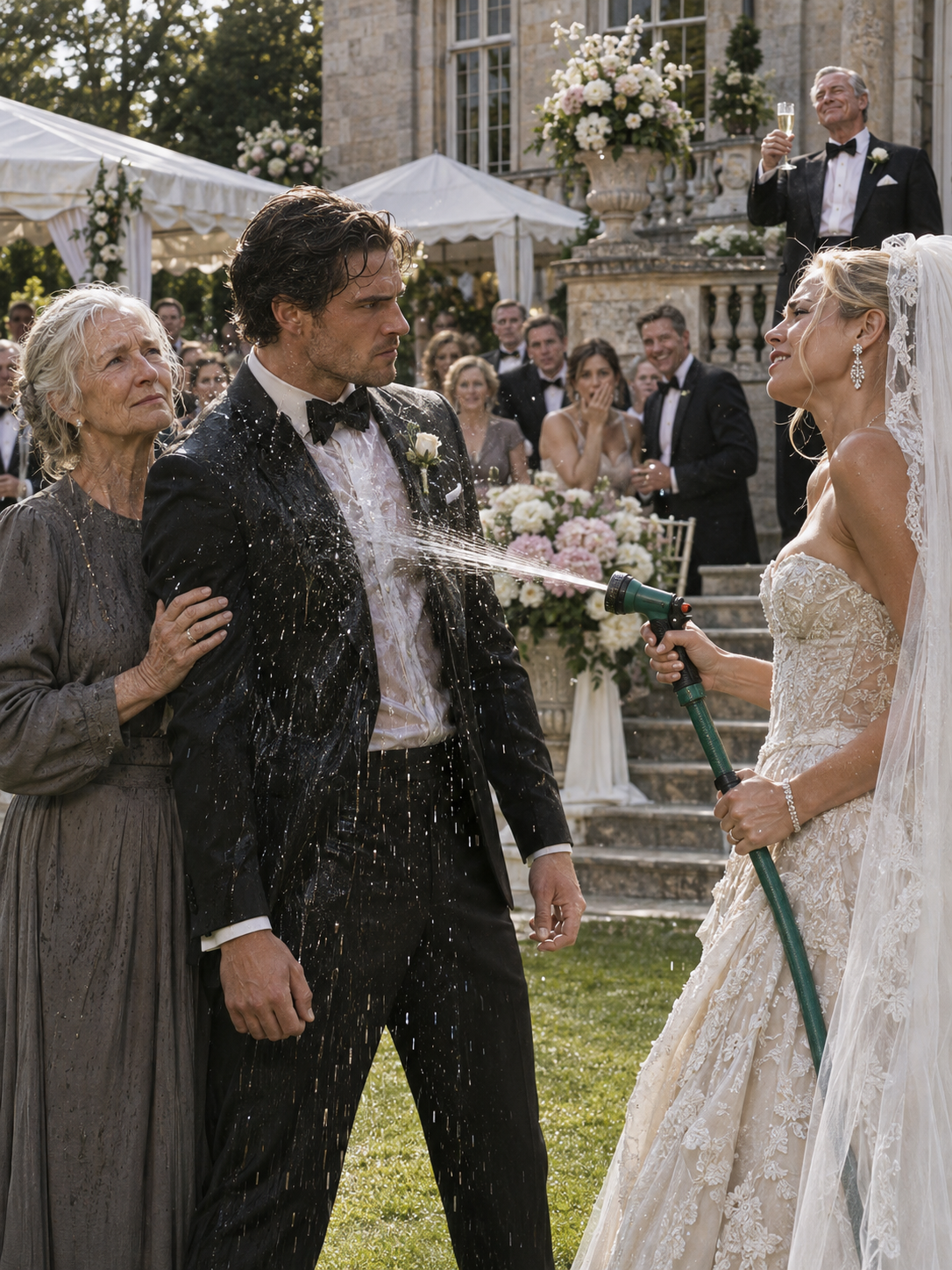
PART 4: THE PRICE OF A NAME
I caught my mother before she hit the floor.
Rebecca rushed forward.
“Eleanor!”
My mother’s eyes were open.
But she seemed unable to focus.
Her breathing came in short bursts.
I lowered her carefully onto the carpet.
“Mom, look at me.”
She blinked.
“Danny?”
“I’m here.”
Her fingers gripped my sleeve.
“Robert.”
“I know.”
She shook her head.
“He disappeared.”
“Mom, breathe.”
Rebecca knelt beside us.
She checked my mother’s pulse.
Then looked toward the door.
“Call medical assistance.”
I reached for my phone.
But my mother caught my wrist.
“No hospital.”
“Mom—”
“Please.”
She swallowed.
“I’m just overwhelmed.”
Rebecca studied her carefully.
“We should still have you examined.”
My mother nodded reluctantly.
“After I see Robert.”
I looked toward the security monitor.
The old man remained downstairs.
Vanessa stood beside him.
She was crying.
For the first time,
I couldn’t tell whether those tears
were fear, guilt, or genuine remorse.
Perhaps all three.
Paul’s voice came through the intercom.
“Daniel, what are your instructions?”
I looked at Rebecca.
She shook her head slightly.
Not yet.
“Keep them in the lobby,” I said.
“Separate them.”
Paul acknowledged.
“And request an investigator’s presence.”
Rebecca nodded approvingly.
“We shouldn’t handle potential evidence ourselves.”
I turned back toward my mother.
“Can you sit up?”
She nodded.
I helped her into a chair.
Her face remained pale.
A medical professional from building security
arrived within minutes.
She examined my mother carefully.
Her blood pressure was elevated.
But she was conscious and responsive.
She recommended further medical evaluation.
My mother agreed.
On one condition.
She wanted to see Robert first.
Rebecca considered the situation.
Then made several calls.
Detective Foster was already nearby.
He agreed to attend.
Until he arrived,
we waited in silence.
My mother held the blue quilt.
Her fingers traced the stitching.
I sat beside her.
“Who is Robert really?”
She looked at me.
“Robert Ellis.”
“The electrician?”
She nodded.
“He worked with your father.”
I remembered her earlier story.
The man who delivered the blue ledger.
The man who disappeared afterward.
“Why did you think he was gone?”
“Because nobody could find him.”
She stared at her hands.
“His sister told me he’d left town.”
“Then she disappeared too.”
I looked toward the monitor.
The old man was sitting quietly.
His hands rested on his knees.
He looked exhausted.
Like someone who had spent
many years running from something.
“Was he Dad’s friend?”
My mother nodded.
“One of his closest.”
She paused.
“And one of the last people
to see him alive.”
I felt a sharp ache.
For most of my life,
I had known almost nothing
about my father’s final hours.
Now witnesses were appearing.
Documents were resurfacing.
Secrets were breaking open.
And the truth seemed close enough
to touch.
At twelve twenty,
Detective Foster arrived.
He came with another investigator.
Rebecca briefed him privately.
Then Foster joined us.
“Mrs. Hayes, are you feeling better?”
“A little.”
He sat opposite her.
“Robert Ellis has agreed
to provide a formal statement.”
She closed her eyes.
“Thank God.”
Foster continued.
“He also brought original records.”
I leaned forward.
“What kind?”
“Photographs.”
“Correspondence.”
“And a statement he says
Samuel prepared before the fire.”
My heartbeat accelerated.
“Have you examined them?”
“Only preliminarily.”
He looked toward Rebecca.
“We’ll preserve the originals.”
Rebecca nodded.
“Of course.”
Foster turned toward my mother.
“Robert would like to speak with you.”
She gripped the quilt.
“Is he alone?”
“Yes.”
“Where’s Vanessa?”
“Being interviewed separately.”
My mother nodded.
“Then let him come.”
Ten minutes later,
Robert Ellis entered the room.
He was thinner than in the photograph.
His back was slightly bent.
His hands trembled.
But his eyes were unmistakably alert.
He stopped when he saw Eleanor.
For several seconds,
neither spoke.
Then he whispered,
“Ellie.”
My mother’s face crumpled.
“Robert.”
He took one hesitant step.
“I didn’t think you’d want to see me.”
She rose slowly.
I moved to help.
But she raised one hand.
Then she walked toward him.
“You should have come back.”
Robert lowered his head.
“I know.”
“You should have told me.”
His eyes filled.
“I know.”
She stood directly before him.
For one terrible moment,
I thought she would strike him.
Instead,
she placed both hands on his shoulders.
“Samuel trusted you.”
Robert began crying.
“I failed him.”
My mother shook her head.
“Then tell us what happened.”
Robert looked toward Foster.
The detective nodded.
“Take your time.”
Robert sat at the conference table.
His hands were shaking badly.
I poured him a glass of water.
He thanked me quietly.
Then he looked at my face.
“Good Lord.”
I frowned.
“What?”
“You look just like him.”
My throat tightened.
“My father?”
Robert nodded.
“Same eyes.”
“Same stubborn jaw.”
He attempted a smile.
“He never knew when to stop asking questions.”
I sat opposite him.
“Then tell me what he found.”
Robert took a long breath.
“The factory was failing inspections.”
“Management concealed the reports.”
“Charles Whitmore knew.”
I felt anger rise.
“How do you know?”
“Because I attended the meetings.”
Rebecca leaned forward.
“Which meetings?”
“The maintenance budget reviews.”
Robert wiped his eyes.
“Charles had invested heavily.”
“He was under pressure.”
“Several expansion loans were coming due.”
“Samuel wanted the machines shut down.”
“Charles wanted production to continue.”
I stared.
“What happened?”
“Samuel discovered the insurance coverage
had recently been increased.”
Robert looked toward Foster.
“The timing frightened him.”
My mother closed her eyes.
Robert continued.
“He started documenting everything.”
“Safety failures.”
“Payment instructions.”
“Equipment orders.”
“And unauthorized changes to the records.”
I remembered the blue notebook.
My father’s careful handwriting.
The warnings.
The dates.
“He knew the factory was dangerous,” I said.
Robert nodded.
“Yes.”
“Then why did he go there that night?”
Robert looked toward my mother.
“Because Margaret called Eleanor.”
My mother lowered her head.
Robert continued.
“Margaret believed someone was destroying evidence.”
“Samuel went to retrieve it.”
“And I went with him.”
I sat forward.
“You were there?”
Robert nodded.
“Yes.”
The room became silent.
He swallowed.
“We arrived around nine thirty.”
“The main building was almost empty.”
“Margaret was waiting near the maintenance office.”
“She showed us a box of records.”
“Samuel started photographing them.”
I could picture him.
Standing beneath fluorescent lights.
Holding papers.
Trying to preserve the truth.
“What happened next?”
Robert stared at his hands.
“Charles arrived.”
My mother made a small sound.
Robert continued.
“He wasn’t alone.”
“Two men came with him.”
“Who?”
“One was a plant executive.”
“The other worked for the insurer.”
Foster began taking notes.
Robert spoke slowly.
“They demanded the records.”
“Samuel refused.”
“Charles became furious.”
I felt my pulse quicken.
“Did he attack Dad?”
Robert shook his head.
“Not directly.”
“What happened?”
“They argued.”
“Samuel accused Charles of covering up
dangerous operating conditions.”
“Charles told him to stop.”
“Samuel said he would go public.”
Robert paused.
“Then one of the other men
tried to take the documents.”
A terrible silence followed.
“Samuel stepped backward.”
“He stumbled against an exposed electrical cabinet.”
“There was a flash.”
My mother covered her mouth.
Robert’s voice broke.
“He was injured badly.”
I stared at him.
“Was he still alive?”
Robert nodded.
“Yes.”
I could barely breathe.
“He was conscious.”
“He asked me to help him.”
Robert began shaking.
“I tried.”
“I swear I tried.”
I gripped the edge of the table.
“Then what?”
Robert looked toward Foster.
“The emergency systems failed.”
“The power distribution equipment overheated.”
“Smoke spread into the corridor.”
“Margaret called for help.”
“I tried to move Samuel.”
“But part of the ceiling collapsed.”
My mother began crying.
Robert lowered his head.
“I couldn’t reach him again.”
I struggled to remain seated.
My father had not simply disappeared
inside an impersonal industrial accident.
He had been injured during a confrontation
over evidence of dangerous conduct.
Then the building’s neglected safety systems
had failed around him.
“Did Charles help?” I asked.
Robert stared at me.
“No.”
The word struck like a blow.
“What did he do?”
“He left.”
I closed my eyes.
Robert continued.
“He told the others
that nobody should mention the argument.”
My hands began trembling.
I wanted to stand.
I wanted to find Charles.
I wanted to make him experience
one fraction of what he had caused.
But my father’s letter returned to me.
Be kind.
Refuse cruelty.
Protect people.
I forced myself to breathe.
Rebecca placed a hand on my arm.
“Daniel.”
I nodded.
Robert continued.
“Afterward, they pressured us.”
“They claimed Samuel had entered
a restricted area without authorization.”
“They said his actions caused the fire.”
My mother shook her head.
“He was trying to stop it.”
“I know.”
Robert’s voice cracked.
“They threatened to blame Margaret.”
“They told her she’d lose everything.”
“What about you?” I asked.
Robert looked ashamed.
“They offered me money.”
My stomach tightened.
“Did you take it?”
He nodded.
“Yes.”
The room went still.
Robert stared at the table.
“I was frightened.”
“My wife was pregnant.”
“We had debts.”
“I told myself I could protect them.”
He began crying again.
“But I sold my silence.”
I looked at him for a long time.
Anger burned through me.
This man had known.
For almost thirty years,
he had known important parts
of my father’s final moments.
And he had remained silent.
“You could have helped my mother.”
Robert nodded.
“I know.”
“You could have told investigators.”
“Yes.”
“You could have told me.”
His shoulders shook.
“I know.”
I stood and walked away.
The room felt too small.
I pressed my hands against the window.
Below us,
the city continued moving.
People crossed streets.
Traffic lights changed.
Somewhere,
a family was probably eating breakfast.
And I was learning
that my father’s death
had been followed by years of cowardice.
Behind me,
Robert spoke quietly.
“I don’t expect forgiveness.”
I turned.
“Then why are you here?”
He looked up.
“Because I finally have
something worth telling the truth for.”
I stared.
“What?”
“My grandchildren.”
The answer surprised me.
Robert wiped his face.
“My oldest grandson asked me
why I never talk about my work.”
“I couldn’t answer him.”
“He’s seventeen.”
“He wants to become an engineer.”
Robert looked at my mother.
“And I realized I’d spent my life
teaching him to be afraid.”
He swallowed.
“I don’t want him
to become the man I became.”
The room remained silent.
Then my mother spoke.
“Truth doesn’t erase what happened.”
Robert nodded.
“I know.”
“But it gives the living
a chance to stop repeating it.”
Robert began crying.
My mother did not embrace him.
She did not absolve him.
She simply returned to her chair.
And I understood.
Forgiveness was not an obligation.
It could not be demanded.
And it did not require pretending
that terrible choices were harmless.
Foster cleared his throat.
“Mr. Ellis, you mentioned photographs.”
Robert nodded.
He opened a folder.
Inside were several old prints.
The first showed factory machinery.
The second showed damaged wiring.
The third showed a group of men
standing near the maintenance office.
One was Charles.
Another was my father.
And the third—
I leaned forward.
“Wait.”
I pointed toward the photograph.
“Who’s that?”
Robert looked at it.
“An insurance consultant.”
“Name?”
He hesitated.
“Victor Lang.”
I stared.
Victor.
Charles’s personal attorney.
The man who had threatened Rebecca.
The man who stood behind Charles
during the emergency board meeting.
I looked toward Foster.
“Victor was there?”
Robert nodded.
“He wasn’t an attorney back then.”
“He worked for the insurer.”
Rebecca’s expression changed.
“That explains the old settlement records.”
I looked at her.
“What?”
“Victor’s career began
in corporate insurance investigations.”
“Later, Charles hired him privately.”
I stared at the photograph again.
The same man.
Connected to the fire.
Connected to missing evidence.
And still protecting Charles today.
The implications were enormous.
Foster collected the photograph carefully.
“This will require verification.”
I nodded.
“Understood.”
Robert reached into his coat.
“There was also this.”
He placed a sealed envelope on the table.
The paper was brittle.
Its edges had darkened.
My father’s handwriting covered the front.
FOR ELEANOR.
My mother went completely still.
Robert looked at her.
“Samuel asked me to give you this
if anything happened.”
Her eyes filled.
“Why didn’t you?”
He lowered his head.
“Because I was a coward.”
She stared at the envelope.
For almost a minute,
she did not move.
Then she reached for it.
Rebecca quietly asked
whether she wanted privacy.
My mother shook her head.
“No.”
She looked at me.
“Daniel should hear it.”
I sat beside her.
She opened the envelope carefully.
Inside was a short letter.
Her hands trembled too much to read.
So she gave it to me.
I unfolded the paper.
The handwriting was familiar.
My father began with an apology.
Not for leaving.
Not for dying.
But for the risks he had taken
without telling my mother everything.
He explained that he had discovered
a concealed insurance arrangement.
Certain parties stood to benefit financially
if the factory suffered catastrophic damage.
He did not claim
to know whether anyone intended harm.
He simply feared the incentives
had become dangerously distorted.
Then he wrote about my mother.
About her courage.
Her intelligence.
Her kindness.
Her ability to see value
where others saw nothing.
I looked at Eleanor.
Tears streamed down her face.
I continued reading.
My father wrote that wealth
could make life easier.
But it could not make someone worthy.
He hoped she would use
whatever survived of their work
to help people who had none.
Then came the final paragraph.
It was addressed to me.
Daniel,
your mother is the bravest person I know.
If you ever wonder what strength looks like,
look at the woman who raised you.
She may never wear diamonds.
She may never own a grand house.
But she will always possess something
no amount of money can purchase.
A heart that remains generous
even after the world has been cruel.
I stopped.
My voice had broken.
I could not continue.
My mother took my hand.
She was crying openly.
Robert covered his face.
Even Foster looked away.
I read the final sentence.
Take care of each other.
And never let fear decide
what kind of people you become.
I folded the letter.
Then I embraced my mother.
She held me tightly.
For nearly thirty years,
she had carried questions without answers.
Now she had something else.
Her husband’s words.
His love.
His trust.
Not an explanation for everything.
But enough to begin healing.
Later that afternoon,
the investigators questioned Vanessa.
I was not present.
Rebecca advised me to remain separate
from the active investigation.
I agreed.
But eventually,
Vanessa requested a formal meeting.
This time,
she did not come with threats.
She came with an attorney.
Rebecca attended with me.
Foster arranged the conversation
inside a supervised conference room.
Vanessa entered wearing a dark coat.
Her hair was tied back.
There was no jewelry.
No expensive handbag.
No carefully arranged smile.
She looked smaller than I remembered.
For a moment,
I saw the woman
I had once believed I loved.
Then I remembered the garden hose.
My mother’s wet dress.
The laughter.
And the threats.
Vanessa sat opposite me.
“Daniel.”
I nodded.
“Vanessa.”
She looked down.
“I don’t know where to begin.”
I remained silent.
Her attorney encouraged her gently.
“Start with the documents.”
Vanessa opened a folder.
Inside were financial statements,
emails,
and old photographs.
She pushed them across the table.
“I found these six months ago.”
I looked at Rebecca.
She nodded.
I examined the first page.
It was a payment schedule.
Several transfers had been made
from a Whitmore subsidiary
to a company linked with Robert Ellis.
I looked up.
“You paid him?”
Vanessa nodded.
“Yes.”
“Why?”
“Because my father told me to.”
My jaw tightened.
“You knew what they concerned?”
“Not at first.”
I waited.
She continued.
“Dad said Robert was a former employee.”
“He claimed there was an old dispute.”
“He said the payments were confidential settlements.”
I looked at the dates.
Some transfers were recent.
“Then what changed?”
Vanessa swallowed.
“I read the archived correspondence.”
“And?”
“I realized Robert had evidence
about the Halstead fire.”
I stared at her.
“When?”
“Three months ago.”
Three months.
During our engagement.
During wedding planning.
During dinners with my mother.
Vanessa had known
that Charles might possess information
about my father’s death.
And she said nothing.
“Why didn’t you tell me?”
Her eyes filled.
“Because I was afraid.”
“Of what?”
“My father.”
I waited.
“And losing everything.”
There it was.
The truth.
Not love.
Not loyalty.
Fear of losing wealth.
I leaned back.
“You could have come to me.”
“I know.”
“You could have told Rebecca.”
“I know.”
“You could have helped my mother.”
Vanessa began crying.
“I know.”
I stared at her.
“Instead, you threatened her.”
She shook her head.
“I was desperate.”
“Instead, you humiliated her.”
Her breathing became ragged.
“Daniel, please.”
I spoke quietly.
“Why did you pick up that hose?”
She looked away.
“Vanessa.”
She covered her face.
“I was angry.”
“At my mother?”
“No.”
“At you.”
I frowned.
“Why?”
“Because you wouldn’t let Dad
take control of Northbridge’s investments.”
I stared.
She continued through tears.
“He wanted additional financing.”
“You kept insisting on audits.”
“He said you were humiliating him.”
“And?”
“He said you needed to learn
who held the power in our relationship.”
My stomach turned.
“The wedding?”
She nodded.
“He told me to make sure
you understood where you belonged.”
I stared at her.
For a moment,
I could not speak.
“Did he tell you to attack Mom?”
Vanessa shook her head.
“No.”
“That was my decision.”
The admission hung in the air.
She looked directly at me.
“I wanted to embarrass her.”
“Because I thought it would embarrass you.”
I felt something inside me settle.
There was no misunderstanding left.
No missing context.
No secret explanation
that could turn cruelty into love.
Vanessa had made a choice.
And she understood why.
I nodded slowly.
“Thank you for telling the truth.”
She leaned forward.
“Does that mean—”
“No.”
Her expression collapsed.
“Daniel.”
“Our marriage will never happen.”
She stared at me.
“Not now.”
“Not later.”
“Not after everything settles.”
Tears ran down her face.
“I still love you.”
I looked at her sadly.
“Love without respect isn’t enough.”
She lowered her head.
I continued.
“You didn’t need to know
whether my mother was wealthy.”
“You only needed to know
that she was a human being.”
Vanessa began sobbing.
For a long time,
nobody spoke.
Then she pushed another document forward.
“I want you to have this.”
I examined it.
A signed authorization.
A transfer instruction.
And a series of emails.
The account was associated with Victor Lang.
The correspondence suggested he had helped
coordinate payments to silence witnesses.
I looked at Rebecca.
She immediately recognized the significance.
“Vanessa, did you obtain these lawfully?”
Vanessa nodded.
“From company records I could access.”
Her attorney confirmed
that the materials had been preserved.
Rebecca carefully set them aside.
“These need to go to investigators.”
Vanessa nodded.
“I know.”
She looked at me.
“My father doesn’t know I brought them.”
I watched her.
“Why are you doing this?”
She swallowed.
“Because I saw the video again.”
I said nothing.
“The wedding video.”
She wiped her face.
“I watched your mother trying to smile.”
“I watched her apologize.”
“And I realized something.”
She looked down.
“I had become exactly like my father.”
The room grew quiet.
Vanessa continued.
“I don’t know how to undo that.”
I answered softly.
“You can’t undo it.”
She closed her eyes.
“But you can stop doing it.”
She nodded.
Then she looked toward the door.
“Will Eleanor ever forgive me?”
I considered the question carefully.
“That’s hers to decide.”
Vanessa began crying again.
I stood.
Our conversation was finished.
Before leaving,
I turned back.
“Cooperate fully.”
“Tell the truth.”
“Accept the consequences.”
She nodded.
“I will.”
I left without touching her.
Without shouting.
Without making promises.
For the first time,
I understood that walking away
could be an act of strength.
The following weeks were difficult.
Far more difficult
than the dramatic headlines suggested.
The financial investigation expanded.
Independent auditors examined hundreds of transactions.
Certain valuations were corrected.
Several assets required restructuring.
Banks negotiated revised repayment arrangements.
The courts reviewed disputed contracts.
The company’s directors cooperated
with the appropriate authorities.
None of it happened magically.
None of it happened overnight.
But the old system of control
was gradually dismantled.
Charles lost his executive positions.
His personal guarantees came under scrutiny.
Several luxury properties were sold
to address legitimate obligations.
Certain disputed funds were preserved
while investigators completed their work.
His carefully constructed public image
collapsed under the weight of documentation.
Not because I shouted louder.
Not because I possessed more money.
Because records eventually mattered.
And the people who had kept them
were finally willing to speak.
Victor Lang was removed
from representing the affected companies.
His conduct became the subject
of separate professional and criminal inquiries.
The surviving witnesses provided statements.
Robert Ellis cooperated extensively.
Margaret Ellis confirmed important details
about the night of the fire.
Investigators reconstructed the timeline.
The technical evidence established
serious, documented safety failures.
And the old accident narrative
was formally reopened for review.
One afternoon,
Detective Foster called me.
“Daniel.”
“Yes?”
“We’ve completed another major review.”
I stood beside my office window.
“What did you find?”
“Your father’s technical warnings were authentic.”
I closed my eyes.
“And the records?”
“Several were deliberately altered.”
My hands tightened.
“Can you establish responsibility?”
“We have evidence supporting charges
against individuals involved in the concealment.”
I took a slow breath.
“Charles?”
Foster paused.
“Among others.”
I looked toward my mother’s photograph.
It sat on my desk.
She was smiling in our old garden.
“Thank you,” I whispered.
Foster continued.
“I want you to understand something.”
“Yes?”
“The legal process will take time.”
“I know.”
“Some facts may remain uncertain.”
I nodded.
“I understand.”
He paused.
“But your father’s warnings were real.”
My eyes filled.
“And he tried to protect people.”
“Yes.”
Those words mattered more
than any financial settlement.
My father had not been reckless.
He had not caused the disaster
through careless interference.
He had tried to prevent it.
And after nearly thirty years,
the truth was finally being acknowledged.
I called my mother immediately.
She answered on the second ring.
“Danny?”
“Mom.”
Something in my voice made her pause.
“What happened?”
I struggled to speak.
“They confirmed Dad’s warnings.”
She made a small sound.
“The technical records?”
“Yes.”
I swallowed.
“He was telling the truth.”
For a moment,
there was only silence.
Then I heard her crying.
Not the frightened crying
I remembered from the wedding.
Something different.
Relief.
Grief.
And the release
of a burden carried far too long.
“I knew,” she whispered.
“I always knew.”
“I know, Mom.”
She cried quietly.
Then she asked,
“Can we visit him?”
I understood immediately.
My father’s grave.
We had not visited together
since the previous autumn.
“Of course,” I answered.
That Saturday,
we drove to the cemetery.
The morning was cool.
Sunlight filtered through the trees.
My mother carried fresh flowers.
White lilies.
My father’s favorite.
We walked slowly along the gravel path.
His headstone stood beneath a maple tree.
SAMUEL HAYES.
BELOVED HUSBAND AND FATHER.
My mother knelt carefully.
She placed the flowers beside the stone.
Then she touched his name.
“Hello, Sam.”
Her voice trembled.
“It’s been a long time.”
I stood beside her.
She smiled through tears.
“Daniel’s here.”
I looked at the headstone.
For so many years,
I had imagined conversations with him.
About school.
About work.
About love.
About mistakes.
About the life I had built.
Now I finally understood
the kind of man he had been.
I knelt beside my mother.
“Hi, Dad.”
The words felt strange.
But right.
I took a breath.
“I almost got married.”
Mom gave a soft laugh.
I smiled sadly.
“It didn’t work out.”
The wind moved through the leaves.
I continued.
“But I learned something important.”
I looked at my mother.
“About who deserves a place in my life.”
She squeezed my hand.
I turned back toward the stone.
“And I think you’d be proud
of the woman who raised me.”
My mother began crying again.
I wrapped my arm around her.
We stayed there for a long time.
No cameras.
No reporters.
No board meetings.
Just two people
remembering someone they loved.
When we finally stood,
my mother touched the headstone again.
“You can rest now, Sam.”
Her voice was steady.
“We’re going to be all right.”
Several months passed.
The Whitmore investigation continued
through formal legal proceedings.
Charles faced charges connected
to financial misrepresentations and evidence concealment.
The court process remained separate
from the company’s restructuring.
Vanessa entered a cooperation agreement
concerning records she had helped maintain.
Her role in the financial transactions
was reviewed independently.
She also accepted responsibility
for what happened at the wedding.
My mother filed a civil claim
relating to the assault.
It was resolved through counsel.
There was no private bargain
to exchange silence for money.
No dramatic secret settlement.
Vanessa issued a public apology.
For once,
she did not call it a joke.
She did not blame alcohol.
She did not claim misunderstanding.
She acknowledged her actions.
And she acknowledged the harm.
My mother read the statement quietly.
Then folded the paper.
“Does it help?” I asked.
She considered the question.
“A little.”
“Do you forgive her?”
Mom looked toward the garden.
“Perhaps someday.”
She turned back toward me.
“But forgiveness doesn’t require
inviting someone back into our lives.”
I nodded.
“No.”
She smiled.
“That’s something I’ve learned.”
The wedding video eventually faded
from the daily news cycle.
Other stories replaced it.
Other scandals.
Other headlines.
But the people who had watched it
did not all forget.
Letters began arriving at Northbridge.
Some came from strangers.
Some from elderly parents.
Some from people who had been humiliated
by their own families.
They wrote about shame.
About loneliness.
About being treated as burdens.
About discovering that their value
had somehow become linked
to the contents of their bank accounts.
My mother read many of those letters.
She answered some personally.
At first,
I worried the attention would exhaust her.
But she seemed energized.
One afternoon,
she came to my office
carrying a thick folder.
“Danny.”
I looked up.
“Yes?”
“I have an idea.”
Her eyes were bright.
The familiar spark had returned.
“Tell me.”
She placed the folder on my desk.
Inside were handwritten notes.
A budget.
Several letters.
And a simple proposal.
I read the title.
THE SAMUEL HAYES FOUNDATION.
I looked at her.
“Mom.”
She smiled.
“I’ve been thinking.”
She sat opposite me.
“Your father cared about workers.”
“He cared about safety.”
“He cared about families
who had nowhere to turn.”
I nodded.
“Yes.”
She continued.
“I want to continue his work.”
I opened the proposal.
It described several programs.
Emergency support for injured workers.
Independent workplace safety education.
Legal assistance referrals.
Scholarships for engineering students
from low-income families.
And community support
for older adults facing financial exploitation.
I looked up.
“This is extraordinary.”
My mother shook her head.
“It’s practical.”
“People need help.”
“We have the resources.”
“Why shouldn’t we use them?”
I smiled.
“You sound like Dad.”
She laughed softly.
“That’s the nicest thing
you could have said.”
We spent the next several months
turning her proposal into reality.
Independent trustees joined.
Experienced nonprofit administrators were hired.
Grant procedures were established.
Financial safeguards were designed.
And every program included
clear eligibility and oversight standards.
My mother insisted on one thing.
“No giant portrait of me.”
I laughed.
“Mom.”
“I’m serious.”
“No gold letters.”
“No ridiculous marble entrance.”
I held up my hands.
“Understood.”
She narrowed her eyes.
“And no naming rights
for people who only want publicity.”
I smiled.
“Agreed.”
The foundation opened quietly.
Its first scholarship went
to a young engineering student
whose father had died in a workplace accident.
Her name was Emily Carter.
She was nineteen.
She worked evenings at a grocery store.
And she wanted to design safer machinery.
At the award ceremony,
Emily approached my mother nervously.
“Mrs. Hayes?”
Mom smiled.
“Yes, dear?”
“I wanted to thank you.”
My mother took her hand.
“You earned this.”
Emily shook her head.
“I almost dropped out.”
“My mother couldn’t afford tuition.”
She swallowed.
“This changes everything.”
My mother’s eyes filled.
“Then promise me something.”
Emily nodded.
“What?”
“When you become an engineer,
remember the people operating your machines.”
Emily smiled through tears.
“I promise.”
My mother embraced her.
I stood nearby,
watching the two women.
And I thought about the Whitmore estate.
The enormous lawn.
The champagne.
The designer dresses.
The guests laughing
while my mother stood in freezing water.
Charles had measured success
through possessions and public admiration.
But here,
inside a modest community auditorium,
I saw something infinitely more valuable.
A future being opened.
A life being changed.
A young woman being told
that her dreams mattered.
After the ceremony,
my mother approached me.
“Danny?”
“Yes?”
“Are you happy?”
I considered the question.
For months,
happiness had seemed like a distant country.
Something I remembered
but couldn’t quite reach.
Now I looked around the auditorium.
Emily was talking with her mother.
Luis stood near the refreshments.
Rebecca was laughing with Katherine.
Marcus Reed had joined the foundation’s
community safety advisory group.
And my mother looked peaceful.
“Yes,” I answered.
“I think I am.”
She smiled.
“Good.”
Then she touched my cheek.
“Your father wanted that for you.”
A year after the wedding,
I visited the Whitmore estate again.
Not as a guest.
Not as a groom.
And certainly not as a son-in-law.
The property was being sold
through a supervised process
to address legitimate financial obligations.
The buyer had requested a walkthrough.
I attended with the restructuring officer.
The great gates opened slowly.
I drove along the familiar driveway.
The gardens were still beautiful.
The fountains still worked.
The marble steps still gleamed.
But the estate felt different.
Empty.
The enormous house had lost
the people who once filled it
with laughter and cruelty.
A caretaker met us.
He was an older man named Peter.
I recognized him from the wedding.
He had been standing near the terrace
when Vanessa sprayed my mother.
He looked embarrassed when he saw me.
“Mr. Hayes.”
“Peter.”
He cleared his throat.
“I’ve wanted to say something.”
I waited.
“About that day.”
I nodded.
He looked toward the lawn.
“I should have helped.”
His voice shook.
“I saw what they were doing.”
“And I stood there.”
I studied him.
He was not a wealthy man.
He had worked for the Whitmores
for almost twenty years.
He had probably spent much of that time
afraid of losing his job.
“Why didn’t you?” I asked.
He lowered his head.
“Because Charles frightened me.”
I nodded slowly.
Peter continued.
“I kept thinking someone else would intervene.”
“But nobody did.”
His eyes filled.
“Then you stepped forward.”
I looked toward the terrace.
The garden hose was gone.
The white silk canopies were gone.
The wedding decorations had vanished.
But I could still see
my mother standing there.
Wet.
Shivering.
Trying not to spoil my happiness.
Peter whispered,
“I’m sorry.”
I considered his words.
Then I said,
“Next time, help.”
He looked up.
“What?”
“When you see someone being humiliated,
don’t wait for someone else.”
His eyes filled.
“I won’t.”
I nodded.
“Good.”
We continued the walkthrough.
The estate eventually sold.
A new owner converted part
of the property into a retreat center
for educational and charitable events.
The lawns remained.
The gardens remained.
But the Whitmore name disappeared
from the entrance gates.
I learned about the change
through a routine property report.
There was no celebration.
No champagne.
No triumphant speech.
Just a quiet sense
that one chapter had finally ended.
Several weeks later,
I received a letter from Vanessa.
It arrived through her attorney.
I recognized her handwriting immediately.
For a long time,
I considered leaving it unopened.
Then I sat beside my window
and carefully unfolded the paper.
She wrote about the wedding.
Not about losing her inheritance.
Not about her father’s downfall.
Not about the life she expected
and no longer possessed.
She wrote about Eleanor.
She described watching the video
after the first public backlash.
She said she had paused it
at the moment my mother
reached for my arm.
The gesture had haunted her.
My mother was trying to protect me
while being humiliated herself.
Vanessa admitted she had mistaken wealth
for superiority.
She had mistaken obedience for love.
She had mistaken cruelty for confidence.
And she had mistaken my patience
for permission to treat people badly.
The letter contained no request
to resume our relationship.
No demand for forgiveness.
No elaborate justification.
Only an acknowledgment.
I am responsible for what I did.
I cannot make your mother forget.
I cannot restore your trust.
But I hope one day
I become someone who would never
do such a thing again.
I folded the letter.
Then placed it inside my desk.
I did not respond.
Some relationships end
without a final argument.
Without a dramatic reunion.
Without another chance.
Sometimes the most respectful ending
is simply to let the distance remain.
That evening,
I drove to my mother’s house.
The same small house
Vanessa had once mocked.
The porch light was glowing.
Flowers grew beside the steps.
A wooden wind chime moved gently.
I parked my six-year-old car
and walked toward the door.
Mom opened it before I knocked.
“Danny!”
She smiled.
“You’re early.”
I kissed her cheek.
“Traffic was light.”
She stepped aside.
“Come in.”
The kitchen smelled wonderful.
Roasted chicken.
Fresh bread.
Apple pie.
Everything familiar.
Everything safe.
I hung my coat beside the door.
Then noticed something new
on the living room wall.
A framed photograph.
My father.
Standing beside a younger version
of my mother.
They were laughing.
Behind them stood their first workshop.
I approached the picture.
“Where did you find this?”
Mom joined me.
“Robert sent it.”
I looked at her.
“Have you spoken with him?”
She nodded.
“Once.”
I studied her face.
“How was it?”
“Difficult.”
She paused.
“But necessary.”
I waited.
She continued.
“He apologized again.”
“Did you forgive him?”
She considered the question.
“I told him I hoped
he would spend the rest
of his life telling the truth.”
I nodded.
“That sounds fair.”
Mom smiled sadly.
“It’s the best I can offer.”
I looked back at the photograph.
My parents looked so young.
So hopeful.
They had no idea
what the coming years would bring.
Yet there they were.
Laughing.
Holding each other.
Building something together.
I touched the frame gently.
“Dad looks happy.”
“He was.”
Mom smiled.
“He loved that workshop.”
“He loved making things.”
“And he loved you.”
I looked at her.
“You too.”
She laughed softly.
“Yes.”
“Very much.”
We ate dinner at the kitchen table.
No expensive silverware.
No hired servers.
No elaborate decorations.
Just two plates.
Two glasses of water.
And a conversation
that did not require anyone
to prove their worth.
Mom asked about the foundation.
I told her about Emily’s progress.
She was doing well in school.
Her professors praised her work.
She had joined a research team
studying safer industrial automation.
Mom smiled proudly.
“Samuel would have loved that.”
I nodded.
“He would.”
We talked about Luis’s daughter.
About Marcus’s new community project.
About Katherine’s retirement plans.
About Rebecca’s upcoming vacation.
Ordinary things.
Good things.
Then my mother became quiet.
“Danny?”
“Yes?”
“Do you regret it?”
I looked up.
“Regret what?”
“Walking away from the wedding.”
I set down my fork.
For a moment,
I considered the question carefully.
I remembered the humiliation.
The anger.
The heartbreak.
The headlines.
The investigations.
The long nights.
The feeling that my entire future
had collapsed in a single afternoon.
Then I looked at my mother.
Sitting across from me.
Healthy.
Safe.
Smiling.
“No,” I answered.
“Not for one second.”
Her eyes filled.
“I’m sorry you lost Vanessa.”
I shook my head.
“Mom.”
She looked at me.
“I didn’t lose the right person.”
I reached across the table.
“I found out who the wrong person was.”
She squeezed my hand.
Then smiled through tears.
“Your father would have liked that answer.”
I laughed.
“Good.”
We finished dinner.
Afterward,
we carried our plates into the kitchen.
Mom insisted on washing them.
I insisted on drying.
It became the same familiar argument
we had repeated for years.
“You’re a guest,” she said.
“I’m your son.”
“Exactly.”
“Then let me help.”
She handed me a towel.
“Fine.”
I grinned.
“Victory.”
She rolled her eyes.
“Don’t become arrogant.”
I laughed.
“Never.”
Later,
we sat together on the porch.
The evening air was warm.
Crickets chirped in the garden.
The street was quiet.
Across the road,
a neighbor watered her flowers.
A child rode past on a bicycle.
Someone waved from a passing car.
My mother leaned back in her chair.
“I like this house.”
I smiled.
“I know.”
“It’s small.”
“It’s yours.”
She nodded.
“And it feels like home.”
I looked around.
The old wooden railing.
The flowerpots.
The little porch swing.
The screen door that squeaked
whenever someone opened it.
Everything Charles had mocked
now seemed precious.
“Mom?”
“Yes?”
“Why did you never buy
one of those enormous mansions?”
She considered the question.
Then smiled.
“Your father once told me something.”
I waited.
“He said a house should be
large enough for the people
who love each other.”
She glanced toward the garden.
“And small enough
that they can still find one another.”
I laughed softly.
“That sounds like Dad.”
She nodded.
“It does.”
The evening darkened.
Stars appeared overhead.
For several minutes,
we sat without speaking.
Then my mother reached for my hand.
“Danny.”
I turned.
“Yes?”
“Promise me one more thing.”
I smiled.
“Another promise?”
She nodded seriously.
“When you fall in love again,
don’t be afraid.”
The words surprised me.
“Mom.”
“I mean it.”
She squeezed my fingers.
“Vanessa hurt you.”
“But she doesn’t get
to decide the rest of your life.”
I looked toward the street.
For a long moment,
I couldn’t answer.
Then I nodded.
“I’ll try.”
She smiled.
“That’s enough.”
Two years after the wedding,
something unexpected happened.
I was attending a foundation scholarship event
when I met a woman named Claire.
She was an engineering professor.
She volunteered with our safety education program.
She wore a simple navy dress
and comfortable shoes.
She carried a stack of student projects.
When we met,
she was helping a nervous teenager
repair a broken demonstration model.
I approached.
“Need a hand?”
She looked up.
“Only if you know how
to fix a misaligned gear assembly.”
I smiled.
“Actually, I do.”
She raised an eyebrow.
“Then you’re hired.”
We spent twenty minutes
repairing the small machine.
The teenager watched eagerly.
Claire explained every adjustment.
She never made him feel foolish.
When the model finally worked,
he shouted with delight.
Claire laughed.
Then turned toward me.
“Not bad.”
I grinned.
“High praise.”
She smiled.
“Don’t let it go to your head.”
Something about her felt familiar.
Not because she resembled Vanessa.
She didn’t.
But because kindness came naturally to her.
She treated the teenager with respect.
She thanked the volunteers.
She helped an elderly guest
carry a heavy bag.
And when she met my mother,
she listened more than she spoke.
Mom liked her immediately.
Of course, she said nothing.
Not until we were driving home.
Then she looked at me.
“That Claire seems nice.”
I laughed.
“Mom.”
“What?”
“Nothing.”
She smiled innocently.
“I’m merely making an observation.”
I shook my head.
“Of course you are.”
She looked out the window.
Then added,
“She has kind eyes.”
I couldn’t help smiling.
“Yes.”
“She does.”
Claire and I became friends.
Then slowly,
something more.
There was no rush.
No enormous engagement party.
No expensive gifts designed to impress.
We spent afternoons walking through parks.
We cooked dinner.
We talked about difficult choices.
She knew about my past.
The wedding.
The Whitmores.
The investigation.
The headlines.
I never concealed any of it.
One evening,
she asked me a question.
“What frightened you most?”
We were sitting beside a lake.
The sunset reflected across the water.
I considered my answer.
“Not losing Vanessa.”
She waited.
“Not losing money.”
I looked toward the horizon.
“Realizing I’d ignored things
I should have taken seriously.”
Claire nodded.
“That’s a difficult lesson.”
“Yes.”
She touched my hand.
“But you learned it.”
I looked at her.
“I’m still learning.”
She smiled.
“Good.”
For the first time in years,
I felt no need
to impress the woman beside me.
I didn’t need to explain Northbridge.
I didn’t need to discuss investments.
I didn’t need to prove
that I belonged in wealthy circles.
I could simply be Daniel.
A man who liked old cars.
A man who missed his father.
A man who loved his mother.
A man still learning
how to build a good life.
And Claire liked that man.
One spring afternoon,
we returned to Willow Street.
The old house had become available
after the Whitmore restructuring.
I had purchased it lawfully
through an independent sale process.
Not to reclaim the past.
Not to build a monument.
But to preserve something meaningful.
The property had been restored carefully.
The workshop remained.
Its damaged roof had been repaired.
The old wooden floorboards were polished.
And my father’s workbench
stood in its original position.
My mother entered slowly.
She looked around.
Tears filled her eyes.
“It smells the same.”
I smiled.
“Wood and machine oil?”
She nodded.
“And memories.”
Claire stood quietly beside us.
She gave my mother space.
I walked toward the workbench.
On top sat the wooden airplane.
The one my father had made me.
I had brought it from home.
My mother saw it.
She covered her mouth.
“Oh, Danny.”
I lifted the airplane.
Its wings were slightly uneven.
One wheel had been repaired.
The paint had faded.
But it was still beautiful.
I handed it to her.
She held it carefully.
Then laughed through tears.
“Samuel was so proud of this.”
“He told everyone he’d built
a masterpiece for his son.”
I smiled.
“He did.”
We stood together in the workshop.
A family shaped by loss.
A family rebuilt through truth.
A family that had survived
because love had remained
when everything else became uncertain.
Later that year,
the foundation opened a technical learning center
inside the restored building.
Young people came to study engineering.
Retired tradespeople volunteered.
Safety specialists taught practical courses.
And photographs of the original workers
hung along the entrance hallway.
Not just my father.
Every employee whose life
had been changed by the Halstead disaster.
Their names were recorded.
Their stories were preserved.
Their families were invited
to contribute memories and photographs.
My mother attended the opening ceremony.
She wore the same gray dress
she had worn at my wedding.
I was surprised.
“Mom.”
She smiled.
“What?”
“That dress.”
She looked down.
“Oh.”
I hesitated.
“Are you sure?”
She studied my face.
Then nodded.
“Absolutely.”
I swallowed.
“Why?”
She gently straightened the collar.
“Because I never wanted
that day to own this dress.”
I stared at her.
She continued.
“Your father bought it for me.”
My eyes widened.
“What?”
She smiled.
“Many years ago.”
“It was one of his favorites.”
I felt my throat tighten.
“I didn’t know.”
She touched my arm.
“Now you do.”
I looked at the simple gray fabric.
For so long,
I had remembered only the water.
The humiliation.
The laughter.
Now the dress meant something different.
It was a gift from my father.
A piece of their marriage.
A memory of love
that existed long before Charles Whitmore.
My mother smiled.
“I wore it because Samuel
would have wanted to see you married.”
She paused.
“And I’m wearing it today
because he’d be proud of what we’ve built.”
I embraced her.
Neither of us spoke.
We didn’t need to.
When the ceremony began,
my mother walked to the front.
There were no silk canopies.
No champagne towers.
No wealthy guests competing for attention.
There were students.
Teachers.
Workers.
Families.
People whose lives mattered
regardless of their financial circumstances.
My mother stepped toward the microphone.
She looked nervous.
I stood beside Claire.
She squeezed my hand.
Mom took a breath.
“Thank you for coming.”
Her voice trembled slightly.
Then steadied.
“Many years ago,
my husband believed technology
should make life safer.”
“He believed businesses had responsibilities
beyond making money.”
She looked toward Samuel’s photograph.
“He also believed
that every person deserved dignity.”
The room became silent.
My mother continued.
“Sometimes people confuse wealth
with the value of a human life.”
“They see expensive clothes
and assume someone is important.”
“They see old shoes
and assume someone is not.”
She paused.
“But kindness doesn’t have a price tag.”
I felt Claire’s hand tighten around mine.
Mom smiled gently.
“Neither does courage.”
She looked toward me.
“And neither does love.”
My eyes filled.
She continued.
“My husband left us
many things worth remembering.”
“Not just designs.”
“Not just inventions.”
“But a belief
that we can make the world better
by treating people with respect.”
She looked across the room.
“This building belongs to that belief.”
The audience rose slowly.
Applause filled the workshop.
My mother stepped back.
Her eyes were bright.
I walked forward and embraced her.
And I realized something.
At my wedding,
two hundred people had watched
while my mother was humiliated.
Here,
hundreds of people stood
to honor her.
But the difference was not
that the crowd was larger.
The difference was
that nobody needed to be humiliated
for someone else to feel important.
That was the world
my father had wanted.
And it was the world
my mother had spent her life building.
That evening,
after everyone had gone home,
Claire and I remained behind.
The workshop was quiet.
Sunlight entered through the windows.
The wooden airplane rested
inside a small glass display case.
Beside it hung my father’s photograph.
Claire stepped closer.
“He had kind eyes.”
I smiled.
“My mother says the same thing.”
She looked at me.
“You have them too.”
I laughed softly.
“That’s what Robert said.”
Claire took my hand.
“Maybe some things survive everything.”
I looked around the workshop.
The restored machinery.
The student workbenches.
The photographs.
The evidence of lives once damaged
and slowly made whole.
“Yes,” I answered.
“I think they do.”
We walked outside.
My mother stood near the garden.
She was talking with Emily.
The young engineer was explaining
her latest research project.
Mom listened eagerly.
She asked questions.
She laughed.
She looked happier
than I had seen her in years.
I watched her for a moment.
Then Claire touched my arm.
“Ready to go?”
I nodded.
“In a minute.”
I walked toward my mother.
She turned.
“Danny.”
I smiled.
“Having a good day?”
She looked around.
At the building.
At the students.
At the people leaving with smiles.
Then she looked at me.
“The best.”
I embraced her.
And for a moment,
I remembered the wedding lawn.
The cold water.
The laughter.
The ring leaving my finger.
The decision that had changed everything.
I had believed that afternoon
was the day my future collapsed.
But it wasn’t.
It was the day
I finally stopped confusing appearances
with character.
The day I stopped accepting cruelty
because it came wrapped in privilege.
The day I understood
that protecting someone you love
sometimes means walking away
from everything you thought you wanted.
My mother stepped back.
She brushed a little dust
from my jacket.
A familiar gesture.
One she had performed
since I was a child.
“Your father would be proud.”
I smiled.
“I hope so.”
She shook her head.
“I know so.”
The sun was setting.
Warm light moved through the trees.
Claire waited beside my car.
My mother waved toward her.
Then she looked at me again.
“Danny?”
“Yes, Mom?”
She smiled.
“Don’t forget your jacket.”
I laughed.
“I won’t.”
“And drive carefully.”
“I will.”
“And call me tomorrow.”
I kissed her forehead.
“Of course.”
She squeezed my hand.
Then turned back toward the workshop.
I watched her walk away.
Her gray dress moved gently
in the evening breeze.
She looked peaceful.
Strong.
Completely herself.
And for the first time,
that was how I remembered her.
Not soaked.
Not humiliated.
Not standing helplessly
before a cruel crowd.
But walking toward a place
built in honor of love.
I returned to Claire.
She opened the passenger door.
I looked at the familiar car.
Six years old.
Comfortable.
Reliable.
Nothing impressive by Whitmore standards.
I smiled.
Claire noticed.
“What?”
I shook my head.
“Nothing.”
She laughed.
“That’s clearly not true.”
I looked back toward the workshop.
Then toward the woman beside me.
“I was just thinking.”
“About what?”
I opened the driver’s door.
“About how much a person can gain
when they stop being afraid
of losing the wrong things.”
Claire smiled.
Then she took my hand.
We drove home beneath the fading sunlight.
And somewhere behind us,
my mother was laughing.
That sound followed me
all the way home.
It was worth more
than every mansion Charles Whitmore had owned.
More than every luxury car.
More than every expensive wedding.
More than every dollar
he had mistaken for power.
Because in the end,
the empire I wanted
was never built from money.
It was built from love.
From dignity.
From truth.
And from the simple promise
that nobody I loved
would ever have to stand alone
while the world laughed at their pain.
My father had understood that.
My mother had lived it.
And at last,
so did I.