Five Days After My C-Section, My Husband Handed Me Twelve Dollars for the Bus and Drove Off With His Mother. He Had No Idea Who Really Owned That Black SUV

Part 1: The Twelve Dollars That Ended My Marriage
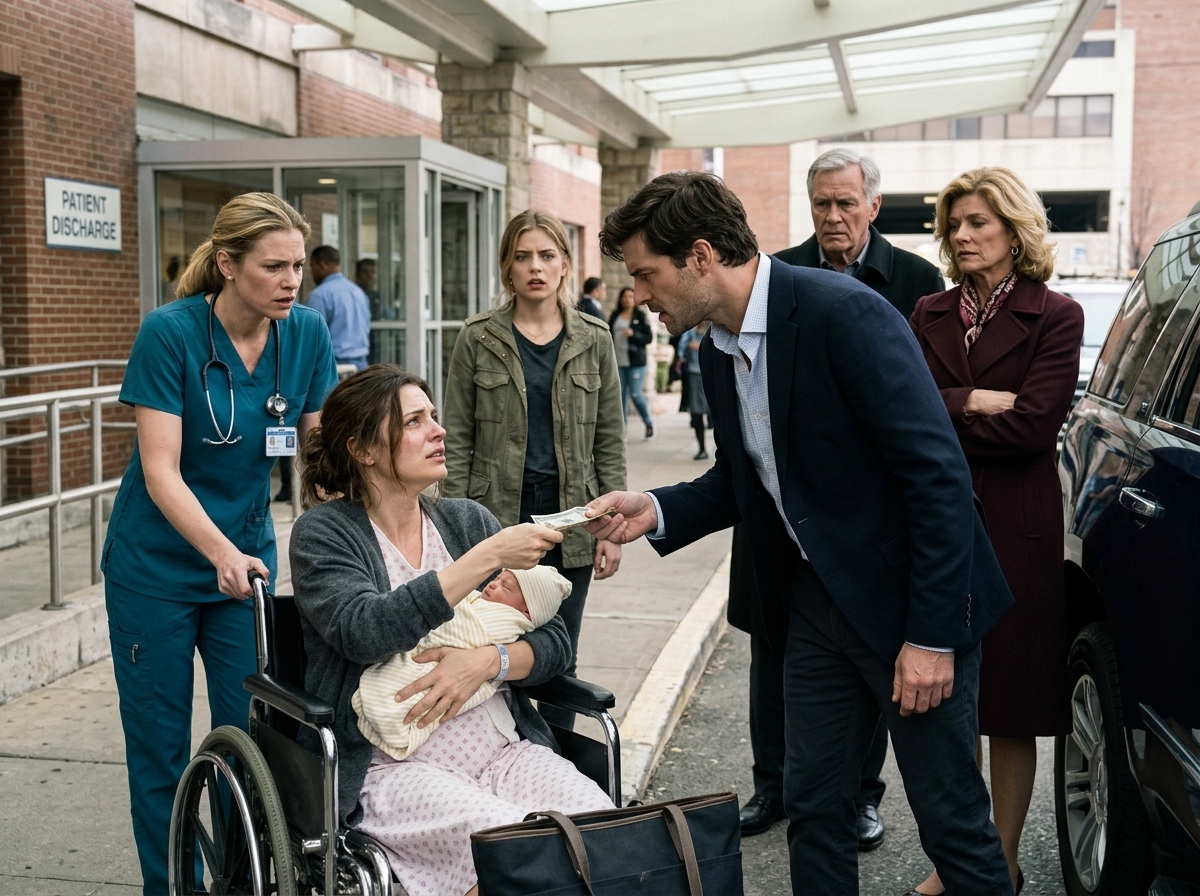
Five days after my C-section, my husband pressed twelve dollars into my hand and told me to take a city bus home with our newborn. Then he climbed into my black SUV to take his mother to lunch.
“Please tell me you’re joking,” I said, struggling to hold baby Noah without straining my incision.
Ethan checked his watch. “The bus fare costs less than that, Claire.”
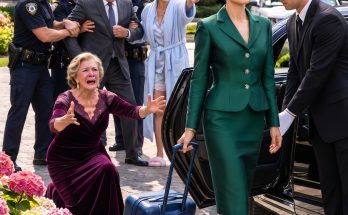
His mother, Diane, impatiently reminded him about their reservation. Ethan opened the passenger door for her, though he had never shown me the same courtesy throughout my pregnancy.
When I asked for Noah’s diaper bag, Ethan dropped it beside my feet. I tried to bend down, but pain tore through my abdomen and blurred my vision.
A nurse hurried over. “Don’t bend, ma’am. You’re still recovering from major surgery.”
Ethan sighed. “Can everyone stop making this so dramatic?”
Then he drove away with Diane, his father, and his sister, leaving me outside St. Vincent’s Hospital with a five-day-old baby, a hospital bracelet, and twelve dollars.
When the bus arrived, the driver lowered the steps, and an elderly woman immediately offered me her seat. Their kindness hurt because two strangers had shown me more concern in thirty seconds than my husband had in months.
As Manhattan passed outside the window, I stopped making excuses for Ethan. His temper was not stress, his selfishness was not temporary, and his mother’s cruelty was not something I had to tolerate.
Ethan knew I came from money and that my father had retired from government service. He did not know General Thomas Morgan had been a four-star Army commander whose influence reached far beyond anything Ethan imagined.
Dad had once warned me, “Let people reveal who they are before they discover who stands behind you.”
I called his private number. He answered immediately.
“Dad, I need help.”
After hearing everything, he asked, “Do you want to go back?”
I looked at Noah sleeping against my chest. “No. I want to leave him.”
“Then you’ve already left.”
At the next stop, two black sedans waited beside the curb. A woman in a dark suit helped me into one equipped with a newborn seat, blankets, water, and medication.
Then Ethan texted: Mom needs the SUV tomorrow. Don’t make plans.
I replied, Check the parking lot first.
Someone was already standing beside my SUV, holding ownership documents Ethan had never bothered to read.
Part 2: The Name on the Title
The woman in the dark suit introduced herself as Rebecca Hale. She had a firm handshake, a calm voice, and the kind of posture that told me she had spent most of her life in uniform.
“I served as your father’s aide for six years,” she said, buckling Noah’s car seat with the precision of someone who had practiced. “These days I run his security team. He asked me to tell you one thing before anything else.”
“What?”
“That you did the right thing by calling.”
My throat closed. I had spent two years married to a man who made me feel like every request was a burden. Now a woman I had met ninety seconds earlier was handing me a bottle of water and a prescription bag with my name already printed on it.
“How did you get my medication?”
“Your father called St. Vincent’s pharmacy while you were still on the bus.” She glanced at my face. “You’re pale, Mrs. Caldwell. Take the pill. We’ll be at the house in twenty minutes.”
“Please,” I said quietly. “Call me Claire. I don’t think I’m going to be a Caldwell much longer.”
She nodded once, as if I had just given an order she intended to follow.
Forty blocks south, outside the Bellmont Grill, Ethan Caldwell was having a very different afternoon.
I learned the details later, from Walter Briggs, my family’s attorney of thirty years. Walter was seventy-one, silver-haired, and so polite that people often underestimated him. That was usually their first mistake.
He had been standing beside my SUV for eleven minutes when Ethan walked out of the restaurant with Diane on his arm.
“Excuse me,” Ethan said sharply. “That’s my car.”
Walter smiled pleasantly. “I’m afraid it isn’t, son.”
Behind him, a flatbed tow truck idled at the curb. Its driver was already attaching chains to the front axle.
Ethan laughed, the same dismissive laugh he used whenever I asked a question he didn’t like. “Are you kidding me? I drive it every day.”
“You do,” Walter agreed. “But this vehicle is registered to the Morgan Family Trust and assigned exclusively to Claire Morgan. You were listed as a permitted driver at her request. As of forty minutes ago, at the request of the trustee, that permission has been revoked.”
He held up the registration and the trust assignment so Ethan could see both.
Diane snatched the papers before Ethan could. Her eyes moved across the page, and for the first time in her life, I imagine, she had nothing clever to say.
“This is ridiculous,” she finally snapped. “Claire is being hysterical. Women get like that after giving birth.”
Walter folded his hands. “Mrs. Caldwell, a woman five days out of abdominal surgery was left on a sidewalk with a newborn so that you could have a lunch reservation. I would choose my next words carefully if I were you. I am writing them down.”
Ethan’s father, Richard, stood behind them and said nothing. Ethan’s younger sister, Lauren, stared at the ground. Walter told me later that Lauren looked less shocked than relieved, and that detail stayed with me longer than anything else.
“How are we supposed to get home?” Ethan demanded.
Walter reached into his coat pocket, pulled out a twenty-dollar bill, and held it out.
“The bus fare costs less than that.”
My father’s house was a quiet brownstone on East Seventy-Fourth Street. I hadn’t been inside it in nearly a year, because Ethan had always found a reason we couldn’t visit. Dad’s schedule. Diane’s birthday. A work dinner. A headache.
Now, as Rebecca helped me up the front steps, the door opened before I could knock.
General Thomas Morgan was sixty-eight years old, broad-shouldered, and gray at the temples. He had commanded tens of thousands of soldiers. He had briefed presidents. And when he saw me standing there with my grandson in my arms and a hospital bracelet still on my wrist, his chin trembled.
“Hi, Dad,” I whispered.
He didn’t say a word. He just stepped forward and wrapped his arms around both of us, careful of my incision, careful of Noah, and held us like he was afraid we might disappear.
“I’m sorry,” I said into his shoulder. “You told me. You told me before the wedding and I didn’t listen.”
“Stop that,” he said softly. “You don’t apologize in this house for being treated badly. Not ever.”
Inside, a guest room had been converted overnight into a nursery. A crib. A rocking chair. A changing table stacked with diapers. A woman in her fifties with kind eyes and a pediatric nurse’s badge stood beside it.
“This is Grace Holloway,” Dad said. “She’ll help with Noah while you heal. You are going to rest, Claire. That’s an order.”
I laughed for the first time in days.
My phone buzzed again and again in my pocket. Ethan. Diane. Ethan. Unknown number. Ethan.
I turned it face down.
An hour later, Walter arrived. He kissed my cheek, admired Noah, and then sat down across from my father with a thick folder and an expression I didn’t like.
“The car was the easy part,” he said. “While I was confirming the trust records, I ran a routine search on your condominium on Riverside Drive. The one your grandmother left you.”
My stomach tightened. “What about it?”
Walter opened the folder and slid a single document across the table.
“Three weeks ago, someone filed a deed transferring half ownership of your home to Ethan Caldwell.” He tapped the bottom of the page. “And that is your signature.”
I stared at it.
It was my name. It looked almost exactly like my handwriting.
And three weeks ago, I had been in the hospital on bed rest.
Part 3: The Signature That Wasn’t Mine
I read the document four times before the words stopped swimming.
Quitclaim Deed. Grantor: Claire Elizabeth Morgan. Grantee: Claire Elizabeth Morgan and Ethan James Caldwell, as joint tenants.
At the bottom sat my signature, and beside it, a notary stamp.
“Patricia Lowell,” I read aloud. “I’ve never heard of her.”
Walter adjusted his glasses. “I have. As of this morning, at least. Mrs. Lowell is a licensed notary in Westchester County. She is also a member of the Rye Women’s Garden Society.”
Dad’s jaw tightened. “Let me guess. So is Diane Caldwell.”
“For eighteen years.”
I set the paper down because my hands had started to shake. “Why would he do this? We were married. He already lived there.”
“Living somewhere and owning it are two very different things,” Walter said gently. “If this deed stands, Ethan owns half of a property worth roughly two point four million dollars. He could borrow against it. Force a sale in a divorce. Use it as leverage.”
“He wasn’t planning to divorce me.”
The room went quiet.
Dad looked at me with the patience he used to show when I was a child working my way toward a truth I didn’t want to see.
“Weren’t he?” he asked. Then, more softly: “Or was he planning something worse?”
That night, I couldn’t sleep. Grace brought Noah to me at two in the morning, and I fed him in the rocking chair while the city hummed outside the window.
I kept replaying moments I had explained away.
The night Ethan insisted we didn’t need a prenup because real love doesn’t need paperwork . The way Diane asked, a month after our wedding, whether my grandmother’s condo was in both of your names now . The afternoon Ethan offered to handle all the mail while I was on bed rest.
The mail.
I had been too sick to argue. He had collected every envelope for nine weeks.
Noah made a small sound against my chest, a tiny sigh. I looked down at his face, his perfect mouth, the dark hair he got from his father.
“I’m not going to let them use you,” I whispered. “I promise.”
The next morning, Walter brought in a specialist.
Naomi Patel was a family law attorney with a reputation for winning custody cases that other lawyers called hopeless. She was forty-four, wore no jewelry except a plain watch, and asked questions like a surgeon making incisions.
“Has Ethan ever hit you?”
“No.”
“Threatened to?”
“No. He just…” I searched for the word. “He made me feel small. Constantly. And his mother made sure I knew I was never good enough.”
“Did he ever control the money?”
“He handled our joint account. I had my own from the trust, but he always said it was selfish of me to keep it separate.”
Naomi wrote steadily. “Did he ever ask you to sign anything you didn’t read?”
I hesitated. “During the pregnancy, a few times. He said they were insurance forms. Tax things.”
She looked up. “Do you remember what they looked like?”
“No. I was sick, Naomi. I was throwing up eight times a day.”
“That’s fine,” she said. “We’ll find out.” She closed her notebook. “Here’s what happens next. We file for divorce today. We file an emergency motion for temporary custody of Noah. We report the forged deed to the Manhattan District Attorney’s Office, and Walter files to void it. And you, Claire, do not answer a single call from Ethan or anyone in his family without me present.”
“He’s going to be furious.”
“He already is,” Naomi said. “That’s not your problem anymore.”
By evening, I had signed everything. My hand ached, and so did my heart, but underneath both was something I hadn’t felt in a long time.
Clarity.
Dad made spaghetti, badly, the way he used to every Sunday after Mom died. We ate at the kitchen island while Noah slept in a bassinet beside us. For one hour, life felt almost simple.
Then the doorbell rang.
Rebecca was already moving toward the front hall. Through the window, I saw the reflection of red and blue lights sweeping across the brownstones across the street.
Rebecca came back with an unreadable expression.
“General,” she said. “There’s an NYPD officer at the door. Ethan Caldwell is with him.”
My fork slipped from my fingers.
“What does he want?” Dad asked.
Rebecca looked at me, not him.
“He’s told the officer that Claire kidnapped his son.”
Part 4: The Officer at the Door
Dad stood up slowly. He didn’t raise his voice. He didn’t rush. He simply buttoned his cardigan as though it were a dress uniform.
“Rebecca, please call Naomi Patel and put her on speaker,” he said. “Claire, stay here with Noah.”
“No,” I said.
He paused.
“He’s accusing me,” I said. “I’m going to answer him myself.”
Something like pride flickered across my father’s face. He nodded. “Then we go together.”
The officer on the stoop was young, maybe twenty-six, with a name tag that read Ortiz . He looked uncomfortable, the way decent people look when they suspect they’ve been dragged into something ugly.
Behind him stood Ethan, in the same navy sweater he had worn to lunch, his face arranged into an expression of wounded concern. And beside Ethan, of course, stood Diane.
“There she is,” Diane said, loudly enough for the neighbors. “Officer, you can see she’s not well. She took the baby without telling anyone.”
“Ma’am,” Officer Ortiz said, “please let me handle this.” He turned to me. “Are you Claire Caldwell?”
“Claire Morgan,” I said. “Yes.”
“Your husband reports that you left the hospital with your infant son and didn’t come home, and that you’re not answering your phone. He says he’s worried about your mental state.”
I reached into the pocket of my robe and pulled out the hospital discharge papers I hadn’t had the energy to put away.
“I left the hospital with my son because my husband told me to,” I said. “He handed me twelve dollars and told me to take the bus. Five days after a C-section. Then he drove away to lunch with his mother.”
Ortiz blinked. He looked at Ethan.
“That’s not—” Ethan began.
“There’s a nurse at St. Vincent’s named Maria Alvarez who watched it happen,” I continued. “There’s a security camera over the main entrance. There’s a bus driver on the M15 line and a woman who gave me her seat. You can ask any of them.”
“She’s twisting it,” Diane cut in. “Ethan told her to wait for a car service.”
“With twelve dollars?” Dad asked mildly.
Diane turned to him with a smile sharpened over decades of charity luncheons. “General Morgan. I suppose you think your rank means you can hide our grandson from us.”
“No, ma’am,” Dad said. “I think the law means a mother can bring her newborn to her father’s home. Officer, my daughter’s attorney is on the line if you have legal questions.”
Rebecca held out the phone. Naomi’s voice came through, crisp and unhurried.
“Officer, this is Naomi Patel, counsel for Ms. Morgan. There is no custody order in place. Both parents have equal rights. Ms. Morgan is not concealing the child; she is at a known address with full medical support. An emergency custody motion was filed this afternoon. Mr. Caldwell has been served.”
Ortiz exhaled. He looked almost grateful. “Then there’s no crime here.” He turned to Ethan. “Sir, your wife is safe, your son is safe, and this is a matter for family court. I’m going to ask you to leave.”
Ethan’s concerned expression slipped. Just for a second. But I saw it, the cold flash underneath, the same look he’d given me when I asked for the diaper bag.
“Claire,” he said, softening his voice. “Babe. Come on. You’re exhausted. You’re not thinking straight. Come home and we’ll talk.”
There it was. The voice that had talked me out of my own instincts for two years.
“I am thinking straight,” I said. “For the first time since I married you.”
“You’re going to take my son away over a misunderstanding about a car?”
“No, Ethan. I’m leaving over a forged deed.”
His face went white.
Diane’s grip tightened on her handbag.
Officer Ortiz looked between them. “What forged deed?”
“That,” Naomi said through the speaker, “is now a matter for the District Attorney.”
Ethan didn’t say another word. Diane took his elbow and steered him toward a waiting cab. As they climbed in, she looked back at me, and I understood something I had always sensed but never let myself believe.
She hated me. She had hated me from the beginning.
After the door closed, my knees gave out. Dad caught me and helped me to the sofa. Grace brought tea. Rebecca stood by the window until the cab’s taillights disappeared.
“You were magnificent,” Dad said quietly.
“I was terrified.”
“That’s what courage usually feels like.”
I leaned my head on his shoulder and closed my eyes.
My phone buzzed. I almost ignored it. Then I saw the name.
Lauren Caldwell.
Ethan’s sister. Twenty-four years old. The quiet one, always at the edge of family photos, always apologizing for things that weren’t her fault.
I opened the message.
Claire, I’m so sorry about today. I should have said something at the hospital. I should have said something a long time ago.
A second message appeared.
There’s something you need to know about why Ethan married you. But I can’t tell you over the phone. My mom checks my messages.
And then a third.
Please. Before she finds out I contacted you.
Part 5: Why He Married Me
We met at a diner in Queens, the kind with laminated menus and coffee that never stops coming. Rebecca chose it, sat two booths away, and pretended to read a newspaper.
Lauren arrived late, in a hooded jacket, glancing over her shoulder. When she saw Noah in his carrier, her eyes filled.
“Can I hold him?”
I hesitated. Then I nodded.
She cradled him like something sacred. “He looks like Ethan did as a baby,” she whispered. “Before Mom got to him.”
“What does that mean?”
Lauren handed Noah back carefully and wrapped both hands around her mug.
“Ethan was a sweet kid. Honestly. But Mom decided early that he was going to be somebody, and when he wasn’t, she started treating it like a crime. Dad stopped arguing with her when I was about ten. After that, there was nobody to stop her.”
“Lauren, what did you want to tell me?”
She took a breath.
“About four years ago, Ethan lost a lot of money. More than a lot. He was doing day trading with money he borrowed, and then sports betting to make it back, and then borrowing again. By the time Mom found out, he owed almost six hundred thousand dollars.”
I felt the floor tilt. “He told me he’d never gambled in his life.”
“He told everyone that.” She swallowed. “Mom paid some of it. She took it from somewhere. I didn’t know where back then. But it wasn’t enough. And then…” She looked at me. “Then there was the Children’s Hospital gala.”
I remembered it instantly. Three years ago. A ballroom at the Plaza. A handsome man who spilled champagne on my sleeve, apologized for twenty minutes, and made me laugh until my sides hurt. —
“He didn’t meet you by accident,” Lauren said quietly. “Mom bought the tickets. She’d read about your family. Your grandmother’s estate. Your father. She showed Ethan your picture in the car on the way there.”
I couldn’t breathe.
“She told him,” Lauren whispered, “‘That girl is the answer to every problem you’ve ever made.’”
For a long time, I didn’t say anything. I looked down at Noah, sleeping peacefully, and tried to find a single memory of my marriage that hadn’t just been poisoned.
“Did he ever love me?” I asked. I hated how small my voice sounded.
Lauren’s eyes were wet. “I think part of him wanted to. I really do. But he’s been doing what Mom says his entire life. And she never wanted him to love you, Claire. She wanted him to own you.”
“Why are you telling me this now?”
“Because of what I heard last week.” Lauren leaned forward. “Mom and Ethan were in the study. They didn’t know I was home. Mom said that after the baby came, women get emotional, and if Ethan could prove you were unstable, a judge would give him custody. And whoever controls Noah controls whatever money is set aside for Noah.”
My blood went cold.
My grandmother had established an education and support trust for any great-grandchild before she died. I had mentioned it once, in passing, at a family dinner.
Diane had been listening.
“She said they’d need a doctor,” Lauren went on. “Someone who would say you had severe postpartum psychosis. She said she knew someone.”
“Leaving me at the hospital,” I said slowly. “The bus. The twelve dollars.”
“I don’t think that part was planned,” Lauren admitted. “I think Ethan was just being cruel because Mom was in the car and he wanted her to approve. But afterward, when you didn’t come home…” She shook her head. “Mom was thrilled. She said you’d run off with the baby and that it would look perfect in court.”
I set my coffee down before I dropped it.
“Will you say this to a judge?”
Lauren’s face drained of color. “If I do, Mom will destroy me. She pays my rent. She’s on my car loan. She’s—” Her voice broke. “I don’t have anyone else, Claire.”
I reached across the table and took her hand.
“Yes, you do.”
That evening, Naomi listened to my notes from the diner without interrupting. When I finished, she leaned back in her chair.
“This explains a great deal,” she said. “And it means we need to move fast.”
“Faster than we are?”
“Faster than they are.”
Too late.
At eight-fifteen, a courier rang the bell at the brownstone. Rebecca signed for an envelope stamped with the seal of the New York County Supreme Court.
I opened it at the kitchen island while Dad read over my shoulder.
Emergency Petition for Temporary Sole Custody. Petitioner: Ethan James Caldwell.
Attached was a seven-page psychiatric evaluation diagnosing me with severe postpartum psychosis with paranoid features , delusions of persecution , and a significant risk to the minor child .
It recommended that Noah be placed immediately in his father’s care.
It was signed by Dr. Alan Pierce, M.D.
I read the name twice, then a third time, my heart pounding in my ears.
I had never met Dr. Alan Pierce.
I had never spoken to him.
But according to his report, he had examined me for ninety minutes on Tuesday, the day I was still lying in a hospital bed at St. Vincent’s.
Part 6: The Doctor I Never Met
“He’s good,” Naomi said, flipping through the report the next morning. “Or rather, he’s well-coached. This is written exactly the way a judge expects to see a dangerous case written.”
“But it’s a lie,” I said. “All of it.”
“Which means it’s also a mistake.” Naomi tapped the date. “He says he examined you Tuesday afternoon. Where were you?”
“Room 412. St. Vincent’s. I had a fever, and they kept me an extra day.”
“Who saw you?”
“Dr. Okafor, my OB. Two nurses. Maria Alvarez. A lactation consultant. A man who delivered lunch.”
Naomi smiled for the first time all morning. “Then Dr. Pierce has a problem.”
Over the next five days, my father’s house turned into something like a command center, but a quiet one. Dad was insistent about that.
“We do this by the book,” he said at breakfast. “Every piece of evidence lawful. Every witness voluntary. If I make a single phone call I shouldn’t, Ethan’s lawyer will say you hid behind a general instead of standing on the truth. You don’t need me to win this, Claire. You need the truth to win it.”
So we found the truth one piece at a time.
Maria Alvarez, the nurse who told me not to bend, called Naomi on her own after hearing from a colleague what had happened.
“I remember him,” Maria said over speakerphone. “I remember his exact words. ‘Can everyone stop making this so dramatic?’ I wrote it down in my shift notes because I thought someone might need it someday.”
Rebecca found the bus driver through the transit authority. His name was Marcus Reed, a former Marine with three daughters. He remembered me.
“Lady was holding that baby like he was made of glass,” he told Naomi. “She was shaking. I asked if she needed an ambulance. She said no, she just needed to get home. Psychosis? No, ma’am. That woman was the calmest person on my bus.”
And the elderly woman who had given me her seat turned out to be Evelyn Shaw, an eighty-one-year-old retired public school principal from Harlem, who called Naomi herself after Marcus mentioned the case at his church.
“I raised four children and buried a husband,” Mrs. Shaw said. “I know what a woman looks like when she’s been abandoned. You tell that judge I’ll be there if I have to take three buses to get to court.”
Meanwhile, Naomi’s investigator dug into Dr. Alan Pierce.
What he found was ugly.
Dr. Pierce had been disciplined by the state medical board six years earlier for billing irregularities. His practice had nearly gone under. And one of his largest private patients, paying in cash for family consultations over the past three years, was Diane Caldwell.
“There’s more,” the investigator said, sliding a photograph across Naomi’s desk. It showed Diane and Dr. Pierce at a charity dinner, laughing together under a banner that read St. Agnes Children’s Fund .
“Diane chairs that charity,” Naomi said.
“And Dr. Pierce is on its advisory board,” the investigator replied. “Paid position.”
I thought nothing else could surprise me. I was wrong.
On Friday afternoon, Walter came in carrying a file and a look I had learned to dread.
“I asked our insurance broker to check something routine,” he said. “Policies issued under your Social Security number. It’s standard when someone forges documents. You check everywhere.”
He laid a page in front of me.
Term Life Insurance Policy. Insured: Claire Elizabeth Morgan. Coverage: $2,000,000. Beneficiary: Ethan James Caldwell.
It was dated four months earlier, during my worst weeks of morning sickness.
And at the bottom was my signature again. Perfect. Smooth. Not mine.
Dad stood so abruptly his chair scraped the floor.
I stared at the number. Two million dollars. I thought of the twelve dollars still folded in my coat pocket.
“Why?” I whispered. “Why would he…”
Walter spoke carefully. “There are reasons people take out policies like this that aren’t sinister. Some use them as collateral for loans. Lenders accept them.”
“And the other reasons?” Dad asked, his voice dangerously calm.
Nobody answered him.
Naomi broke the silence. “The custody hearing is Monday at nine. We don’t speculate. We present facts.” She looked at me. “Can you do this, Claire? Ethan will be in that room. So will his mother. And they’ll say anything to make you look broken.”
I looked over at Noah, asleep in Grace’s arms by the window, his tiny fist curled around her finger.
“They already tried to break me,” I said. “They should have done it before I became his mother.”
That night, just before midnight, an email arrived from an address I didn’t recognize.
The subject line said only: Monday.
The body was one sentence.
If you want to know where the money for the insurance premiums came from, ask Diane about the St. Agnes accounts. – R.
Part 7: The Courtroom
The courtroom on Centre Street was smaller than I had imagined. Wood paneling. Fluorescent lights. A clock that ticked too loudly.
Ethan sat at the opposite table in a charcoal suit, his hair freshly cut, looking every inch the devoted young father. Behind him sat Diane in pearls. Richard sat at the far end of their row, gray-faced, staring at his hands. Lauren was not there.
His attorney, Gordon Weiss, was known for aggressive custody work and expensive suits. He stood first.
“Your Honor, this is a tragic case,” Weiss began. “A young mother, suffering from a serious postpartum condition, fled the hospital with a newborn, cut off all contact with the child’s father, and is now sheltering behind her powerful family. We have an independent psychiatric evaluation by Dr. Alan Pierce that concludes the child is at risk.”
Judge Eleanor Brandt, sixty, sharp-eyed, made a note.
Dr. Pierce testified first. He was smooth and soft-spoken. He described my paranoid fixation , my delusional belief that my husband’s family wished to harm me , and my flat affect during our ninety-minute examination .
“Dr. Pierce, where did you examine Ms. Morgan?”
“At her home on Riverside Drive.”
“On Tuesday, October twentieth, between two and three-thirty p.m.?”
“That’s correct.”
Naomi lifted a document. “Your Honor, I’m submitting the certified medical record from St. Vincent’s Hospital showing Ms. Morgan was an inpatient in Room 412 from October sixteenth until discharge on October twenty-first. At two-fifteen p.m. on Tuesday, her vitals were taken by Nurse Maria Alvarez. At two-forty, she was examined by Dr. Grace Okafor. At three-ten, she met with a lactation consultant.”
The courtroom went still.
“Dr. Pierce,” Naomi asked gently, “who exactly did you examine?”
Pierce’s mouth opened. Closed. “There may be… a clerical error regarding the date.”
“There may be. Who paid for your evaluation?”
“The family.”
“Which member of the family?”
He glanced, very briefly, at Diane.
“Mrs. Diane Caldwell.”
“Is that the same Mrs. Caldwell who has paid you more than forty-one thousand dollars in cash over three years? The same Mrs. Caldwell who chairs a charity where you hold a paid advisory seat?”
Weiss shot up. “Objection!”
“Overruled,” Judge Brandt said coldly. “I would very much like to hear the answer.”
Pierce’s answer was barely audible. “Yes.”
Maria Alvarez testified next, reading her shift notes word for word. Marcus Reed described the bus ride. Dr. Okafor described my condition at discharge.
Then Mrs. Evelyn Shaw rose from the gallery with her cane, walked slowly to the witness stand, and told the judge she had taken three buses to be there.
“Young man,” she said, looking directly at Ethan, “I don’t know you. But I know this: a man who leaves his wife on a curb with a baby doesn’t need a psychiatrist to explain her. He needs a mirror.”
Judge Brandt had to call for order.
Finally, Naomi called Ethan.
He walked to the stand with confidence. He answered the first few questions perfectly: how much he loved his son, how worried he’d been, how he’d only wanted me to get help .
Then Naomi asked, “Mr. Caldwell, what is the name of Noah’s pediatrician?”
Ethan blinked. “I… It’s Dr…. My wife scheduled that.”
“What is Noah’s birth weight?”
“About seven pounds?”
“Eight pounds, two ounces. What formula supplement was he prescribed for jaundice?”
Silence.
“When Ms. Morgan asked for the diaper bag outside the hospital, did you hand it to her?”
“I put it down next to her.”
“On the ground. Knowing she’d had abdominal surgery five days earlier.”
“She could have asked someone.”
“She did,” Naomi said. “She asked you.”
Ethan’s jaw clenched. And then the mask slipped, completely, for the whole courtroom to see.
“She’s always been like this!” he snapped. “Acting like the victim. Like her money makes her better than my family. My mother said she’d—”
He stopped himself. Too late.
“Your mother said what, Mr. Caldwell?”
He stared at the table. “Nothing.”
Judge Brandt took forty minutes. When she returned, she didn’t waste a word.
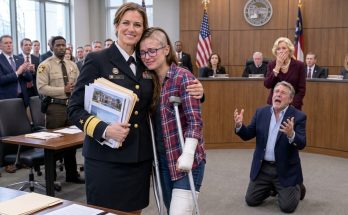
“Temporary sole legal and physical custody is awarded to the mother, Claire Morgan. The father will have supervised visitation pending further evaluation by a court-appointed, independent psychiatrist. I am referring Dr. Pierce’s testimony and report to the State Medical Board and to the District Attorney for review.” She paused, looking at Diane. “And I strongly suggest that certain parties in this courtroom retain criminal counsel.”
I didn’t realize I was crying until Dad squeezed my hand.
Outside, on the courthouse steps, the November air was bitterly cold. Reporters had not found the story yet, but a few curious onlookers lingered.
Ethan stormed past without looking at me. Diane followed, her heels striking the stone like gunshots.
But one person hung back.
Richard Caldwell. Ethan’s father. The man who had sat silently in the back seat while his son drove away and left me on the curb.
He approached slowly, hat in his hands. Rebecca stepped forward, but I shook my head.
“Mrs.… Ms. Morgan,” he said. His voice was hoarse. “I owe you an apology I don’t know how to make.”
“You were in the car,” I said quietly.
“I was.” He closed his eyes. “I’ve been in the car for thirty-five years.”
He reached into his coat and pulled out a small, worn leather notebook.
“I sent you that email,” he said. “The one signed R. This is Diane’s ledger. Every dollar she moved out of the St. Agnes Children’s Fund for the last four years. Every payment to Ethan’s creditors. Every check to Alan Pierce.”
He held it out, but didn’t let go.
“I’ll give it to you,” he said. “I’ll testify. But I need one promise first.”
“What?”
Part 8: The Ledger
We met in Walter’s office that same evening: Richard, Naomi, Walter, Dad, and me. Rebecca had sent a car for Lauren, who arrived pale and red-eyed, carrying a duffel bag with everything she owned.
“Mom changed the locks on my apartment this afternoon,” she said. “She left a voicemail calling me a traitor.”
Dad stood and pulled out a chair for her. “You’ll stay with us,” he said. “For as long as you need.”
Lauren burst into tears. I put my arm around her, and for a moment, two women who had both been raised in the shadow of the same cruel woman simply held each other.
The ledger was meticulous. That was the terrible irony. Diane, who had criticized my handwriting, my cooking, my clothes, and my nouveau-riche manners for two years, kept the neatest records I had ever seen.
Four years. Over one point one million dollars moved out of the St. Agnes Children’s Fund under false invoices: catering, event rentals, consulting fees . Money meant for children’s medical bills, redirected to cover Ethan’s gambling debts.
Monthly premiums on my two-million-dollar life insurance policy, paid from a St. Agnes operating account .
And a line item, dated the week before the quitclaim deed was filed:
P.L. — notary — $5,000.
“Patricia Lowell,” Naomi said grimly.
Richard rubbed his face. “The insurance policy was Diane’s idea,” he said. “She told Ethan it was collateral. That lenders would extend him credit if there was a big policy behind him. Maybe that’s all it was.” His voice cracked. “I told myself that’s all it was. I don’t know anymore. I don’t know who my wife is.”
“Why now?” I asked him. “Why not before?”
Richard looked at me for a long moment.
“Because I watched you stand on that curb,” he said. “And I watched my son drive away. And I realized I had raised him exactly the way Diane raised him, by never saying no to her. I didn’t want my grandson raised that way, too.”
Naomi laid out the options. Walter gave legal advice. Dad listened.
“The ledger goes to the District Attorney,” Dad finally said. “Through proper channels. With Richard’s sworn statement. Nobody threatens anyone. Nobody leaks anything. We let the system work.”
“It might take months,” Naomi warned.
“Then it takes months,” Dad said. “Justice that cuts corners isn’t justice. It’s just another kind of power.”
I loved him more in that moment than I ever had.
Two days later, I took Noah to Carl Schurz Park for his first real outing. Grace walked beside me pushing the stroller. The trees along the East River were gold and copper, and the wind smelled like cold water and fallen leaves.
I was sitting on a bench when Ethan appeared.
He had flowers. White roses, my favorite. His eyes were red, and his voice was soft.
“I’m not here to fight,” he said. “Rebecca can stand right there. I just want five minutes.”
Rebecca stood twenty feet away, watching him the way a hawk watches a field.
I nodded once.
Ethan sat on the far edge of the bench. “I lost it in court. I know. I was scared. I’m not a monster, Claire. You know me.”
“I thought I did.”
“I made mistakes. My mom…” He shook his head. “You don’t know what it’s like having her as a mother. Everything was always about what she needed. I just wanted her to be proud of me for once.”
For a dangerous second, I felt the old pull, the urge to soothe him, to fix him, to make his pain my responsibility.
“Come home,” he said softly. “Drop the case. We’ll go to counseling. We’ll move somewhere away from her. Just you, me, and Noah. I’ll be better. I swear.”
He held out the roses.
I looked at them. Then I looked at my son, asleep in his stroller, wrapped in a blanket my father had bought him.
“Ethan,” I said quietly. “Did you forge my signature on the deed?”
He hesitated a fraction of a second.
“Mom handled the paperwork.”
“That’s not what I asked.”
He said nothing.
“Did you know about the insurance policy?”
His eyes slid away.
I stood up slowly, careful of my incision, and put my hand on the stroller.
“I spent two years making myself smaller so you could feel bigger,” I said. “I don’t do that anymore. Not for you. Not for anyone. And I’m never teaching my son that love means letting someone treat you like you’re worth twelve dollars.”
I walked away. I didn’t look back. Behind me, I heard the roses hit the ground.
Lauren cried when she read it. Richard didn’t say anything at all. He simply went upstairs and called a divorce attorney.
The St. Agnes Children’s Fund held its annual holiday gala two weeks later, in the grand ballroom of a hotel on Park Avenue. Diane, against the advice of her lawyers, had refused to cancel.
She stood at the podium in a silver gown, speaking about the sacred duty of protecting children , when four investigators from the DA’s office walked through the ballroom doors.
I wasn’t there. I didn’t need to be.
But the next morning, a photograph appeared on the front page of a New York tabloid. Diane Caldwell, in silver silk, being escorted out past the champagne tower by two detectives, her face frozen in disbelief.
The charges included grand larceny, scheme to defraud, forgery, and conspiracy.
I looked at that photograph for a long time.
I didn’t feel triumph. I felt something quieter.
I felt free.
That evening, just after dinner, Naomi called.
“It’s over, almost,” she said. “Diane’s attorneys want to talk plea. Ethan’s sentencing is next month. And Claire…” She paused. “There’s one more thing. Ethan asked the court for permission to write a letter to Noah. To be opened when he’s eighteen. He wants to know if you’ll allow it.”
I looked across the room at my son, asleep in his grandfather’s arms.
Part 10: What Twelve Dollars Bought
It took me two weeks to answer Naomi.
I said yes.
Not for Ethan. For Noah. Because one day my son would have questions, and I wanted him to have every answer, even the painful ones, and to know that the truth had never been hidden from him.
Diane Caldwell pleaded guilty in February.
She stood before the judge in a plain gray suit, without pearls, and admitted to stealing $1.1 million from a children’s charity, to forging documents, and to conspiring to defraud me. She was sentenced to four years in state prison and ordered to pay full restitution. Her house in Rye was sold to repay the St. Agnes Children’s Fund.
She never apologized to me. When the sentence was read, she turned around in her seat and searched the courtroom until she found me. I held her gaze calmly. After a moment, she looked away first.
That was all I needed.
Dr. Alan Pierce lost his medical license permanently. Patricia Lowell lost her notary commission and received probation.
Ethan’s sentence was lighter, because he had cooperated: eighteen months in a county facility, five years of probation, full restitution, and mandatory treatment for gambling addiction. The quitclaim deed was voided. The life insurance policy was canceled. The divorce was finalized in March.
At his sentencing, Ethan asked to speak. He turned toward me.
“I don’t expect forgiveness,” he said. “I spent my whole life trying to become the man my mother wanted. I should have tried to become the man my son needed. I’m going to spend the rest of my life trying to fix that. Even if he never knows me.”
For the first time, I believed he meant it.
“Then start,” I said. “Not for me. For him.”
The court granted Ethan supervised visitation once he completed treatment. Whether he earns more than that will be up to him. The door isn’t locked. But he will have to walk through it with his own feet, not his mother’s.
Richard Caldwell divorced Diane in April. He moved into a small apartment in Brooklyn and started volunteering at a literacy program. Every other Sunday, he comes to the brownstone for dinner. He holds Noah like a man who has been given a second chance he doesn’t think he deserves. Maybe that’s exactly why he does.
Lauren went back to school. She’s studying social work at Hunter College and lives in the garden apartment downstairs. She calls me her sister, and I don’t correct her. In every way that matters, she is.
In June, I walked back into St. Vincent’s Hospital.
Not as a patient this time.
I walked in with Naomi, Walter, Dad, and a check.
With my share of the trust, private donations from all over the country, and a generous gift from a retired bus driver’s union, I founded The Twelve Dollar Fund . It provides free, safe transportation home for new mothers being discharged from hospitals across New York City, plus a care bag with essentials, a list of postpartum resources, and a handwritten note.
Every note says the same thing:
You are not being dramatic. You deserve to be cared for.
Maria Alvarez runs the program at St. Vincent’s. Marcus Reed trains our drivers. And Mrs. Evelyn Shaw, now eighty-two, sits on our board and terrifies every donor who doesn’t give enough.
On a warm evening in late October, almost exactly one year after the day I stood on that curb, we celebrated Noah’s first birthday in my father’s garden.
String lights hung between the trees. Grace baked a cake shaped like a city bus. Lauren made a playlist. Richard brought a wooden train set he had built by hand. Rebecca, who still insists she is only security, wore a party hat without being asked.
Marcus came with his three daughters. Mrs. Shaw came with her granddaughter. Maria came straight from her shift, still in scrubs.
And Dad sat in a lawn chair with Noah on his knee, telling him stories about faraway places as if he could understand every word.
At one point, Dad found me standing alone by the garden wall.
“You look happy,” he said.
“I am,” I said, and I meant it completely.
He reached into his pocket and pulled out something small, wrapped in tissue paper. “I had this made for you.”
Inside was a simple frame. Behind the glass were twelve wrinkled dollar bills, the exact ones Ethan had pressed into my hand outside St. Vincent’s. I had kept them in my coat pocket for a year without knowing why.
Beneath them was a small brass plate engraved with the words Dad had said to me on the phone that day:
Then you’ve already left.
I laughed through my tears.
“You know what I used to think those twelve dollars meant?” I said. “That I was worth so little to him he didn’t even bother to round up.”
“And now?”
I looked across the garden at my son, at Lauren laughing with Marcus’s daughters, at Richard showing Noah how the wooden train moved, at a family that had been built not by blood or money, but by kindness offered when it mattered most.
“Now I think they were the best investment I ever made,” I said. “They bought me a bus ride. And the bus ride took me home.”
Dad put his arm around my shoulders, and together we watched the light fade over the city.
People sometimes ask me what I learned from that year.
I tell them this:
Family isn’t the people who share your name. It’s the people who stop when you’re struggling on a curb. It’s the stranger who gives up her seat. The driver who lowers the steps. The father who answers on the first ring.
Self-respect isn’t pride. It’s the quiet decision that you will no longer accept less than you would give.
And love, real love, never asks you to make yourself small.
It hands you the diaper bag.
It opens your door.
And it always, always takes you home.
THE END