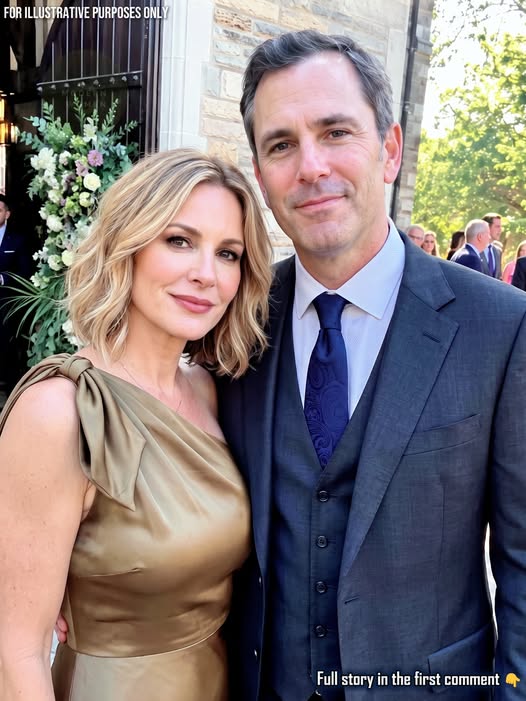
My Family Mocked Me for Being Single at 42, So I Hired a Fake Fiancé—But When My Mother Saw His Face, She Whispered, “That’s Impossible…”
Sixteen Thanksgivings of the Same Question
At forty-two, I had survived sixteen Thanksgiving dinners where my love life was treated like a family emergency.
Sixteen years of, “Any nice men at work?”
Sixteen years of, “You’re not getting younger.”
Sixteen years of smiling politely while relatives explained my loneliness to me as if I had misplaced a husband somewhere between the office and the grocery store.
My name is Claire Bennett, and contrary to what my family believed, I was not miserable.
I had a good job as a librarian. I had a small house with a blue front door, a garden I was proud of, and a cat named Winston who judged everyone equally. I had friends, routines, books stacked on every table, and quiet Sunday mornings that belonged only to me.
But to my mother, none of that counted as a life.
A life, according to Eleanor Bennett, required a husband, a shared mortgage, and at least one grandchild she could show off at church.
“You can’t come to Beth’s wedding alone,” she said one afternoon, standing in my kitchen with her purse still hanging from her elbow.
My cousin Beth was twenty-eight, marrying a dentist named Andrew, and my mother had already turned her wedding into another courtroom where I would be the evidence.
“I can come alone,” I said.
“You shouldn’t have to.”
There it was. The sentence that always sounded like concern but landed like pity.
I kept slicing lemons for the iced tea.
“Mom, I’m fine.”
She sighed, the heavy kind of sigh that meant she had carried my entire future on her back and I had failed to thank her.
“Claire, people talk.”
I put the knife down.
“Then let them.”
She looked at me with tired eyes. “I just don’t want you to be lonely.”
I almost told her the truth then.
That being alone and being lonely were not the same thing.
That I had felt lonelier sitting at family tables surrounded by people who treated me like an unfinished project.
But instead, I did something foolish.
I lied.
“I’m bringing my fiancé.”
The kitchen went silent.
My mother blinked.
“What fiancé?”
I dried my hands on a towel and forced myself to look calm.
“His name is Michael.”
“Michael who?”
“You’ll meet him at the wedding.”
Her mouth opened, then closed again.
“You’re engaged?”
“Yes.”
“To a man none of us have met?”
“We wanted to avoid family drama before Beth’s wedding.”
My mother hated that answer, which made it sound believable.
For the first time in years, she had no advice.
And for one ridiculous moment, I enjoyed the silence.
The Man from the Website
Three days later, I found Michael online.
Not a fiancé. An actor.
His profile said he specialized in corporate events, private parties, small theater productions, and “custom character appearances.” He was forty-seven, with kind eyes, silver at the temples, and the sort of gentle smile that looked trustworthy even through a computer screen.
His name was Michael Carter.
It felt almost too perfect.
I booked him for Beth’s wedding and told him exactly what I needed.
One afternoon. One rented suit. One convincing performance.
“You want me to play your fiancé?” he asked when we met at a coffee shop two days before the wedding.
“Yes.”
He stirred his coffee slowly. “And why?”
“Because my family won’t stop acting like my single life is a tragedy.”
He nodded, not laughing.
Most people would have laughed.
Michael didn’t.
Instead, he said, “That sounds exhausting.”
Something in my chest softened, but I ignored it.
I slid a sheet of paper across the table.
“Our story is simple. We met at a charity book sale. You travel for work. You proposed privately. We don’t want to discuss wedding plans yet because we don’t want to distract from Beth’s big day.”
He read the page carefully.
“You’re very organized.”
“I’m very desperate.”
That made him smile.
I pointed at him.
“One rule.”
“Yes?”
“Do not improvise.”
He raised one hand solemnly.
“No improvising.”
“And don’t oversell it. My family can smell drama.”
“Claire,” he said gently, “you hired an actor to pretend to be your fiancé at a family wedding. Drama has already been invited.”
I hated that he was right.
On the wedding day, Michael met me outside St. Mark’s Garden Chapel with a small bouquet of white roses.
“You look nervous,” he said.
“I’m paying you not to notice.”
He smiled.
“You look beautiful, then.”
I rolled my eyes, but my face warmed.
“Careful. That sounded improvised.”
“Professional habit.”
He offered me his arm.
For one second, I almost turned around and ran.
Then I thought of my mother’s sighs, my aunt’s questions, my cousins’ pitying smiles.
I took Michael’s arm.
Together, we walked into the chapel.

For illustrative purposes only
“That’s Impossible…”
My family turned almost at once.
It was as if some invisible alarm had sounded.
Claire Bennett has arrived with a man.
My aunt Lydia leaned toward Uncle Rob and whispered. My cousin Jenna raised her eyebrows so high they nearly touched her hairline. Beth, glowing in her wedding dress near the front, gave me a confused but delighted little wave.
Michael played his role perfectly.
He smiled warmly, placed his hand over mine, and greeted everyone with calm confidence.
But my mother did not move.
She stood beside the second pew, one hand pressed against her pearl necklace.
Her face changed the moment she saw him.
Not surprise.
Not suspicion.
Fear.
All the color drained from her cheeks.
Her eyes fixed on Michael as if the church floor had opened beneath her.
Then she whispered one sentence I was not supposed to hear.
“That’s impossible…”
I felt Michael’s arm tense beneath my fingers.
“You heard that?” I murmured.
“Yes.”
“Ignore it.”
“I’m trying.”
But my mother did not stop staring.
During the ceremony, I could barely focus on Beth’s vows. I kept glancing at my mother, who kept glancing at Michael. Once, I saw her wipe her eyes with the corner of her handkerchief.
By the time the reception began in the garden hall behind the chapel, I was sweating under my dress.
This was supposed to be simple.
Michael would smile, answer basic questions, eat chicken, and leave.
Instead, my mother looked like she had seen a ghost wearing a navy suit.
At dinner, Aunt Lydia struck first.
“So, Michael,” she said, leaning across the table, “Claire says you travel for work.”
Michael nodded.
“I do contract training for small theater programs and communication workshops.”
That was partly true. Safe.
“How romantic,” Aunt Lydia said. “And how did you propose?”
I nearly choked on my water.
Michael placed his hand lightly over mine.
“Quietly,” he said. “Claire doesn’t like public scenes.”
That was not on the paper.
I kicked him under the table.
He didn’t react.
“She deserves gentleness,” he added.
The table went quiet.
For once, no one had a joke.
Across the room, my mother stood abruptly and walked out into the hallway.
I followed her.
The Question My Mother Asked
I found her near the coatroom, gripping the edge of a small table.
“Mom?”
She turned too quickly.
“Where did you meet him?”
I swallowed.
“I told you. At a book sale.”
“No.” Her voice trembled. “Where did he come from?”
“What do you mean?”
She looked past me toward the reception hall.
“That man’s face…”
“Mom, you’re scaring me.”
She pressed a hand to her mouth.
“For one second, I thought I was looking at Clara.”
I froze.
Clara.
My mother’s younger sister.
The aunt I had never met.
The woman no one in our family talked about except in broken sentences and uncomfortable silences.
When I was a child, I once asked why there were no pictures of Aunt Clara in Grandma’s house. My mother had said, “Some stories are too sad to keep on the wall.”
That was all I ever got.
“Mom,” I said carefully, “what does Aunt Clara have to do with Michael?”
Before she could answer, Michael appeared at the hallway entrance.
“I’m sorry,” he said. “I didn’t mean to intrude. I just wanted to make sure everything was all right.”
My mother stared at him.
Then she asked a question so strange that the air seemed to leave the hallway.
“Were you adopted?”
Michael’s smile faded.
I turned to him.
He looked at my mother for a long moment.
“Yes,” he said quietly.
My mother’s knees seemed to weaken.
I grabbed her arm.
Michael stepped forward, concerned.
She waved us both off, but her eyes never left his face.
“When were you born?” she asked.
“June 14, 1978.”
My mother closed her eyes.
A sound escaped her. Not a sob exactly. More like a door inside her had finally opened after being locked for decades.
“And your birth name?” she whispered.
Michael looked stunned.
“I don’t know all of it. My adoption records were sealed for years. I only found part of a file after my adoptive mother passed away.”
He reached into his jacket pocket and pulled out a small folded paper.
“I carry a copy because I’ve been trying to find answers.”
My mother stared at the paper like it might burn her.
Michael unfolded it.
At the top was a faded line from an old hospital record.
Baby Boy Bennett.
My heart stopped.
Bennett.
My last name.
My mother made a small cry and covered her mouth.
Michael looked from her to me.
“What is happening?”
I could not answer.
Because suddenly my fake fiancé was holding a piece of my family’s past in his hands.
The Lie Falls Apart
We moved into a small side room used by the chapel staff.
Outside, music played. People laughed. Glasses clinked.
Inside, the three of us stood around a table as if someone had placed a bomb in the center of it.
My mother sat down slowly.
“I had a sister,” she began.
“I know about Clara,” I said.
Her eyes filled with tears.
“No, Claire. You know her name. You don’t know about her.”
Michael remained standing by the door, pale and silent.
My mother twisted her handkerchief in her lap.
“Clara was seventeen when she fell in love with a young man named David Carter.”
Michael’s head lifted.
“My adoptive surname is Carter.”
My mother nodded, crying now.
“I know.”
She told us the story in pieces.
Clara had been wild-hearted, musical, and brave in a family that valued obedience above happiness. She sang in the kitchen, danced barefoot in the rain, and believed love could fix anything.
When she became pregnant, my grandparents panicked.
They were strict people, proud people. They sent Clara away to a maternity home three towns over, telling neighbors she was staying with relatives.
My mother, only twenty at the time, begged to visit her.
Grandpa refused.
But Clara wrote letters.
“She said she had a son,” my mother whispered. “She named him Michael.”
The room blurred.
Michael gripped the back of a chair.
“What happened to her?”
My mother’s face crumpled.
“There was a storm. A flood near the home. Records were damaged. People were moved. Your mother disappeared from the official files, and my parents told me she had run away and wanted nothing to do with us.”
“Did you believe them?” I asked.
“For a while,” she said. “Then one letter arrived months later. No return address. Just one line.”
She looked at Michael.
“‘Please find my baby.’”
No one spoke.
“I searched,” my mother said. “I went to the home. It had closed. I asked questions. People said babies had been placed quickly, paperwork lost, names changed. My father forbade me from looking again. He said Clara had disgraced the family enough.”
Her voice broke.
“I was young. I was scared. And then I married your father, Claire. Life moved forward, but I never stopped wondering.”
Michael sat down as if his legs could no longer hold him.
“My whole life,” he said softly, “I wondered why nobody came for me.”
My mother reached across the table, but stopped before touching him.
“I tried,” she whispered. “Not enough. But I tried.”
That was when my own lie finally became unbearable.
I looked at Michael.
Then at my mother.
“There’s something I have to tell you.”
Michael’s eyes met mine.
He already knew.
My mother looked confused.
I took a breath.
“Michael isn’t my fiancé.”
The words landed heavily.
“I hired him,” I said. “For today. To pretend. Because I was tired of everyone treating me like I was broken because I came alone.”
My mother stared at me.
For a moment, I expected anger.
I deserved it.
But instead, she lowered her head and began to cry.
Not loudly.
Not dramatically.
Just quietly, like someone whose heart had finally run out of places to hide.
“I did that to you,” she said.
“Mom…”
“I made you feel so small that you thought you had to rent someone to stand beside you.”
Her words hurt because they were true.
Michael looked down at the hospital paper in his hands.
“I guess we were both pretending today,” he said.
I turned to him.
He gave me a sad smile.
“You hired me to pretend I belonged to your family,” he said. “And I’ve spent forty-seven years pretending I didn’t care that I didn’t belong to anyone.”
That was the moment everything changed.

For illustrative purposes only
The Wedding No One Forgot
We did not announce anything during Beth’s reception.
It was still her day.
My mother washed her face. Michael folded the paper carefully and put it back in his pocket. I returned to the table with red eyes and a fake smile that was much worse than my fake fiancé.
But Beth noticed.
Brides notice everything.
Later, when she found us near the garden, I told her just enough.
Her eyes widened.
“So let me get this straight,” she whispered. “You brought a fake fiancé to my wedding, and he might actually be our long-lost cousin?”
I winced.
“When you say it like that, it sounds bad.”
Beth stared at me for one second.
Then she started laughing.
Not cruelly.
Joyfully.
The kind of laughter that breaks tension instead of adding to it.
“Claire,” she said, wiping tears from her eyes, “this is the most interesting thing that has ever happened at a Bennett wedding.”
“I’m sorry.”
“Don’t be. Andrew’s dentist friends have been discussing plaque for forty minutes. You saved the reception.”
By the end of the evening, Michael was no longer pretending to be affectionate. He was simply being kind.
He danced once with my mother, slowly, while she cried against his shoulder. No one understood why, but everyone seemed to feel the weight of it.
I watched them from the edge of the dance floor.
For years, I had thought my mother’s pressure came from disappointment.
That night, I began to understand it came from fear.
She had lost her sister.
She had lost a baby nephew she never got to hold.
She had spent decades believing that a woman without a husband, without protection, without family beside her, could be swallowed by the world and erased.
So she tried to protect me in the only clumsy way she knew.
It did not excuse the hurt.
But it explained the ache behind it.
Before Michael left that night, he stood with me under the chapel lights.
“I should return your payment,” he said.
“No. You earned it.”
“Claire.”
“You survived my family. That deserves double.”
He smiled, but his eyes were wet.
“Thank you for hiring me.”
“That is a strange sentence.”
“I mean it,” he said. “I think I found something today.”
I nodded.
“So did we.”
Then, after a pause, I added, “For the record, you did improvise.”
He laughed softly.
“For the record, your family required it.”
The Truth at Thanksgiving
The DNA test confirmed it six weeks later.
Michael Carter was Michael Bennett, son of Clara Bennett.
My mother’s nephew.
My cousin.
When the results came in, my mother held the paper to her chest and whispered, “I found you, Clara. I finally found him.”
Michael did not suddenly become a stranger turned perfect relative overnight. Real life is not that simple.
There were awkward lunches. Long conversations. Questions no one could answer. Grief for Clara, whose final years remained a mystery. Anger at grandparents who were no longer alive to explain themselves.
But there was also healing.
Michael brought photographs from his childhood. My mother brought Clara’s old letters from a locked box in her closet. I saw my aunt’s handwriting for the first time, looping and bright, full of hope even in heartbreak.
One letter ended with the words:
“Tell my baby he was loved before he even opened his eyes.”
Michael read that sentence three times.
Then he folded the letter against his heart and cried.
That November, Thanksgiving was at my mother’s house.
For the first time in sixteen years, no one asked me if I had met someone.
No one said I was running out of time.
No one treated the empty chair beside me as a tragedy.
Michael came too.
Not as my fiancé.
As family.
My mother stood before dinner, holding her glass with trembling hands.
“I owe my daughter an apology,” she said.
The room went quiet.
I stared at my plate.
“For years,” she continued, “I confused concern with pressure. I thought I was protecting Claire from loneliness, but I was teaching her that her life was incomplete. I was wrong.”
My throat tightened.
My mother looked at me.
“Claire, you were never incomplete.”
I tried to smile, but tears came first.
Then she looked at Michael.
“And sometimes the person missing from a family is not the unmarried daughter everyone keeps worrying about. Sometimes the missing person is the one we were too ashamed, too afraid, or too stubborn to search for properly.”
Michael reached for her hand.
Aunt Lydia, who usually had something to say about everything, dabbed her eyes with a napkin and said nothing.
That was its own miracle.
After dinner, I stood on the porch with Michael while the house glowed behind us.
“Do you regret hiring me?” he asked.
I thought about the lie, the panic, the hallway, the hospital paper, my mother’s tears.
“No,” I said honestly. “But I don’t think I’ll be hiring any more fiancés.”
“Probably wise.”
We laughed.
Then he looked at me with gentle seriousness.
“You know, Claire, you didn’t need a man beside you that day.”
“I know.”
“But I’m glad I was there anyway.”
“So am I.”
Inside, my mother called us in for pie.
For once, I did not feel like the family problem.
I did not feel like the unfinished woman, the cautionary tale, the single daughter everyone whispered about.
I felt like Claire.
Just Claire.
Forty-two years old.
Single.
Loved.
Whole.
And part of a family that had finally stopped pretending silence was the same as peace.
That day, I learned something I wish I had known earlier.
Sometimes the lie you tell to survive a painful room becomes the truth that sets everyone free.
I hired an actor to play my fiancé for one afternoon.
But he didn’t become my husband.
He became my family.
And somehow, that was the love story we all needed.
Source: topstoryusa.store
Note: This story is a work of fiction inspired by real events. Names, characters, and details have been altered. Any resemblance is coincidental. The author and publisher disclaim accuracy, liability, and responsibility for interpretations or reliance. All images are for illustration purposes only.