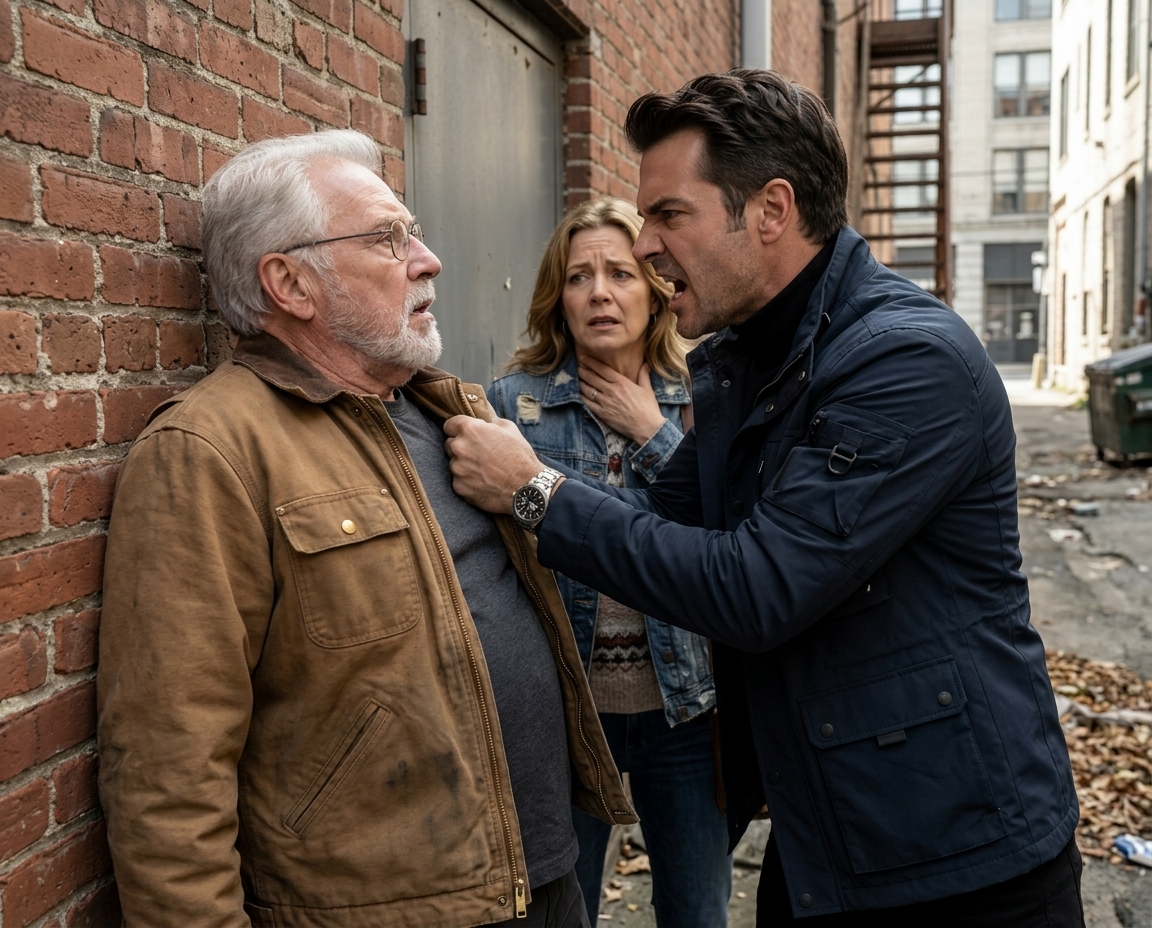
HE SAID HE HAD CLOSED A $12 MILLION DEAL BUT COULDN’T FIND $3,200 TO SAVE HIS FATHER—THEN ONE TERRIFYING DOCTOR’S CALL FORCED HIM TO FACE WHAT MONEY COULD NEVER BUY
Elliot’s expression shifted again.
This time, fear broke through the anger.
“The rest?” he asked.
Claire looked at me, then back at him.
“Two thousand dollars,” she said.
“Dad still needs two thousand dollars by tomorrow.”
For several seconds, Elliot said nothing.
He had come to my house ready to defend himself.
Ready to argue about money, reputation, business pressure, and how unfairly everyone had judged him.
But suddenly none of that seemed important.
Thursday.
The surgery was Thursday.
My son finally looked directly at me—not at the medical papers, not at the envelope, not at the faded furniture around him.
At me.
“How serious is it?” he asked.
I gave a small shrug.
“Serious enough that they want it out.”
Claire folded her arms.
“The doctor said waiting longer isn’t a good idea.”
Elliot swallowed.
Noah stood quietly beside his mother, his young face tense.
“What exactly did the doctor say?” Elliot asked.
Claire looked at him for a long moment.
“Do you really want to know now?”
The question hit him harder than shouting would have.
His eyes lowered.
I could see the boy he used to be for a moment.
Not the investor.
Not the man in the expensive coat.
Just my son, realizing there were questions he should have asked days ago.
“Yes,” he said quietly.
“I want to know.”
Claire took a breath.
“They found the tumor near Dad’s stomach.
They believe they can remove it.
But they don’t want unnecessary delays.”
Elliot looked at me.
“Why didn’t you tell me all that?”
I almost laughed, but there was no humor in it.
“I called you to tell you I had cancer.”
His face tightened.
“I know.”
“You told me you needed to keep the call quick.”
He closed his eyes.
The words came back to him.
Can this be quick?
I remembered hearing laughter and glasses clinking behind him that night.
I remembered sitting alone at this same table after he hung up.
I had spent forty-two years fixing machines.
And somehow, in the last few years, I had become something my own son believed could wait.
Elliot walked toward the kitchen counter and put both hands against it.
“Dad…”
I didn’t answer.
Claire turned toward me.
“We’ll figure it out.”
“We already have,” Elliot said.
She looked at him.
He reached into his coat again and pulled out the checkbook.
Claire immediately shook her head.
“No.”
He stared at her.
“No?”
“You don’t get to throw money at this because you feel guilty.”
His jaw tightened.
“This isn’t about guilt.”
“Then what is it?”
He looked toward me.
“I almost lost my father because I didn’t understand what mattered.”
The room went silent.
Even Claire seemed surprised.
Elliot slowly opened the checkbook.
I stepped forward.
“Put it away.”
He looked at me.
“Dad, please.”
“No.”
His expression fell.
“I mean it.”
“Why?” he asked.
“You need the money.”
“I needed my son.”
The checkbook trembled slightly in his hand.
For the first time since he had arrived, Elliot looked genuinely lost.
“I am your son.”
“No,” I said quietly.
“You’re my son by blood.
But three days ago, when I needed you most, you treated me like a problem interfering with your evening.”
“Dad—”
“I didn’t raise you to become ashamed of being poor.
I didn’t raise you to believe money made one person more valuable than another.
And I certainly didn’t sell my truck and work double shifts so that one day you’d have twelve million dollars tied up somewhere while your father sat at home wondering whether his life was worth three thousand two hundred.”
Elliot went completely still.
Noah looked down.
Claire’s eyes filled with tears.
I continued.
“Your sister didn’t have money to spare.
She had rent.
She had a son.
She had bills.
But she looked at me and saw her father.”
I pointed gently toward the envelope.
“You looked at me and saw an expense.”
Elliot’s face crumpled.
Not dramatically.
Not the way people cry in movies.
It was worse than that.
He simply looked exhausted.
Then he sat down at my kitchen table.
The same table where, thirty-four years earlier, he had done homework while I repaired his broken science project.
The same table where Margaret had served pancakes every Sunday.
The same table where I had once stayed awake until three in the morning calculating whether I could afford his college tuition.
He put his face in his hands.
“I didn’t know how to do this,” he whispered.
Claire stared at him.
“Do what?”
“Be there.”
Her anger softened slightly, though she didn’t forgive him.
Not yet.
Elliot looked at me.
“After Mom died, I thought being useful meant making money.
Solving things.
Building something.
Every time I felt helpless, I worked harder.”
His voice broke.
“And when you called me…”
He couldn’t finish.
I understood anyway.
“When I called you,” I said, “you felt helpless.”
He nodded.
“So you hid behind business.”
Another nod.
“I told myself I’d send something later,” he whispered.
“I thought I’d figure out the numbers.
I thought there would be time.”
I looked toward the window.
Outside, snow had begun to fall.
Small flakes drifted across the driveway, covering the tracks of Elliot’s expensive rental car.
“There isn’t always time,” I said.
Nobody spoke after that.
Then Elliot stood.
He tore the check from his checkbook.
Claire crossed her arms again.
“I said—”
“Wait,” I told her.
Elliot placed the check on the table.
It was made out to the clinic.
Not to me.
Not cash.
Not some dramatic gesture meant to buy forgiveness.
He had written $2,000.
“The surgery deposit is covered,” he said.
Then he took out his phone.
“But I’m not finished.”
I frowned.
“What are you doing?”
He called someone.
“Cancel Thursday afternoon,” he said when the person answered.
“No.
Move the meeting.”
A pause.
“I don’t care if they’re flying in.”
Another pause.
“No.
I’m unavailable.”
His eyes stayed on me.
“My father is having surgery.”
He ended the call.
Claire stared at him.
Noah did too.
I felt something tighten in my chest.
“Elliot,” I said.
He shook his head.
“I should’ve said it the first time.”
Then he picked up the check, walked toward me, and held it out.
“This is for the clinic.
But I know this doesn’t fix what I did.”
I looked at him.
“It doesn’t.”
“I know.”
“Money doesn’t erase words.”
“I know.”
“It doesn’t buy back the night I spent sitting here after you hung up.”
His eyes filled.
“I know.”
I took the check.
Not because I had forgiven him.
Not yet.
I took it because Thursday was coming.
The next morning, the clinic called at 9:12.
The surgery was officially scheduled.
Thursday morning.
I wrote the time down twice because my hands were shaking.
After I hung up, I sat at the kitchen table and stared at the wall.
Claire came over after work.
She brought soup, though I told her I wasn’t hungry.
Noah brought his math homework and sat in the living room pretending not to listen to us.
At six that evening, another car pulled into the driveway.
I looked through the window.
Elliot.
This time, he wasn’t driving a rental.
He had left the black car behind somewhere and arrived in an old sedan from the airport rental lot.
He walked up carrying two grocery bags.
Claire opened the door.
“What is this?” she asked.
He held up the bags.
“I called Dad’s doctor.
He gave me a list of what Dad can eat before surgery.”
Claire blinked.
“You called the doctor?”
“With Dad’s permission.”
I looked at him.
“Yesterday morning.”
She turned toward me.
“You let him call?”
“I did.”
Elliot shifted awkwardly.
“I brought groceries.”
Claire looked inside the bags.
Plain crackers.
Soup.
Fruit.
Tea.
And, oddly enough, a package of oatmeal cookies.
She lifted them.
“Really?”
Elliot looked embarrassed.
“Dad likes those.”
I did.
Margaret used to buy the same kind.
Claire slowly set the package down.
That was the first moment I saw the wall between them crack.
Not fall.
Just crack.
Forgiveness is rarely one big moment.
Sometimes it begins with someone remembering which cookies their father likes.
Thursday arrived cold and gray.
I woke before dawn.
For a few minutes, I forgot where I was.
Then I saw the hospital bag by the door.
I remembered everything.
Cancer.
Surgery.
The phone call.
Claire’s bracelet.
Elliot’s check.
I sat on the edge of my bed and suddenly felt terrified.
At sixty-eight, I had buried my wife.
I had buried friends.
I had attended enough funerals to know how quickly a person’s ordinary life could disappear.
I was afraid of dying.
Not just because I wasn’t ready.
But because there were still things I wanted to repair.
At 5:40, someone knocked.
It was Claire.
At 5:42, another knock came.
Elliot.
They had both arrived early.
For one second, they looked at each other awkwardly in my hallway.
Then Claire sighed.
“Let’s go, Dad.”
The drive to the hospital was quiet.
Elliot drove.
Claire sat beside me in the back.
Noah had stayed with a neighbor because he had school.
As we entered the hospital, Elliot walked on one side of me and Claire on the other.
I didn’t need help walking.
But neither of them asked.
They just stayed there.
At the admissions desk, the nurse asked who would be making decisions if I couldn’t.
I looked at my children.
Claire immediately stepped forward.
Elliot did too.
The nurse smiled faintly.
“Both?”
I looked at them.
For the first time in years, I didn’t see rivals.
I saw my children.
“Yes,” I said.
“Both.”
The surgery lasted nearly four hours.
Later, Claire told me Elliot had paced the waiting room for the entire first hour.
After that, he sat beside her.
Neither of them spoke much.
At one point, Claire pulled out a photograph from her wallet.
It showed the three of us at a lake when they were children.
I was holding a fishing rod.
Claire had mud on her face.
Elliot was laughing.
Moments after showing it to him, she said, “You know Dad still has the fishing box you made him.”
Elliot looked at her.
“I made that when I was nine.”
“I know.”
“I thought he threw it away.”
Claire shook her head.
“No.”
Elliot stared at the photograph.
Then he whispered, “I thought Dad liked you more.”
Claire almost laughed.
“I thought he liked you more.”
And somewhere in that sterile waiting room, while I lay unconscious behind operating room doors, my children discovered that much of their resentment had been built on things neither of them had ever bothered to say.
When the surgeon finally came out, both of them stood.
“Mr. Bennett’s surgery went well,” she said.
Claire began crying immediately.
Elliot grabbed her hand.
Neither of them seemed to notice they were doing it.
“The tumor was removed,” the surgeon continued.
“We’ll need follow-up testing and monitoring, but the procedure itself went as planned.”
Claire covered her face.
Elliot sat down slowly.
Then he cried.
This time, he didn’t hide it.
I woke up the next morning.
The room was dim.
For a moment, everything hurt.
Then I saw them.
Claire was asleep in the chair by the window.
Her coat was folded over her.
Elliot was sitting on the other side of my bed, still wearing the same clothes from the previous day.
His head was lowered.
When I moved my hand, he looked up.
“Dad?”
I tried to speak.
My throat was dry.
“Water,” I whispered.
He laughed through his tears.
Then he pressed the button for the nurse.
A few minutes later, Claire woke too.
She walked to my bed and kissed my forehead.
And for the first time since Margaret died, I felt like our family was in one room again.
Damaged.
Imperfect.
But together.
Recovery was not easy.
There were medications, appointments, weak mornings, and days when I could barely walk around the block.
But something had changed.
Elliot started calling every Sunday.
Not texting.
Calling.
At first, the conversations were awkward.
“How are you feeling?”
“Fine.”
“What did you eat?”
“Food.”
But he kept calling.
One Sunday, he told me about a deal that had gone wrong.
For the first time in years, he didn’t try to make himself sound successful.
He simply said, “I messed up.”
And I answered, “Then fix what you can.”
Another week, he called to ask how to make my favorite beef stew.
He burned the onions.
I laughed so hard my stomach hurt.
Claire came over often too.
She eventually replaced Margaret’s bracelet.
Not with the original.
That one was gone forever.
But Elliot quietly found a jeweler and bought Claire a simple gold bracelet with a small engraving inside.
When she opened the box, she almost refused it.
“You think this makes everything better?”
“No,” Elliot said.
“I know it doesn’t.”
“Then why buy it?”
“Because Mom should have left you something beautiful.”
Claire stared at him.
Then she read the engraving.
For Claire—always family.
She cried.
So did he.
So did I.
Even Noah, who had been pretending to be too grown-up for emotion, wiped his eyes and said, “Can everybody stop doing this? It’s weird.”
That made us laugh.
Real laughter.
The kind that doesn’t need expensive restaurants or business deals behind it.
Six months later, my follow-up scans showed no sign of the cancer.
The doctor smiled when she told me.
I sat in that small office and felt the world become bright again.
When I walked outside, both my children were waiting.
Claire ran to hug me.
Elliot stood back for half a second, then joined us.
For a moment, I was trapped between them.
I didn’t complain.
We went to lunch afterward.
Nothing fancy.
A small diner outside Columbus.
Elliot insisted on paying.
Claire rolled her eyes.
“Of course.”
He smiled.
“I can afford it.”
I looked at him.
“You sure your money isn’t allocated?”
The table went silent.
Then Elliot laughed.
Claire started laughing too.
Finally, I did.
Elliot shook his head.
“I deserved that.”
“Yes,” Claire said.
“Definitely,” I added.
He laughed harder.
And I realized something then.
My son had not become a different person overnight.
People rarely do.
But he had made a choice.
He could have defended his pride forever.
He could have kept blaming pressure, business, appearances, or his sister.
Instead, he had finally allowed himself to see what his success had cost him.
And he had decided to pay attention before it cost him more.
A year after my surgery, Elliot came back to Ohio for my sixty-ninth birthday.
He brought no expensive gift.
No watch.
No fancy bottle.
Just an old wooden box.
I recognized it immediately.
The fishing box he had made when he was nine.
The hinges had been repaired.
The faded blue paint had been carefully restored.
He placed it in my hands.
“I found it in the garage,” he said.
“I know.”
“You still had it.”
“Of course.”
He looked down.
“I didn’t think anything I did as a kid mattered that much to you.”
I put my hand on his shoulder.
“Elliot, you spent so many years trying to prove you were worth something that you forgot you never had to.”
His eyes filled.
Claire stood beside us, holding her new bracelet.
Noah was in the backyard, almost seventeen now, complaining that we were taking too long.
I smiled.
Then I looked at my son.
“The day I called you, I thought I was asking for $3,200.”
He said nothing.
“But I wasn’t.”
I paused.
“I was asking whether I still had a son.”
His tears fell then.
“I know.”
I squeezed his shoulder.
“And now?”
He looked at me.
“Now you do.”
I nodded.
“Yes,” I said.
“Now I do.”
That day, we went fishing.
Claire didn’t catch anything.
Noah caught the smallest fish of his life and claimed it was huge.
Elliot tangled his line twice.
And I sat there under a clear Ohio sky, listening to my children argue about something completely unimportant.
For forty-two years, I had believed the greatest gift I could give my children was a better life.
I had been wrong.
The greatest thing I could give them was the truth:
Success means nothing if the people who loved you when you had nothing are afraid to call when they need you.
Money can be earned again.
Deals can be replaced.
A lost reputation can sometimes be repaired.
But time with the people you love is the one thing no amount of money can buy back.
I had needed $3,200 to schedule surgery.
But in the end, my family needed something far more valuable.
They needed to remember that love is not proven by how much you say you have.
It is proven by whether you show up when someone you love needs you.
And sometimes, the moment you finally understand that…
is the moment you still have time to come home.
Source: torpstoryusa.store